Practical guide for tube and board converters: adhesive solids, ply tension, recycled-stock penetration, and radial crush qualification—without over-gluing high-speed winders.
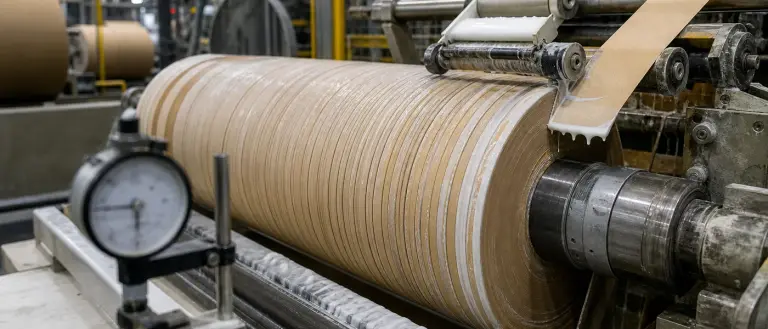
Table of Contents
Radial crush strength is not a single knob. On a spiral winder, the core fails when glue chemistry, solids/add-on, ply tension, and paper grade stop working as a system—often before the machine hits its nameplate speed. The fix is rarely “more adhesive”; it is matching hold development to the speed window you are actually running.
This guide is for paper tube, core, and structural board teams on our paper converting pillar—applications citing >150 m/min winding and 1000N+ crush targets for heavy-duty programs. It complements our troubleshooting post on
why paper tube cores fail on high-speed lines; it does not replace your customer’s crush specification or conditioned-storage protocol.
Why Crush Strength Fails Before the Winder Maxes Out
Over-Application vs. Under-Penetration on Recycled Ply
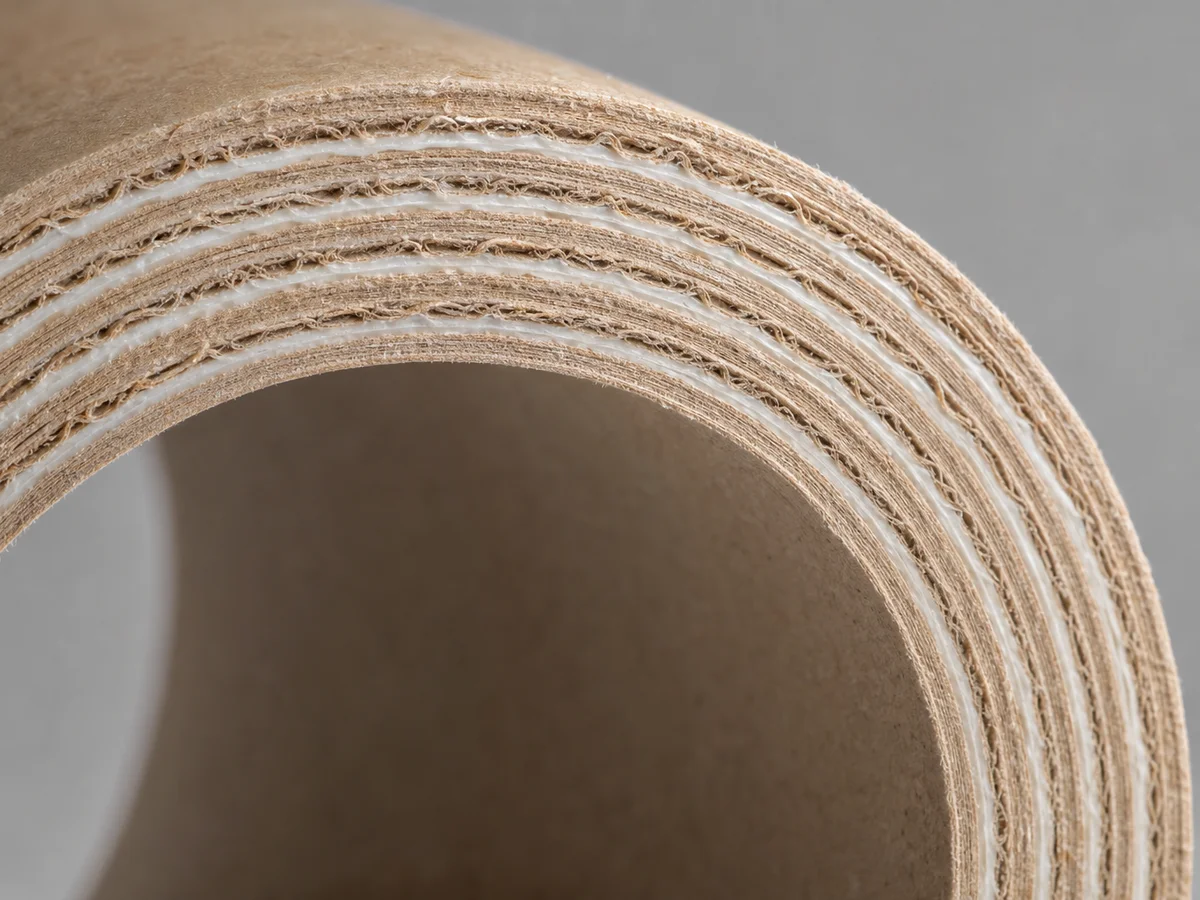
Adding glue can improve same-shift stiffness but raises moisture carry-through, lengthening oven time and sometimes lowering conditioned crush after humidity exposure. Under-penetration on recycled board shows the opposite: the ply looks bonded but separates under tension. Our FAQ notes adjusting solid content and penetration agents for low-quality recycled substrates while still targeting 1000N+ radial performance in validation—not as a universal guarantee.
- Soft cuts and dog-ears: Green strength arrives too late for the cutter at the current speed.
- Fresh-core feel vs. stored crush: Cores pass on the mandrel, then lose stiffness after conditioning.
- Splashing at the applicator: Rheology breakdown mistaken for “weak glue.”
What to Control on the Line
Solids and Viscosity Window
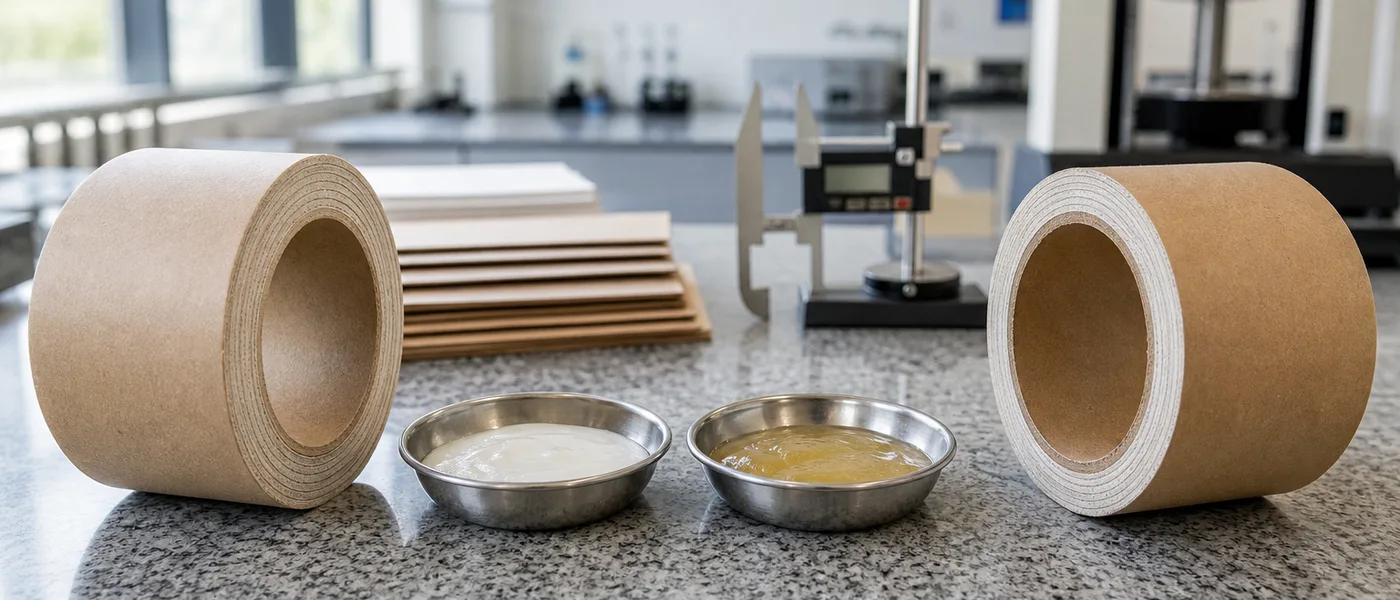
High-solid dextrin and PVA routes on our industrial tubes page are tuned for rigidity with lower water load than legacy starch runs. Hold viscosity and solids inside the supplier TDS band; batch drift in solids content is a common hidden variable when crush scatters week to week.
Ply Tension and Mandrel Speed
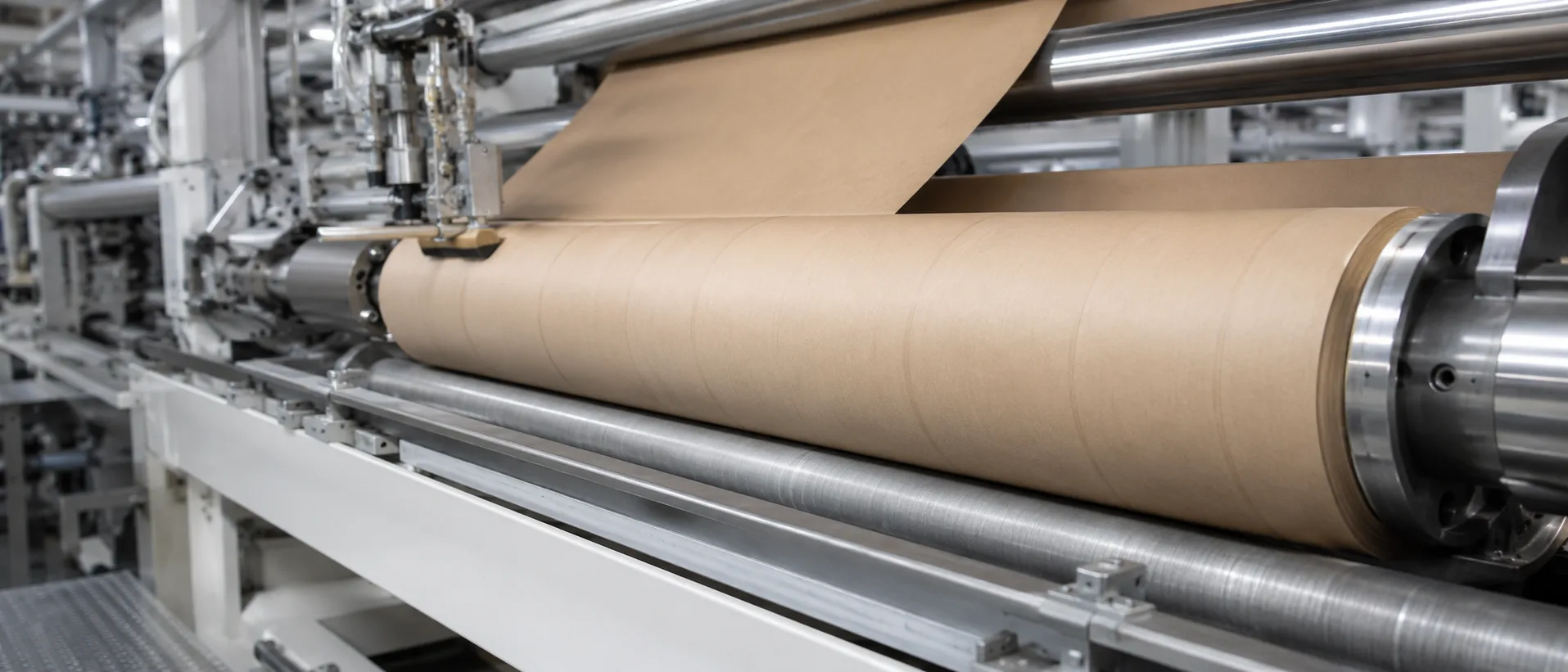
Tension that is too low leaves air in the laminate; too high crushes thin recycled plies. Mandrel speed without matching wet tack development produces acceptable tubes in the shift and failing crush after storage. Qualify speed, tension, and add-on together—the case study on industrial core high-speed winding kept paper grade and laydown constant so chemistry comparisons stayed honest.
When to Switch Starch/PVA vs. Hybrid
Starch/dextrin remains cost-effective on many parallel and spiral lines; PVA hybrids often win when you need faster green strength and cleaner cutoff above ~120–150 m/min. Use our starch vs. PVA for paper tube adhesives guide for chemistry selection; use this article for line variables around that choice.
Engineering Pro Tip
Pillar testimonial language cites 15% higher winding speed with 1000N+ crush maintained—that is a customer outcome on a specific tube program, not a promise for every winder. Document your qualified window (speed, add-on, conditioning) on the production traveler.
Qualification Workflow
Radial Crush as Pass/Fail
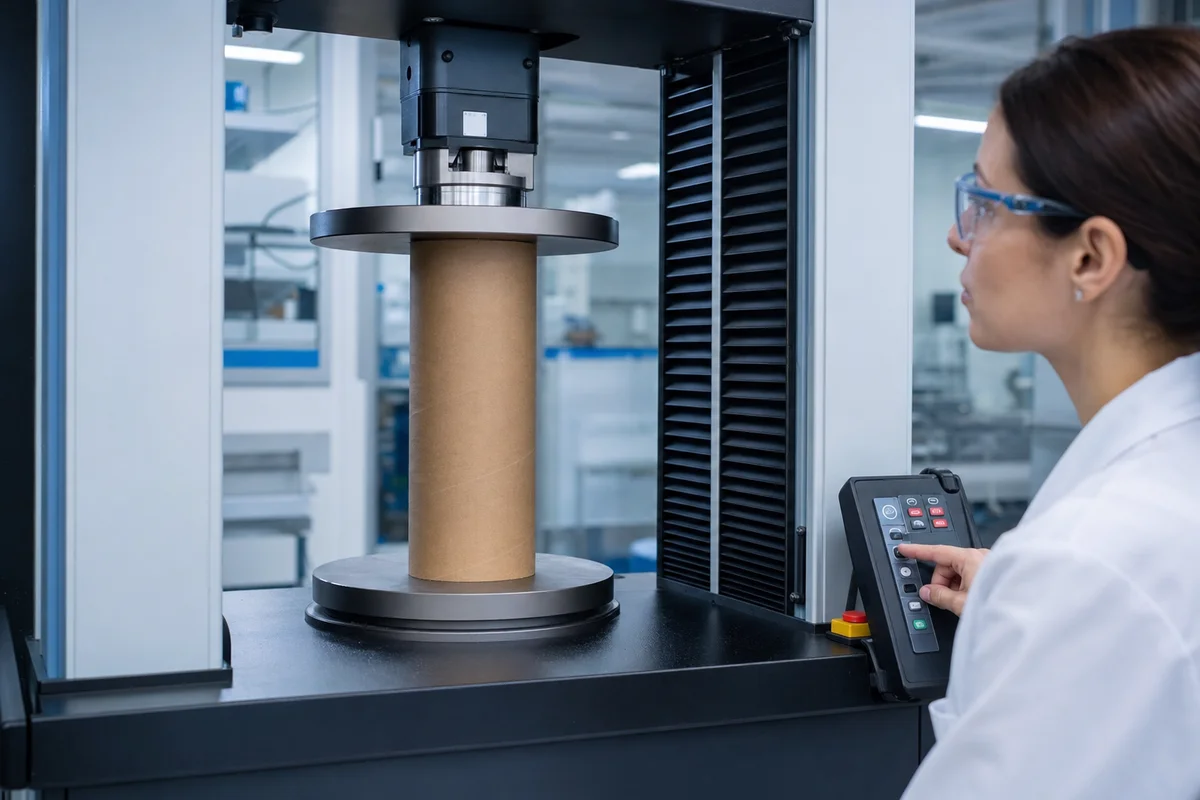
Define whether your spec is fresh-off-line or conditioned (humidity/storage). Our high-speed core case approved on 1000N+ conditioned crush and a 150 m/min qualified winding window—always mirror your customer’s test method.
Documentation for Customer Audits
Industrial cores typically align with FDA 21 CFR 175.105 (indirect contact). FDA 176.170 applies to direct liquid contact such as paper straws—do not cite 176.170 for textile or film cores. Bundle TDS, SDS, and DoC per batch; see regulatory resources for audit packages.
Pushing Speed Without Losing Crush?
Review industrial tube and core adhesives for high-solid dextrin/PVA winding, cutoff control, and conditioned crush qualification.
See Industrial Tubes & CoresCase Evidence: High-Speed Tube Winding
A North American tube converter stabilized a faster program by matching wet tack, add-on, and cutoff behavior to conditioned crush instead of increasing glue laydown. Results included a 150 m/min qualified window, 1000N+ crush target, and less cutoff intervention—full narrative: industrial core high-speed winding case study.
When to Escalate to Custom Formulation
Escalate when recycled furnish, hybrid ply builds, or tail-tie/hot-melt combinations fall outside standard dextrin/PVA windows. Metallocene tail tie and core-start hot melts are separate from spiral body glue—see hot-melt adhesives and water-based platforms. Our lab cycle for custom winding grades is typically about 7 days once components and speed range are defined.
Final Takeaway
Maximizing core and board strength is a process equation: right solids, controlled add-on, honest tension, and crush tested the way your customer tests. Start with failure mode (soft cut, dog-ear, conditioned crush drop), then tune chemistry—not the reverse. For tube-specific grades, see industrial tubes & cores; for failure-mode deep dive, read the high-speed core troubleshooting post linked above.
Frequently Asked Questions
Can you customize adhesive for recycled paper board?
Yes. We adjust solid content and penetration agents for recycled furnish while qualifying radial crush on your actual ply build—targets like 1000N+ are validation goals on specific programs, not universal guarantees.
Which FDA standard applies to industrial cores?
Industrial cores and most winding tubes align with FDA 21 CFR 175.105 (indirect contact). Direct liquid contact formats such as paper straws require 176.170 review under a different product path.
What speed can your tube adhesives run?
Grades are engineered for high-speed spiral winders; published case work qualified about 150 m/min with clean cutoff when rheology and add-on matched the line. Your OEM, ply count, and dryer capacity set the real ceiling.
Starch or PVA for my winder?
Starch/dextrin is economical on many lines; PVA hybrids often help when you need faster green strength and conditioned crush at higher speeds. See our starch vs. PVA guide and run side-by-side trials on identical add-on.
What is your MOQ for tube winding adhesives?
Standard MOQ is about 1,000 kg. We offer free 1 kg lab samples and 20 kg trial pails for machine validation.
Trial ply bond on your winder
Request complimentary 1 kg lab material (shipping prepaid by recipient) after screening on your substrate and line conditions.
References
Technical Disclaimer: All technical data is based on standard laboratory conditions. Users should perform their own verification testing to confirm suitability for specific substrates, processes, and regulatory requirements. Senda Glue makes no warranties, express or implied, and assumes no liability for improper use of the products or reliance on this information.