Paper Tube Adhesive for Cores, Tubes & High-Speed Winding

Factory-direct paper tube glue and paper core adhesive for textile carriers, film cores, and tape cores. Dextrin and PVA water-based grades tuned to your ply count, add-on, and radial crush targets—1 kg lab screen, then 20 kg winder trial.
*Complimentary 1 kg lab material · shipping prepaid by recipient. 20 kg pails for winder trials after screening. MOQ typically ~1,000 kg (IBC).*
✅ Crush & cutoff qualified on your stock • Starch/dextrin & PVA routes • REACH statements on request
Optimized For:
Crush-Qualified
Radial strength screened on your ply stack
Line-matched
Rheology tuned to mandrel speed & cutoff
40–60% solids
Grade-dependent solids for drying window
Tube & Core Programs We Qualify
Textile, film, and tape lines stress the bond differently—one tube glue rarely covers every speed, solids, and crush target.
Textile Tubes (DTY/POY)
High-tension yarn carriers need stiff seams that resist radial collapse under take-up—qualify crush after conditioning, not only at the mandrel.
Film & Foil Cores
Smooth bond lines that limit surface impression on sensitive film—balance wet tack, cutoff, and oven drying on your wall build.
Tape Cores
Dimensional stability across temperature swings for adhesive and masking tape programs—screen geometry and crush together.
From Collapse & Dog-Ears to a Qualified Winding Window
Most tube failures are process-window problems—green strength, cutoff, and conditioned crush—not a single “strongest glue” label.
Common Failures
Radial Tube Collapse
Weak or mismatched bonding lets cores implode under winding tension or stack load—often a batch rejection, not a one-off defect.
Soft Cuts & Dog-Ears
Slow wet tack leaves the tube too soft for immediate precision cutting—edge curl and shape drift at higher mandrel speeds.
High Moisture & Energy Load
Excessive add-on traps water between plies, stretching oven time and making post-conditioning crush less predictable.
Our Solution
Conditioned Crush Screening
Lab and line trials target your crush spec on the actual ply stack—including after storage and humidity exposure.
Fast Wet Tack & Clean Cutoff
Rheology tuned for green strength at the mandrel so operators see cleaner cuts without simply raising glue weight.
Solids & Drying Fit
Match solid content and open time to your oven capacity—often the lever before chasing a higher-viscosity grade.
High-Speed Winding Qualification
Before you raise mandrel speed, validate chemistry fit, cutoff behavior, wet tack, and conditioned crush on the same core—not lab tack alone.

Common Failures at High Speed
Faster winding usually exposes machine-window issues before it exposes bond chemistry on paper.
-
Splashing and dog-ears when rheology breaks down at the applicator or knife.
-
Slow green strength that leaves the core too soft for immediate precision cutting.
-
Conditioned crush drop-off after storage, humidity swings, or high winding tension.
What to Verify Before Switching Chemistry
A fair comparison needs the same process conditions for each trial adhesive.
-
Paper grade, ply count, glue add-on level, and target wall construction.
-
Actual winding speed range, cutoff behavior, and drying window on the production line.
-
Fresh-cut stability and finished-core performance after conditioning.
Starch / Dextrin vs. PVA at High Speed
Both routes can work; they trade off different high-speed priorities.
-
Start with starch or dextrin when paper affinity, renewable-content positioning, and a stable line window matter most.
-
Move toward PVA/PVAc when faster wet tack, cleaner cut quality, or stronger conditioned crush matters more.
-
On mixed-demand lines, the answer is often a modified or blended system—not a pure chemistry pick.
Clean Cut, Wet Tack & Crush Checklist
Do not approve a tube adhesive on initial feel alone.
-
Can the core hold shape cleanly at the mandrel without edge curl or deformation?
-
Does wet tack build fast enough for handling and precision cutting at your qualified speed?
-
Does the finished core still meet crush and dimensional targets after storage or humidity exposure?
Share your line speed, paper grade, ply count, and target crush strength. We will narrow chemistry for sample review instead of guessing from generic tube-glue labels.
Lab Support for Tube & Core Converters
We simulate crush, cutoff, and conditioning on your paper—not generic “1000N guaranteed” marketing.
Radial Crush Screening
Crush and geometry checks aligned to your tension and stacking scenario—not a single lab default.
High-Speed Rheology Tuning
Applicator and knife behavior screened at the speed range you nominate for production.
Conditioning Protocol
Hold samples through humidity/storage cycles before approving a grade for export or textile programs.
Tune to Ply Count, Speed & Crush Target
Textile, film, and heavy-wall programs need different viscosity, solids, and technology—confirm on your winder, not from a generic table.
| Application | Technology | Viscosity (typical) | Engineering benefit |
|---|---|---|---|
| Textile tubes (DTY/POY) | 1,500–3,000 cps | High-solid dextrin / PVA | Stiff seams for high-tension take-up—crush qualified on your ply stack. |
| Film & tape cores | 1,000–2,500 cps | High-tack emulsion / PVA | Smooth surface and clean cutoff at your qualified winding speed. |
| Heavy-wall / fiber drums | 400–800 cps | Silicate / PVA blend | Rigidity for stacking loads—match oven drying to add-on and solids. |
Technology: 1,500–3,000 cps
Viscosity (typical): High-solid dextrin / PVA
Engineering benefit: Stiff seams for high-tension take-up—crush qualified on your ply stack.
Technology: 1,000–2,500 cps
Viscosity (typical): High-tack emulsion / PVA
Engineering benefit: Smooth surface and clean cutoff at your qualified winding speed.
Technology: 400–800 cps
Viscosity (typical): Silicate / PVA blend
Engineering benefit: Rigidity for stacking loads—match oven drying to add-on and solids.
Why Tube Converters Shortlist Senda
Qualified crush windows, mandrel-tuned paper tube adhesive, and chemistry choice (starch/dextrin vs PVA) without unverified speed or cost guarantees.
Crush & Cutoff on Your Line
Dual Chemistry Routes
Audit-Ready Paperwork
Documentation for QA & Export Programs
Industrial tube grades are not food-contact straws—request statements matched to your end use (packaging vs industrial carrier).
Compliance Scope (Confirm for Your Program)
Food-contact packaging tubes may need 175.105 paperwork; industrial textile cores may need REACH/RoHS only—nominate the grade before you claim audit readiness.
- FDA 175.105 ( Indirect food-packaging routes where applicable (structure-dependent) )
- REACH & RoHS ( SVHC statements on request )
- Repulpable routes ( Water-based options—mill and coating stack dependent )
Batch-level TDS, SDS, DoC, and CoA for the nominated grade—scoped to your tube program.
Related Paper Converting Lines
Tube winding is one station—compare dry powder preparation and edge protection programs without mixing their qualification logic into liquid core glue.

Paper Tube Adhesive Powder
Dry powder starch/dextrin route for plants that can mix or cook adhesive on site—compare freight, preparation labor, pot life, and tube crush before switching.
View powder adhesive route
Edge Protector Adhesives
V-board and U-profile ply bonding for pallet protection—beam strength under strap tension, distinct from spiral core seams.
View edge protector grades
High-tension winding on wide textile cores kept collapsing until we qualified a higher-solid PVA on our ply stack. Senda’s crush and conditioning protocol gave us audit-friendly data—not just a datasheet claim.
Technical Proof (Optional Reading)
Share with process engineering after you request samples. Primary path: lab screen + audit package via the buttons above.
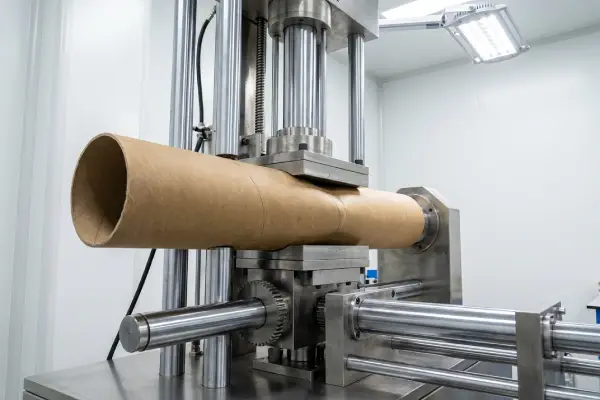 CASE STUDY
 Case Study: High-Speed Tube Winding Window
How a converter matched wet tack and cutoff to hold conditioned crush without only increasing glue laydown.
Read the Full Story →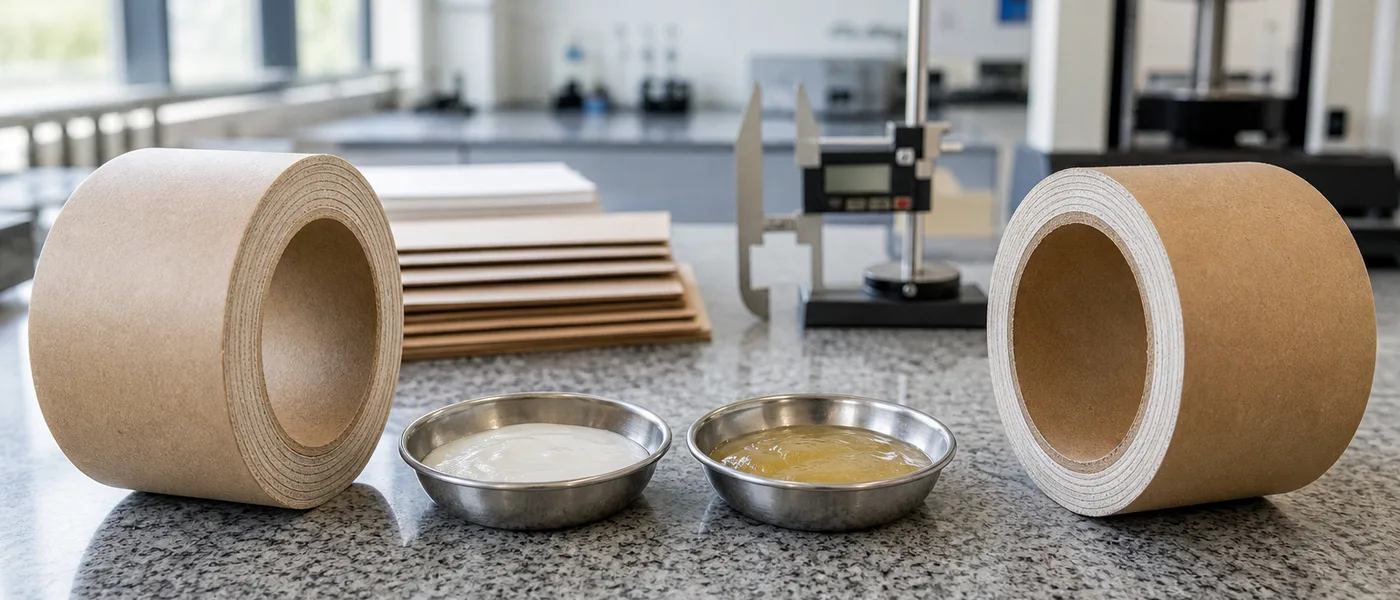 CHEMISTRY GUIDE
 Guide: Starch vs. PVA for Tube Adhesives
Compare bio-based positioning, wet tack, speed stability, and finished-core crush before you switch chemistry.
Read Full Article →Frequently Asked Questions
Find answers to common questions about our adhesive solutions and services.
Starch/dextrin vs PVA—which paper tube adhesive should we trial first?
Many lines start with starch or dextrin for cost and paper affinity; move toward PVA/PVAc when wet tack, cutoff, or conditioned crush need more headroom. Read the starch vs PVA guide (Resources) before you switch chemistry.
Are starch-based tube adhesives bio-based or biodegradable?
What are MOQ, lead time, and sample options?
MOQ is typically ~1,000 kg (often IBC for liquids). Lead time is often 7–10 business days for qualified grades. Complimentary 1 kg lab material (recipient prepaid shipping), plus 20 kg pails for winder validation.
How do you qualify radial crush strength?
We screen fresh-cut and conditioned cores on your paper grade, ply count, and add-on—targets are agreed in trial (e.g. textile programs vs film cores), not guaranteed from a generic N value.
What winding speeds can your adhesives run?
Speed limits are line-specific—applicator, solids, drying, and wet tack must be validated together. Share your mandrel RPM range; do not approve from a marketing m/min figure alone.
What solid content do you supply for our winding speed, paper grade, and drying window?
Often ~40–60% depending on drying capacity and stiffness needs—confirm on the grade TDS for your oven window.
Are formulations REACH and RoHS documented?
REACH/RoHS statements are available on request for nominated grades—include your export market in the audit package request.
What shelf life and storage conditions should we plan for the approved grade?
Typically 6–12 months sealed at about 5–35°C for water-based grades—protect from freezing; confirm on the TDS.