Optimize adhesive coverage, nip pressure, and paper grade on V-board lines to stop strapping delamination, soft corners, and slow drying—plus beam-strength qualification for heavy-duty profiles.
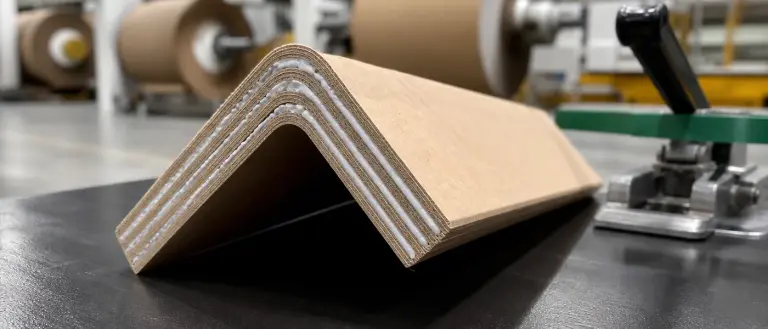
Table of Contents
- ·Why V-Board Fails Under Strapping
- ·Coverage vs. Glue Weight
- ·Compression Pressure and Nip Design
- ·Paper Grade and Ply Count Trade-Offs
- ·High-Solid VAE for Faster Dry-Down
- ·Beam Test Interpretation (Qualitative)
- ·Case: Strapping Delamination Eliminated
- ·Repulpable Bond and Compliance
- ·Startup Checklist
- ·Final Takeaway
- ·Frequently Asked Questions
V-board looks fine on the laminator and fails on the pallet. Strap tension finds the weak ply line first—often at the outside angle—then propagation looks like “bad paper” when the real issue is coverage, compression, or moisture left in a starch-heavy glue.
This guide is for edge-protector converters running V-board, U-profile, and heavy-duty guards—the three levers on our edge protector page: coverage, compression, and paper grade. It links to the strapping delamination case; it does not replace your 3-point bend fixture or customer load rating.
Why V-Board Fails Under Strapping
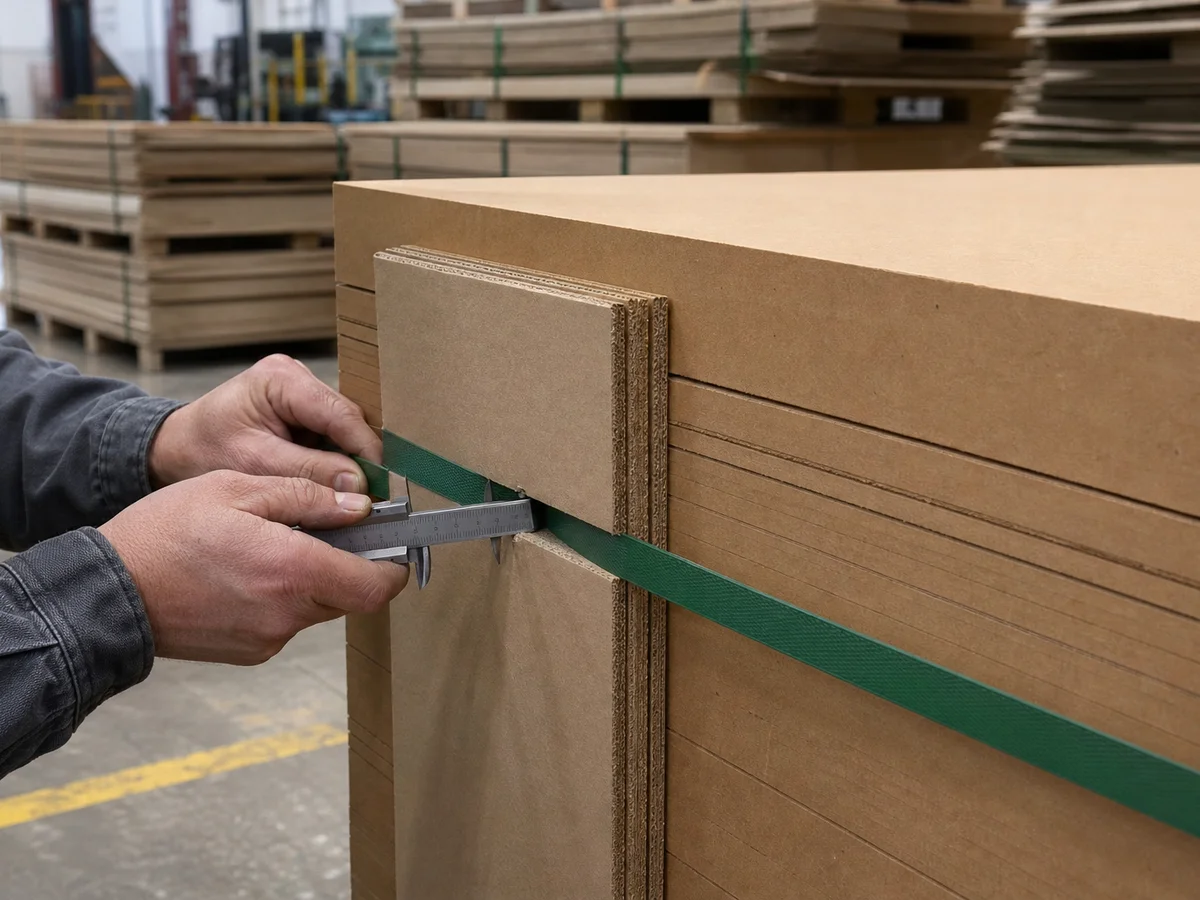
Ply separation under high-tension strapping is shear failure between layers, not edge crush alone. Standard starch routes can feel stiff in the hand but open when strap load concentrates on a thin wet bond line. High-shear VAE grades are tuned for internal bond under packing stress—our case converter reported zero delamination in strap testing after switching chemistry and tightening process windows.
- Outside angle opens first → check spread uniformity on the acute corner ply.
- Soft edges in transit → often under-compression or high moisture slowing crystal set.
- Lot-to-lot beam scatter → solids drift or paper supplier change without re-qualification.
Coverage vs. Glue Weight
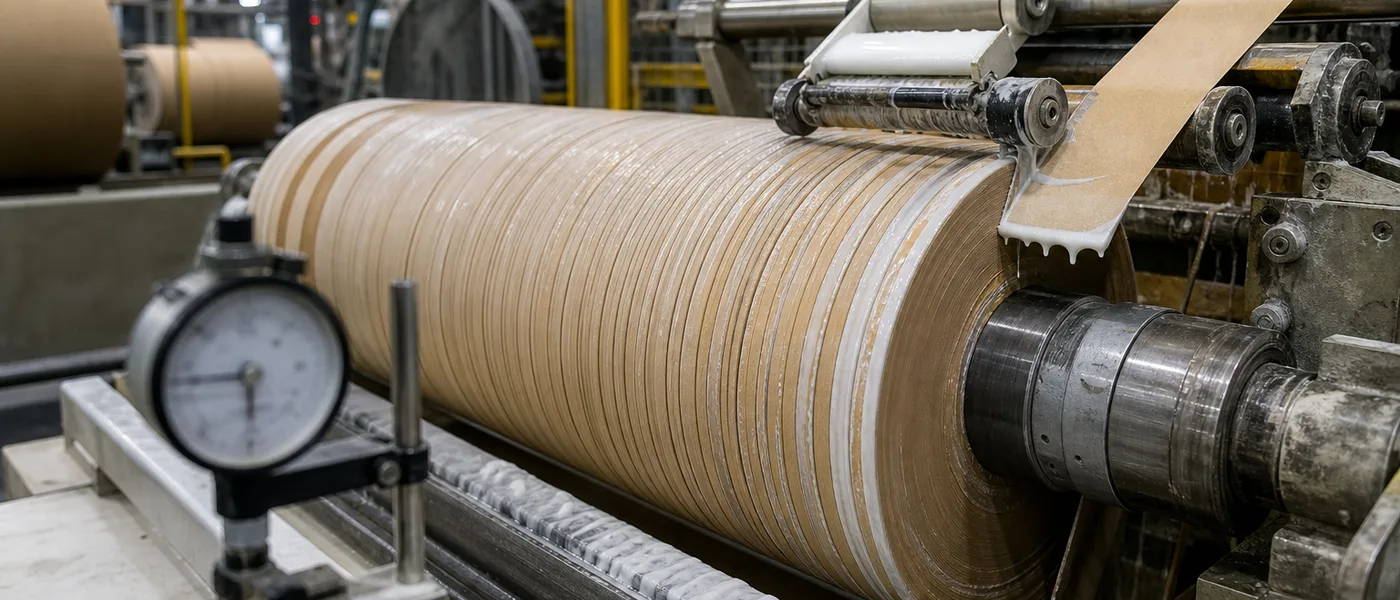
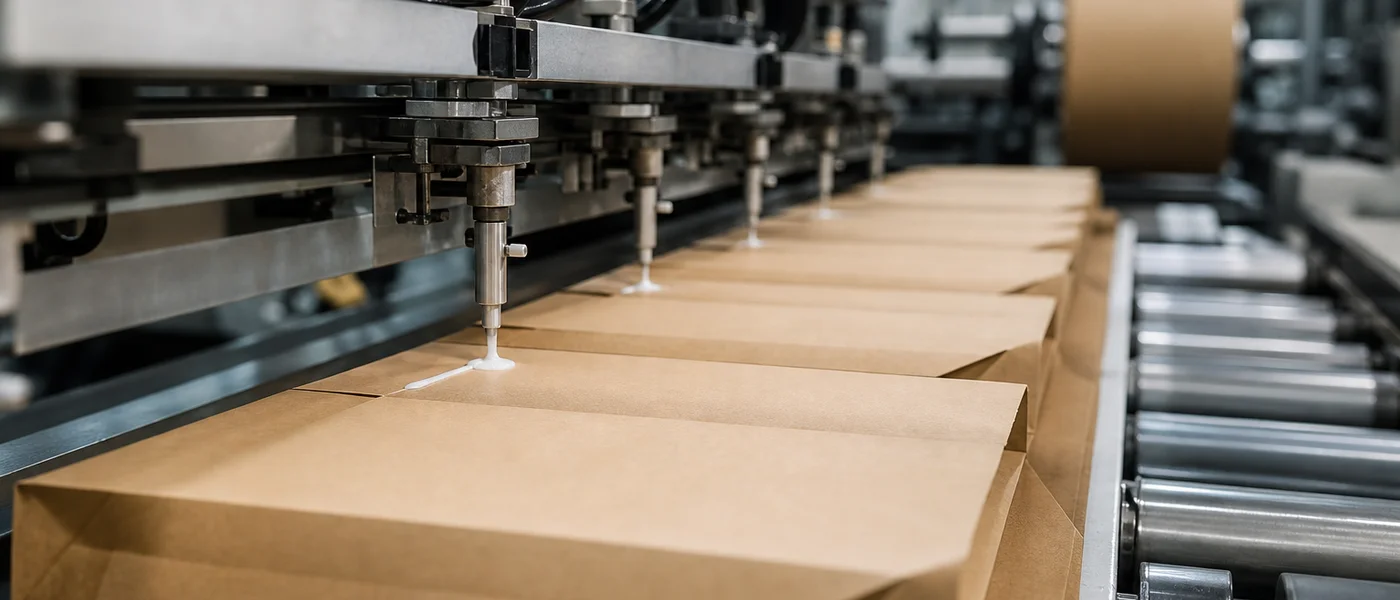
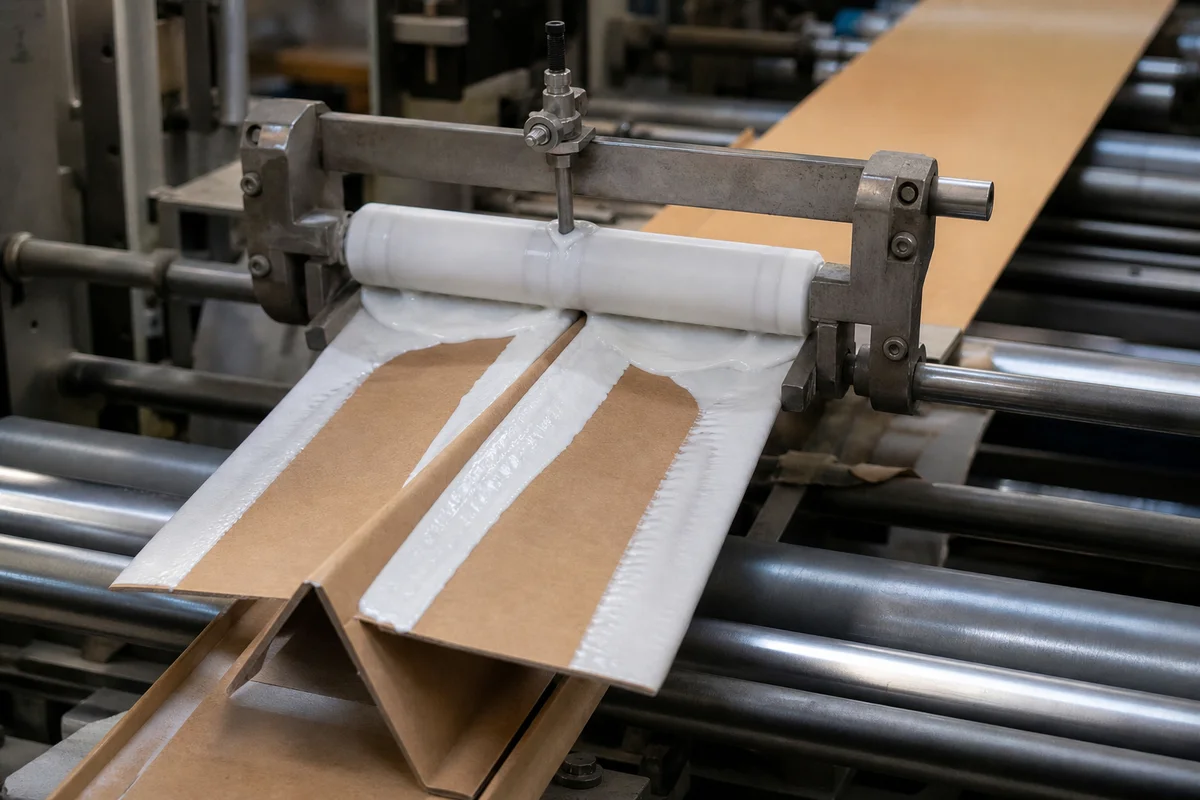
More glue is not more stiffness. Excess water increases drying time and can plasticize the profile before strap load. Target consistent coat weight per ply with even coverage on the scarfed edges. Matrix bands cite 500–1,500 cps for standard V-board (about 30–60 m/min lines) and 1,000–3,000 cps for heavy-duty profiles—confirm on your applicator (roller/wheel/nozzle).
Compression Pressure and Nip Design
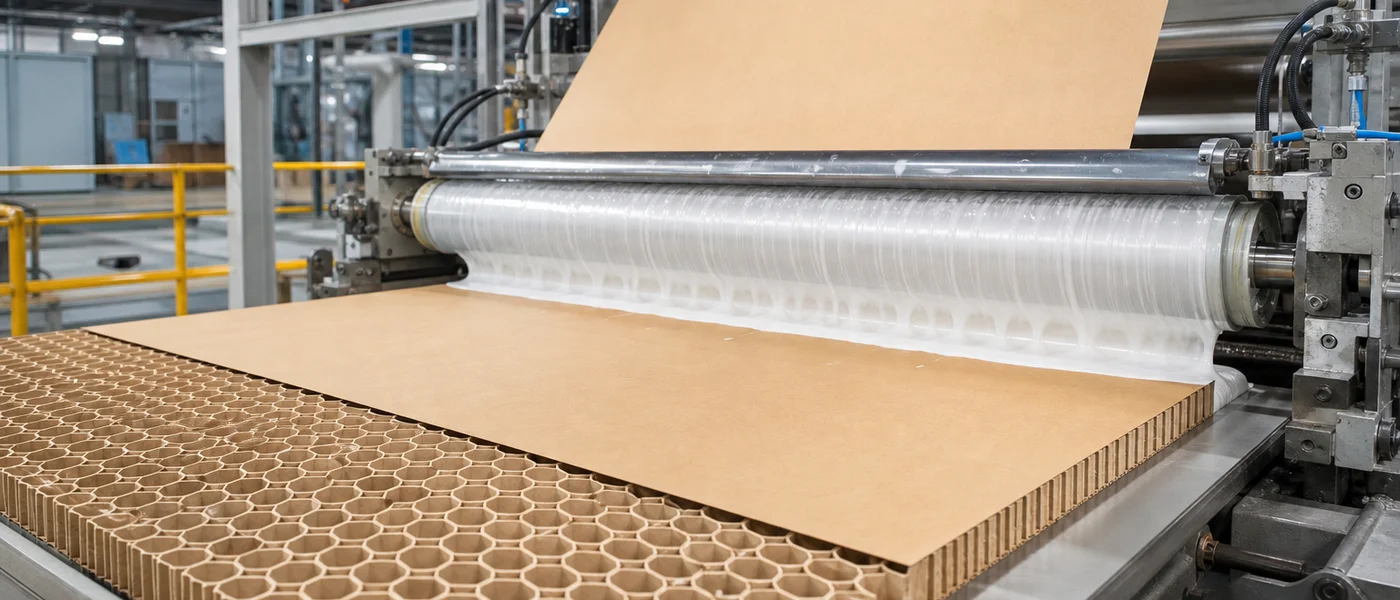
Adhesive must be forced into fiber before it sets. Light nip pressure leaves a dry interface; excessive pressure can crush thin recycled plies. Tune pressure with dwell time so fast-tack VAE builds green strength before the profile exits the compression zone—especially on >4 mm wall heavy-duty guards.
Paper Grade and Ply Count Trade-Offs
Higher ply count increases beam potential but also multiplies bond area that must set uniformly. Recycled liner furnishes need penetration-friendly rheology without flooding the profile with water. Document GSM and supplier lot on the production traveler when strap failures spike.
High-Solid VAE for Faster Dry-Down
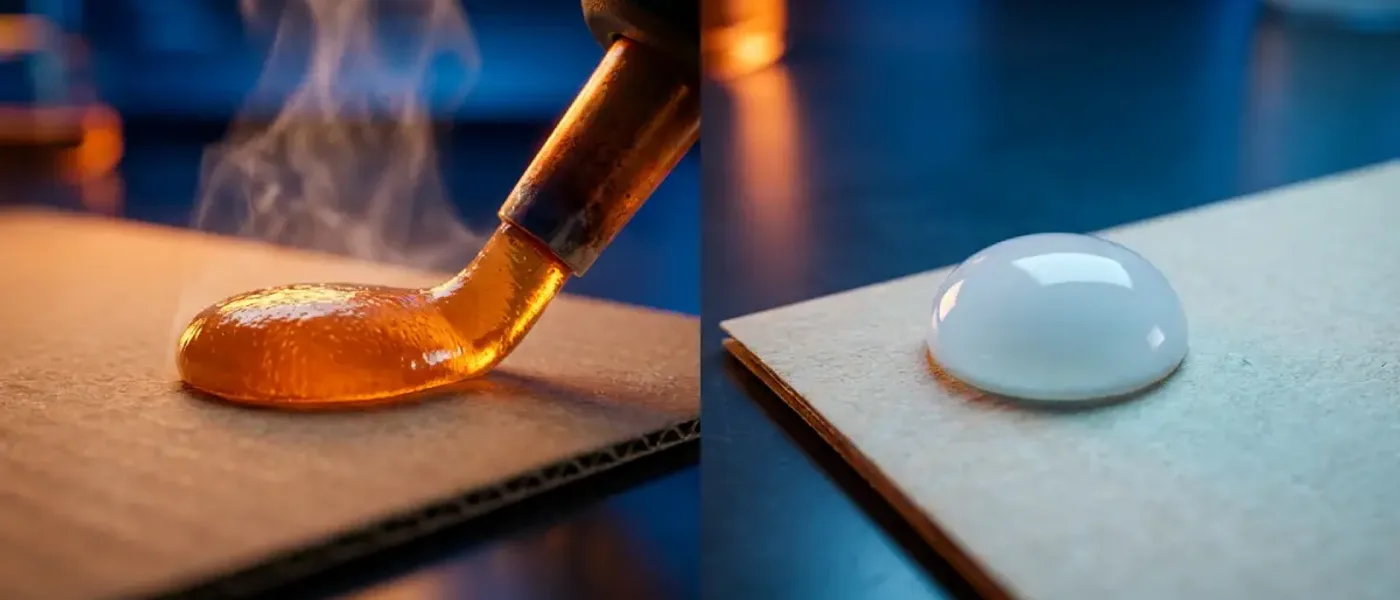
High-solid, low-water formulas shorten dry-to-cut time and reduce oven energy versus legacy starch—whyChoose cites directional TCO improvement up to ~15% from mileage/energy on some lines, not a guaranteed savings for every plant. Capabilities copy references clean application up to 120 m/min on tuned lines; whyChoose mentions >100 m/min—treat both as qualification contexts, not merged nameplate limits.
Engineering Pro Tip
Cold-storage matrix row references -20°C integrity for export-grade profiles—only specify that grade when your supply chain includes freezer storage; do not assume all VAE routes are freezer-stable.
Ply Separation Under Strapping?
Review edge protector adhesives for high-shear VAE ply bonding, beam strength, and repulpable compliance—with trial pail support.
See Edge Protector AdhesivesBeam Test Interpretation (Qualitative)
Lab 3-point bending screens stiffness trends between adhesive lots. Compare trials at the same ply build and moisture conditioning. A 15% beam-strength improvement appears in our published case and matching testimonial on a European protector program—that is customer validation language, not a universal spec bump for every V-board plant.
Case: Strapping Delamination Eliminated
An appliance protector manufacturer fighting ply separation under strap load moved from starch to a higher-stiffness VAE route with tighter moisture and compression control. Observed outcomes in the case: zero delamination in strap test, 15% higher beam strength, and faster dry-to-cut on heavy profiles. Full narrative: edge protector strapping delamination case study.
Repulpable Bond and Compliance
Edge protectors in paper recovery streams need repulpable VAE/PVA bonds. Food-adjacent secondary packaging typically aligns with FDA 21 CFR 175.105. Related structural converting: honeycomb board adhesives and water-based platforms.
Startup Checklist
- Run strap-tension test on production boards, not only lab peel.
- Log coat weight per ply and nip pressure each shift.
- Match viscosity band to line speed (30–60 vs. high-speed heavy-duty).
- 3-point bend compare old vs. new lot at conditioned moisture.
- Request batch DoC for customer audits.
Final Takeaway
V-board rigidity is internal bond under strap shear, delivered by coverage, compression, and paper grade working together. Fix delamination at the strap test, then optimize beam and speed. Submit board stock for free strength and strap screening if you want a lab-backed grade recommendation.
Frequently Asked Questions
Does this work for heavy-duty V-board over 4 mm wall?
Yes. High-stiffness VAE grades target heavy profiles with stronger internal bond and spring-back control—qualify with strap-tension and 3-point bend on your exact ply build.
How much beam strength improvement should I expect?
Our published case and testimonial cite about 15% higher beam strength versus the prior starch route on that program. Your result depends on paper grade, ply count, and process control—run side-by-side trials.
What line speeds are supported?
Standard grades are tuned for roughly 30–60 m/min; high-speed capability up to about 100–120 m/min appears in page copy for rheology-optimized lines—validate splashing and coverage on your laminator.
Is the adhesive repulpable?
Yes. Edge protector formulations are designed to separate in standard paper recycling streams.
What is your MOQ?
Standard MOQ is about 1,000 kg. We offer free 1 kg lab samples and 20 kg trial pails for lamination validation.
Screen bond on your V-board line
Request complimentary 1 kg lab material (shipping prepaid by recipient) after screening on your substrate and line conditions.
References
Technical Disclaimer: All technical data is based on standard laboratory conditions. Users should perform their own verification testing to confirm suitability for specific substrates, processes, and regulatory requirements. Senda Glue makes no warranties, express or implied, and assumes no liability for improper use of the products or reliance on this information.