Control moisture introduction, glue spread, and lamination pressure to stop honeycomb curling, core delamination, and drying bottlenecks on structural panel and paper-pallet lines.
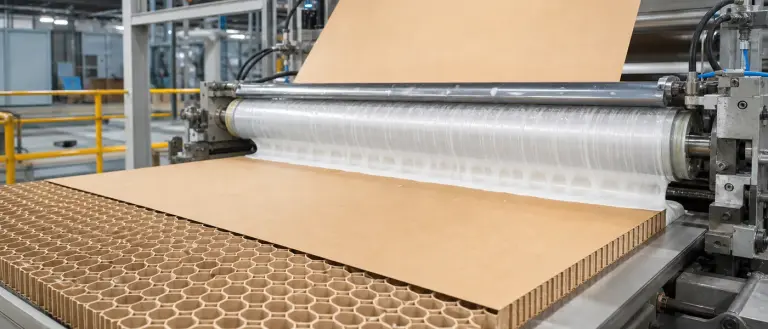
Table of Contents
- ·Banana Curl: Moisture Mechanics
- ·Spread Rate and Coat Weight on Liners
- ·Pressure and Clamp/Oven Balance
- ·Core Delamination Under Pallet Load
- ·Chemistry Paths: Dextrin vs. High-Solid PVA
- ·Throughput When Drying Is the Bottleneck
- ·Case: Anti-Curling Switch on Structural Panels
- ·Repulpable Structure and Compliance Note
- ·Startup Checklist
- ·Final Takeaway
- ·Frequently Asked Questions
Honeycomb panels fail in two visible languages: they curl like a banana, or they stay flat until load—and then delaminate. Both trace back to how much water you inject into kraft, how evenly adhesive wets the liner, and stack conditioning. This guide is for honeycomb lamination teams; for tube/core chemistry trade-offs, see starch vs. PVA for paper tubes.
This guide is for honeycomb lamination leads building paper pallets, door cores, furniture panels, and protective buffers—the defect checklist behind our honeycomb board adhesives page. It pairs with the anti-curling case study; it does not replace your compression test fixture or customer pallet spec.
Banana Curl: Moisture Mechanics
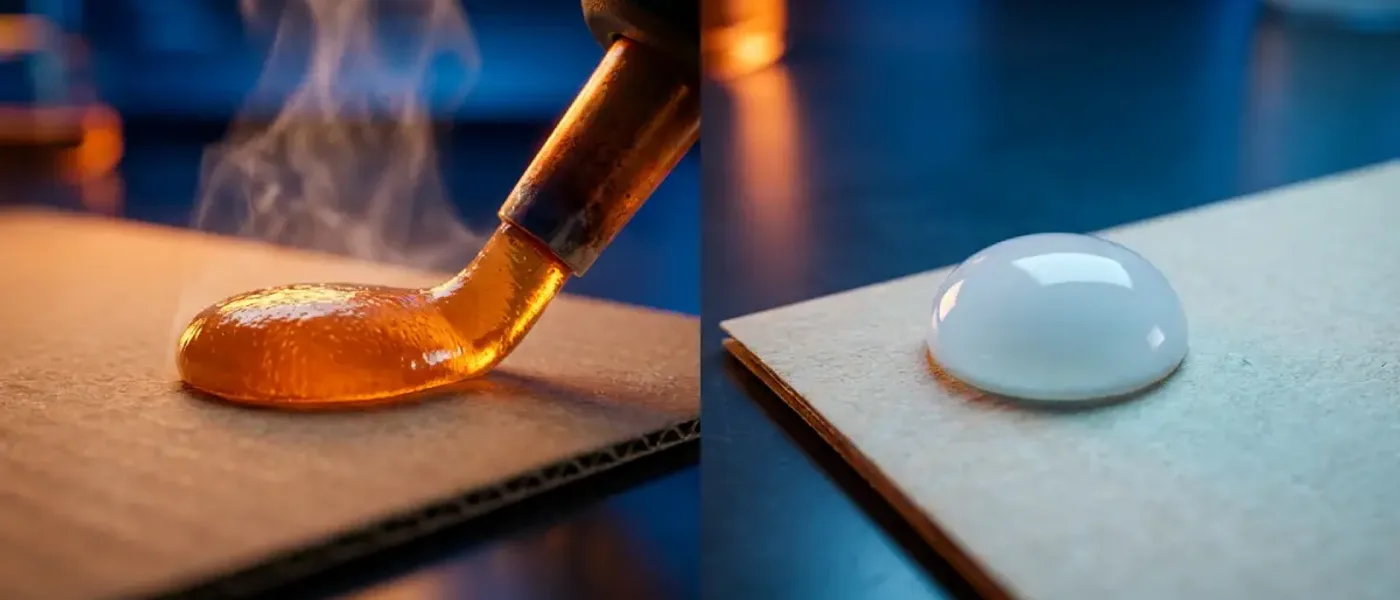
Standard high-water glues swell fibers unevenly as they dry. One face moves more than the other and the panel arcs—the banana effect. Door fillers and automatic pallet lines reject curved boards, so curl is scrap, not aesthetics. Low-water, high-solid routes minimize moisture transfer so liners and core stay dimensionally stable through curing.
- Symptom: panel bows after stack storage → check total moisture add-on, not only open time.
- Symptom: curl worse on recycled liner → penetration agents must not equal “more water.”
- Symptom: flat off press, curved next morning → drying/clamp profile incomplete.
Spread Rate and Coat Weight on Liners
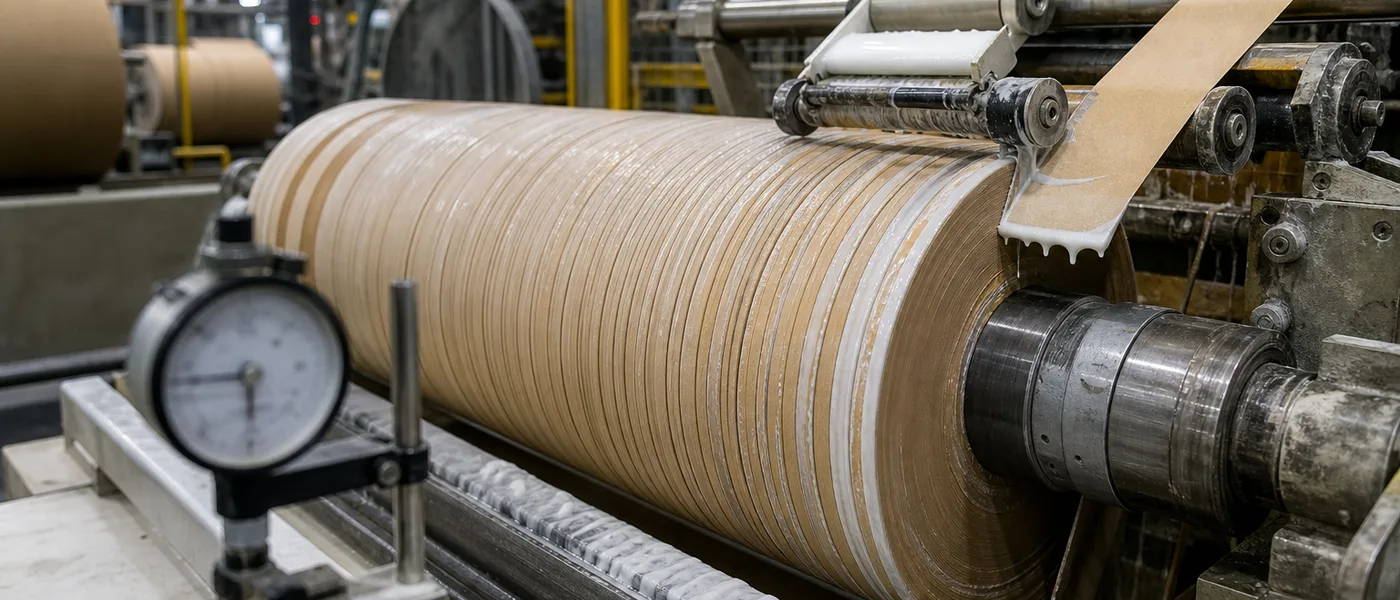
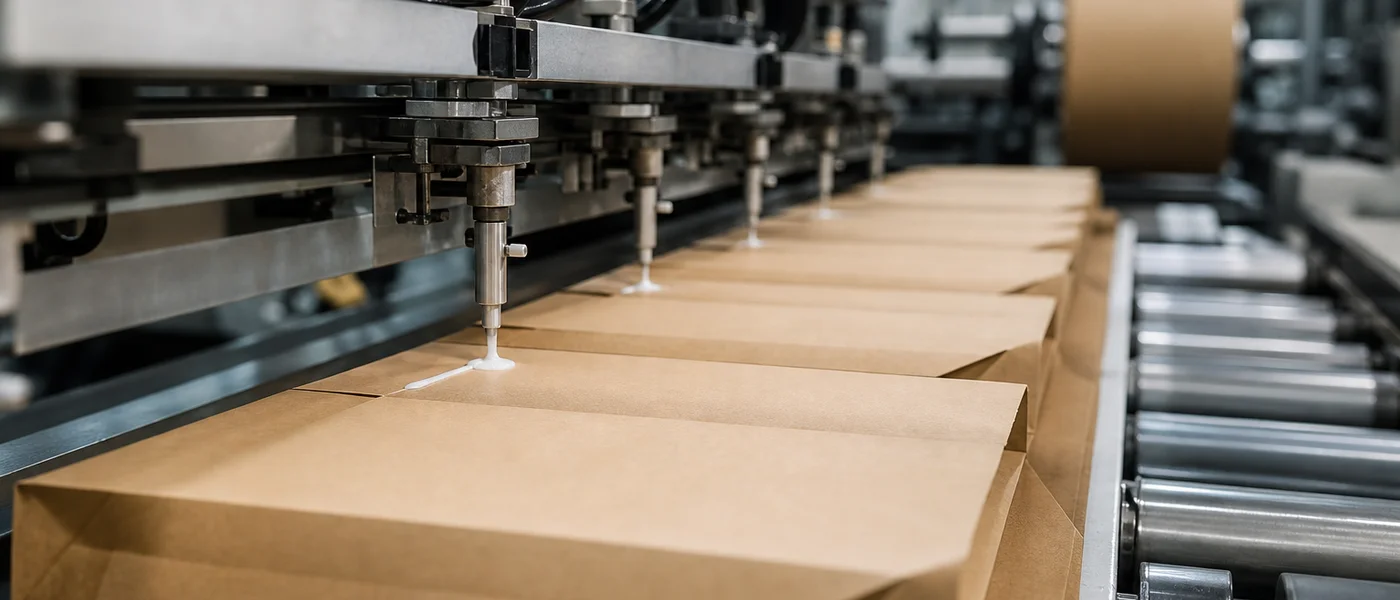
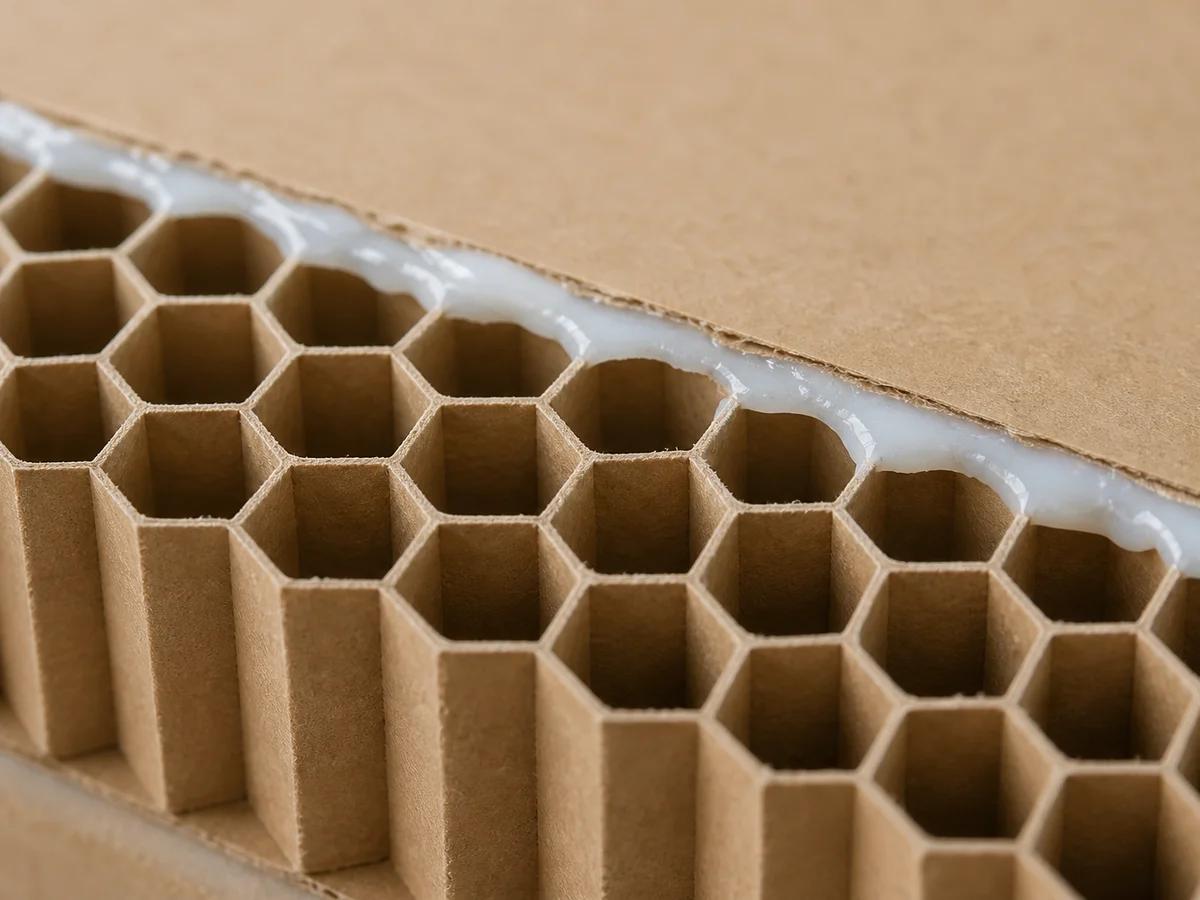
Spread rate sets how much adhesive enters the hex cells versus sitting on the liner surface. Too little: weak mechanical lock under compression. Too much: moisture load rises without proportional strength gain. Matrix references include bio-based dextrin at ~800–1,500 cps for core expansion/pull-winding and high-solid PVA at ~2,000–4,000 cps for lay-flat panel lamination—use supplier TDS for your GSM and cell size.
Pressure and Clamp/Oven Balance
Nip pressure drives adhesive into kraft; clamp time and oven energy remove water. If pressure is high but dwell is short, you trap moisture. If oven is aggressive but pressure is light, you dry the surface while the core stays wet—curl returns later. Fast-break emulsion technology on our page is aimed at releasing moisture faster in the nip stage, which can shorten clamp/oven time (case and whyChoose cite up to 20% faster lamination throughput in customer programs—not a universal plant guarantee).
Core Delamination Under Pallet Load
Delamination is liner release from hex cells when static loads stack on paper pallets. Deep-penetration tack with wetting agents is meant to create a mechanical lock in the cell walls. Vertical compression targets above 1000 kg/m² appear on our page with appropriate core materials (per FAQ)—qualify on your core density, facing paper, and test method.
Engineering Pro Tip
WhyChoose copy also mentions 15% lower energy consumption in some programs. Treat energy and speed claims as trial outcomes tied to reduced drying time, not marketing defaults for every laminator.
Chemistry Paths: Dextrin vs. High-Solid PVA
- Core expansion / pull-winding: Bio-based dextrin—high wet tack to limit cell collapse during expansion; repulpable starch route.
- Panel lamination (lay-flat): High-solid PVA—ultra-low moisture for anti-curl door cores and furniture panels.
- Heavy structural loads: Toughened PVA blend for pallet-grade rigidity when flatness and compression must both pass.
Banana Curl or Pallet Delamination?
Review honeycomb board adhesives for low-moisture lay-flat lamination, compression qualification, and repulpable dextrin/PVA options.
See Honeycomb Board AdhesivesThroughput When Drying Is the Bottleneck
When the laminator waits on panels to stabilize, line capacity is capped by drying—not bond chemistry. Lower water load per square meter is the lever that unlocks speed. Compare trials on time-to-flat and compression after conditioning on the same panel build before declaring a winner.
Case: Anti-Curling Switch on Structural Panels
A structural honeycomb converter fighting banana curl and long drying windows moved to a lower-moisture lamination system. Qualification kept lay-flat and compression linked—flatter panels still had to meet load expectations for pallets and door cores. Results: more stable lay-flat output, 1000 kg/m²+ compression target in scope, and less drying delay. Full story: honeycomb board anti-curling case study.
Repulpable Structure and Compliance Note
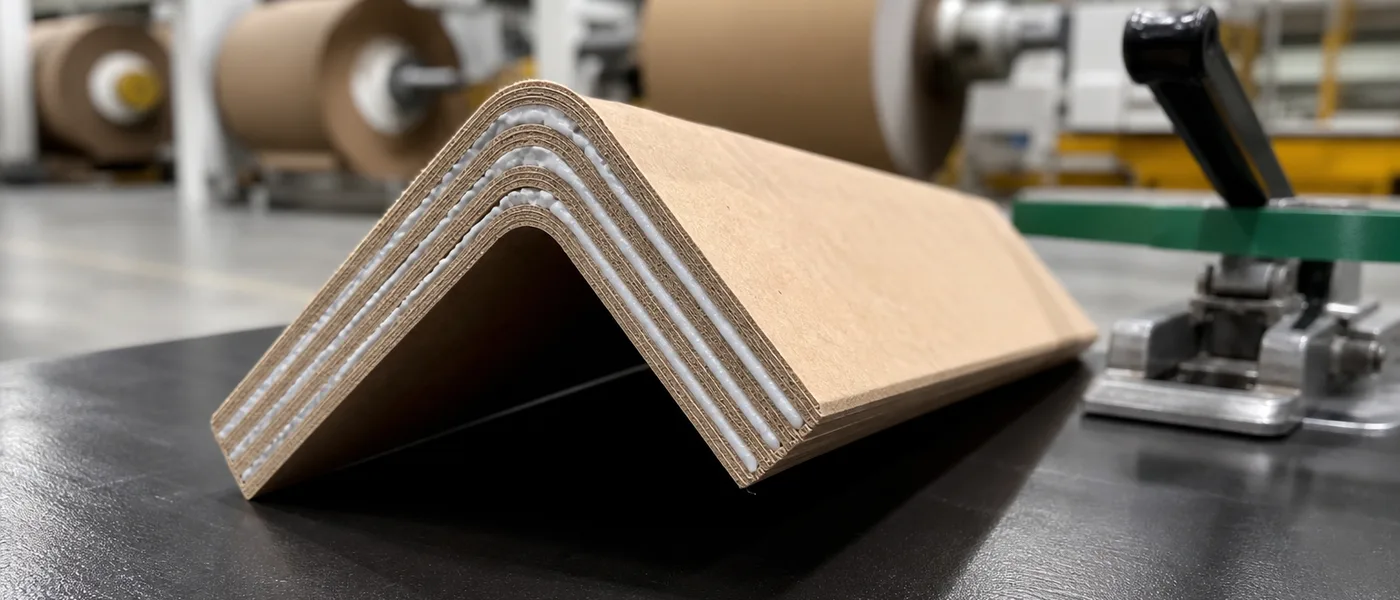
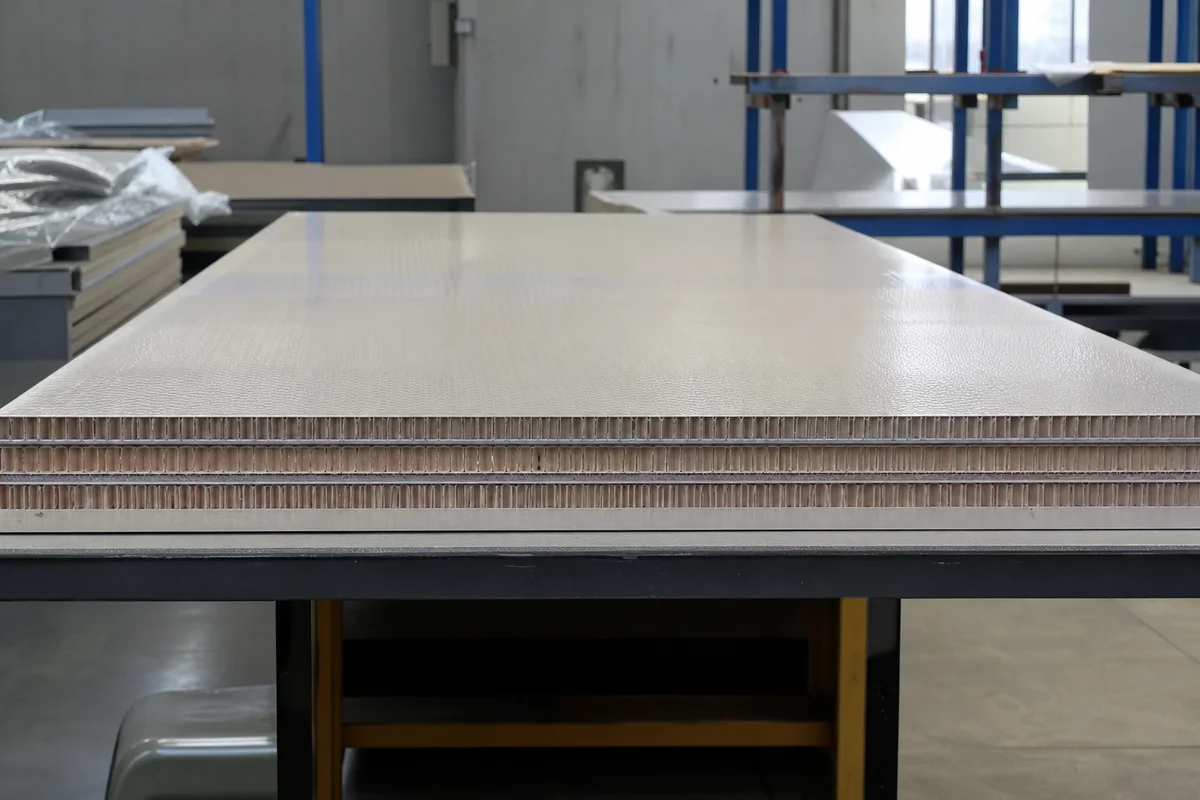
Bio-based dextrin routes support repulpable honeycomb structures in standard fiber recovery streams. Food-adjacent secondary packaging often aligns with FDA 21 CFR 175.105—not direct liquid contact for every honeycomb build. For pallet-only industrial use, still document REACH and customer audit needs. Related structural converting: edge protectors.
Startup Checklist
- Measure curl direction and magnitude after conditioned storage.
- Log spread rate, coat weight, and solids per liner GSM.
- Match nip pressure and clamp time to adhesive water load.
- Run vertical compression on the same panels you flatness-tested.
- Compare dextrin vs. high-solid PVA on identical panel builds.
Final Takeaway
Honeycomb defect prevention is moisture management first, strength second. Control spread and pressure as a drying system, qualify flatness and compression together, then chase throughput. Submit honeycomb stock for lab anti-curl and compression screening if you want a structured grade recommendation.
Frequently Asked Questions
How do you prevent board curling?
Use low-water, high-solid formulations to limit moisture introduced into kraft fibers, then balance spread rate, nip pressure, and drying/clamp time so both faces dry evenly—eliminating the banana effect on most programs when the full system is tuned.
What compression strength can honeycomb panels achieve?
With appropriate core materials and facing paper, our adhesives support vertical compression strengths exceeding 1000 kg/m² in customer validation—always test your specific panel construction and load method.
Are honeycomb adhesives repulpable?
Yes. Bio-based dextrin and compatible PVA routes are designed to disperse in repulping for recyclable paper packaging structures.
Dextrin or PVA for my line?
Dextrin suits core expansion and pull-winding with high wet tack; high-solid PVA targets lay-flat panel lamination with minimal moisture. Heavy pallet loads may use toughened PVA blends—qualify flatness and compression together.
What is your MOQ?
Standard MOQ is about 1,000 kg. We offer 20 kg trial pails and free 1 kg lab samples for lamination screening.
Qualify lay-flat panels on your line
Request complimentary 1 kg lab material (shipping prepaid by recipient) after screening on your substrate and line conditions.
References
Technical Disclaimer: All technical data is based on standard laboratory conditions. Users should perform their own verification testing to confirm suitability for specific substrates, processes, and regulatory requirements. Senda Glue makes no warranties, express or implied, and assumes no liability for improper use of the products or reliance on this information.