Hot-Melt Adhesives for Fast Set, Clean Running & Chemistry Fit
Commercial hub for hot-melt on automated lines. Narrow EVA, metallocene, or HMPSA fit—then review the linked application notes and comparison guides for food packaging, char, and water-based tradeoffs.
Pick your application below—or share substrate, line speed, and set window. Food-contact routing starts on Paper Glue / food-contact programs.

Fast set
Handling strength screened at your compression window
Clean run
Char and buildup reviewed on your thermal profile
Substrates
Carton, bindery, film, label, and coated stock routes
Where Hot-Melt Adhesives Fit Best
This is a technology hub—each tile routes to a product program (not a single pillar). Match your line, then qualify for that application.
Box & Case Sealing
Metallocene and EVA for case erectors and shippers—compression set and nozzle cleanliness screened on your line.
Folding Cartons
Side seams on coated board—bead control, fast grab, and hold on varnished stock at your folder-gluer speed.
Perfect Binding
Spine strength on bindery lines—thermal stability and page-pull screened on your trim and transport protocol.
Labels, Tapes & HMPSA
PSA coating for tapes and labels—tack, coat weight, and converting stability on your coater (not finished tape rolls only).
Custom Hot-Melt Route
Unusual film, board, or maintenance target? Share applicator, substrate, and speed for a qualification path.
How to Choose the Right Hot-Melt System
The right route depends on line speed, thermal load, substrate surface, and maintenance tolerance on your equipment—not brochure tack claims alone.
What to Check First
Line Speed & Set Window
Machine timing first: Set too slow and handling strength arrives late; too fast and transfer and compression destabilize.
Tank Heat History
Dwell and temperature: Long residence and hot tanks can turn chemistry choice into char, buildup, and nozzle issues.
Substrate Energy & Coatings
Real facestock: Recycled corrugated, coated board, films, and PSA stocks change wet-out and hold at production speed.
How We Narrow the Options
Filter by Chemistry Family
EVA, metallocene, HMPSA solve different problems—we narrow by application, speed, and bond objective before comparing grades.
Review Thermal Load
Cleaner running is judged through your shift—tank temperature, hose path, dwell, and cleanup interval on your line.
Trial on Your Substrate & Head
Final fit on the line: Carton coating, film type, applicator, and output target—not lab peel charts alone.
Why Teams Shortlist Senda Hot-Melt
Qualify faster with chemistry matched to the machine—without treating EVA and metallocene as interchangeable SKUs.
Line-First Qualification
Uptime-Aware Chemistry
Honest Chemistry Routing
Hot-Melt Technologies by Chemistry
Three families—EVA for mainstream packaging economics, metallocene when cleaner thermal behavior matters, HMPSA when the job is pressure-sensitive coating.
EVA Hot Melts
Mainstream packaging route: Balanced set and carton bonding—compare against metallocene before you assume upgrade is required.
Metallocene Hot Melts
Cleaner thermal stability for maintenance-sensitive or high-speed lines—screen char and cutoff on your board and temperature.
HMPSA Systems
Pressure-sensitive coating—peel, tack, and coat weight for tape and label lines, not structural case sealing.
When to Choose Hot Melt vs Water-Based
Hot melt fits fast handling strength, compact process flow, and many coated or low-porosity substrates. Water-based fits porous paper, lower heat exposure, and cleanup priorities—compare both when food-contact or odor limits apply.
- Choose hot melt when you need immediate handling strength without a drying stage before downstream handling.
- Choose hot melt when coated board, films, or plastics make slow-setting water routes harder to wet out at speed.
- Choose water-based when porous paper, lower application temperature, or water cleanup matter more than instant set.
- Compare both when food-contact review, freezer exposure, or operator environment shape the final qualification path.
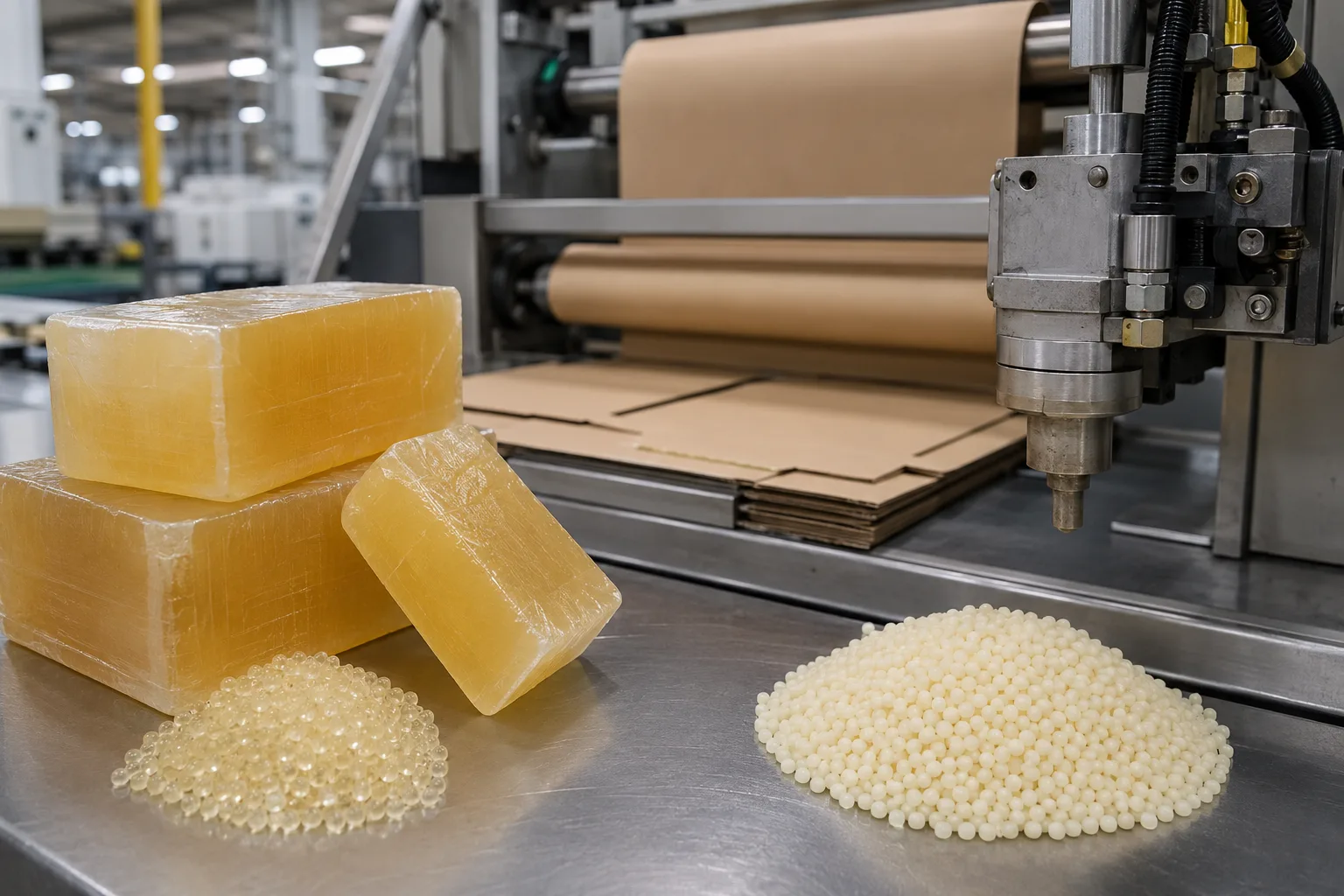
Hot-Melt Documentation Support
Regulatory fit depends on application and market. Request TDS, SDS, and compliance notes for the grade you nominate.
Common documentation paths
FDA and REACH claims are scoped per grade and structure—not site-wide certifications.
- FDA 175.105 routes (Indirect food-contact screening where applicable (structure-dependent).)
- REACH & RoHS (SVHC statements on request for export programs (per grade).)
- TDS + SDS (Via technical resources for operator training and plant approval.)
- Application notes (Food packaging, odor, or EHS comparisons documented per nominated grade.)
Batch-level TDS, SDS, and compliance notes scoped to your hot-melt program.

We had been buying on price until cleanup and nozzle issues showed up in output. Senda helped us qualify a cleaner-running grade for our speed and board mix—less char-driven downtime after line approval, not a generic “low char” datasheet claim.
Technical Proof (Optional Reading)
After you pick an application tile, use these for deeper reading—not a substitute for program-specific trials.
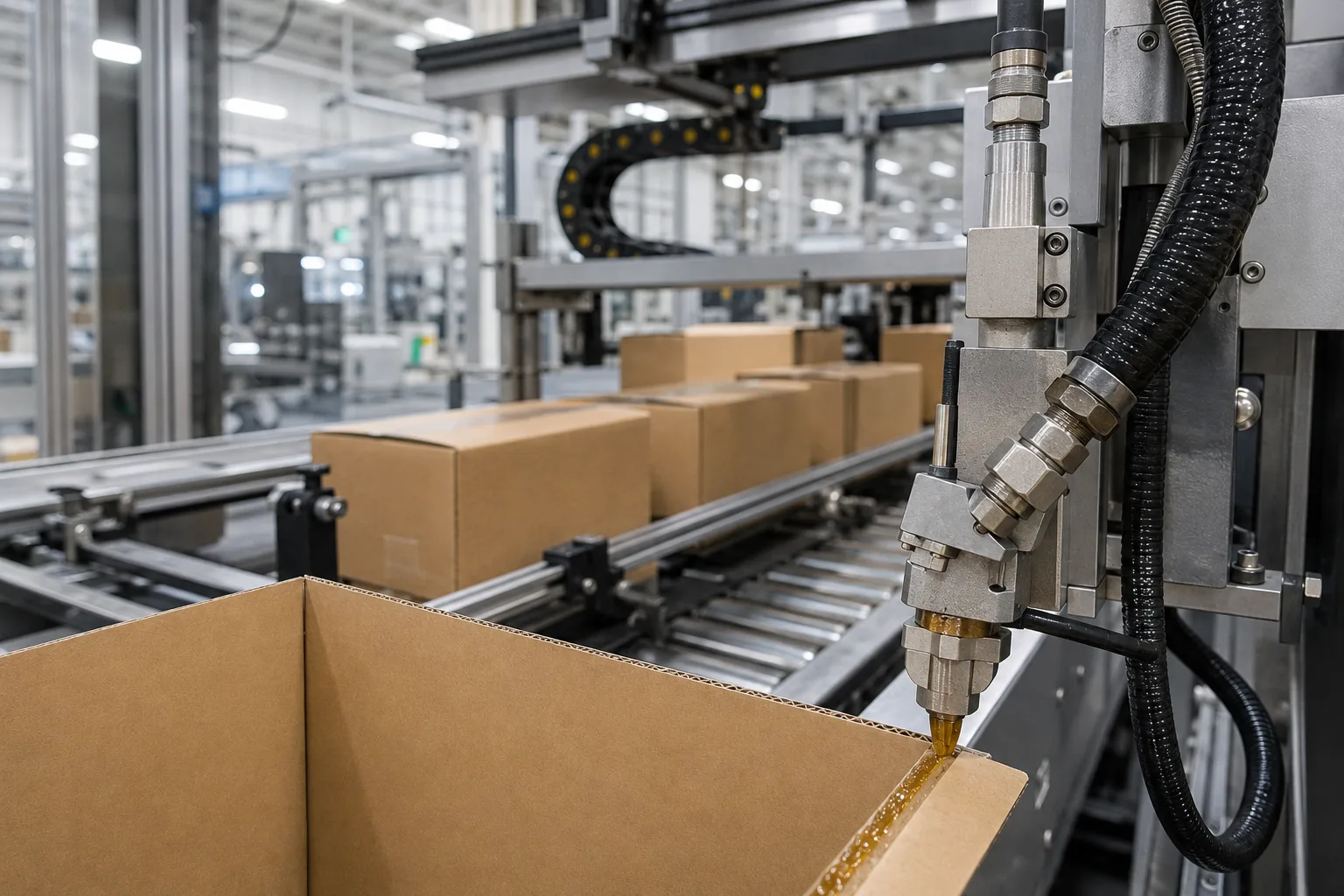 CASE STUDY
 Case Study: Six Months Without a Nozzle Clog
How a shipper line improved metallocene thermal behavior and compression set on recycled board after case erector qualification.
Read the Full Story TECHNICAL GUIDE Guide: Choosing EVA vs Metallocene
Compare set window, thermal stability, char resistance, and substrate fit before selecting a food-packaging or case sealing grade.
Read Full ArticleHot-Melt Adhesive FAQ
Commercial, chemistry, and documentation answers for teams sourcing hot-melt systems.
What is your standard MOQ for hot-melt adhesives?
MOQ is typically ~1,000 kg per approved grade. Lead time is confirmed at quotation. Start with complimentary 1 kg lab material (recipient prepaid shipping), then 20–25 kg line trials for that application.
Is the 1 kg sample free? Who pays shipping?
Yes—the 1 kg lab material (200 g–1 kg) is complimentary for qualified screening. Courier freight is prepaid by the recipient (liquid formulations ship prepaid only). 20 kg production trials are quoted separately before dispatch.
What is the difference between EVA and metallocene hot melts?
EVA is often the economical mainstream route for packaging. Metallocene is screened when lower char and more stable high-speed behavior matter more than lowest upfront cost—see the EVA vs metallocene guide before treating them as interchangeable.
Where should food-packaging teams start when the structure, contact route, and test target are still being defined?
Start on the paper glue hub and food-contact program for regulatory fit, then return here if hot melt is the right bonding method for your line.
When should we choose HMPSA instead of structural hot melt?
HMPSA fits pressure-sensitive coating (tapes, labels)—tack, peel, and coat weight matter more than instant structural set after compression.
Can hot melts bond coated board, films, or plastics?
Yes—qualification is screened on coated board, films, plastics, and other LSE surfaces depending on chemistry, coat weight, and process conditions on your line.
How do you reduce char and nozzle buildup?
Char control balances chemistry, operating temperature, dwell, and maintenance discipline—we screen on your thermal profile, not universal “zero char” marketing.
Where do I get TDS, SDS, or compliance paperwork?
Use technical resources or request an audit package for your nominated hot-melt grade.