When paper tube cores start failing on high-speed lines, the adhesive is often blamed first. Sometimes that is right. Just as often, the real problem is a bad machine window: wet tack develops too slowly, cutoff gets messy, moisture load stays too high, or crush strength collapses after conditioning.
Table of Contents
When a tube or core line speeds up, weak process assumptions become visible very quickly. A formulation that felt acceptable at moderate speed can suddenly look unstable once the winder, dryer, or cutoff changes.
- High-speed failures are not always pure adhesive failures: paper grade, ply tension, add-on level, drying, and cutoff setup can all be part of the same problem.
- The first useful question is not "Which glue is best?": it is "What changed when the line started running faster?" Cross-check starch vs. PVA, biodegradable starch claims, and the high-speed winding case study before swapping chemistry.
- The comparison that matters is machine-side: wet tack, clean cutoff, moisture load, and conditioned crush tell you more than a brochure ever will.
A Small Reality Check
What counts as a high-speed tube line depends on the construction, machine design, and product format. The point is not the exact number by itself. The point is whether the current adhesive and process still give you a usable operating window once speed, tension, and cutting pressure tighten up.
Why High Speed Exposes Weakness So Fast
A slower line gives you forgiveness. There is more time for wet-out, more time for early bond development, and sometimes more time to hide a moisture problem before cutting. Once speed increases, that forgiveness disappears. The line starts demanding that every part of the process happen earlier and more consistently.
- The adhesive has less time to build usable green strength: if the core has to hold shape earlier, a marginal system starts looking soft.
- Cutoff behavior gets more obvious: stringing, splash, and dog-ears that were occasional before can become persistent.
- Moisture load becomes expensive: too much water in the system can slow stabilization, extend drying, and distort later crush results.
"High speed does not create new physics. It just removes the extra time that was covering up your weak point."
Four Failure Modes That Show Up Again and Again
1. Green Strength Arrives Too Late
This is one of the most common reasons a core looks fine on paper but behaves badly on the machine. The line needs the structure to hold its geometry almost immediately, but the bond is still forming. Operators experience soft tubes, shape drift, edge deformation, or weak cuts that suggest the core was asked to behave before it was ready.
- Look at early shape retention on the mandrel, not just final dry feel.
- Check whether the issue worsens with speed increases or only under certain paper lots.
2. Cut Quality Breaks Down
If the core starts showing dog-ears, messy edges, or intermittent deformation at cutoff, the problem is not always the knife itself. At high speed, adhesive rheology, add-on level, and timing all affect whether the structure reaches the cutter in a stable state.
- Watch for splash, stringing, or buildup around the glue station before blaming the cutoff station alone.
- Compare clean edge quality right after cutting and again after a short rest period.
3. Moisture Load Stays in the Structure Too Long
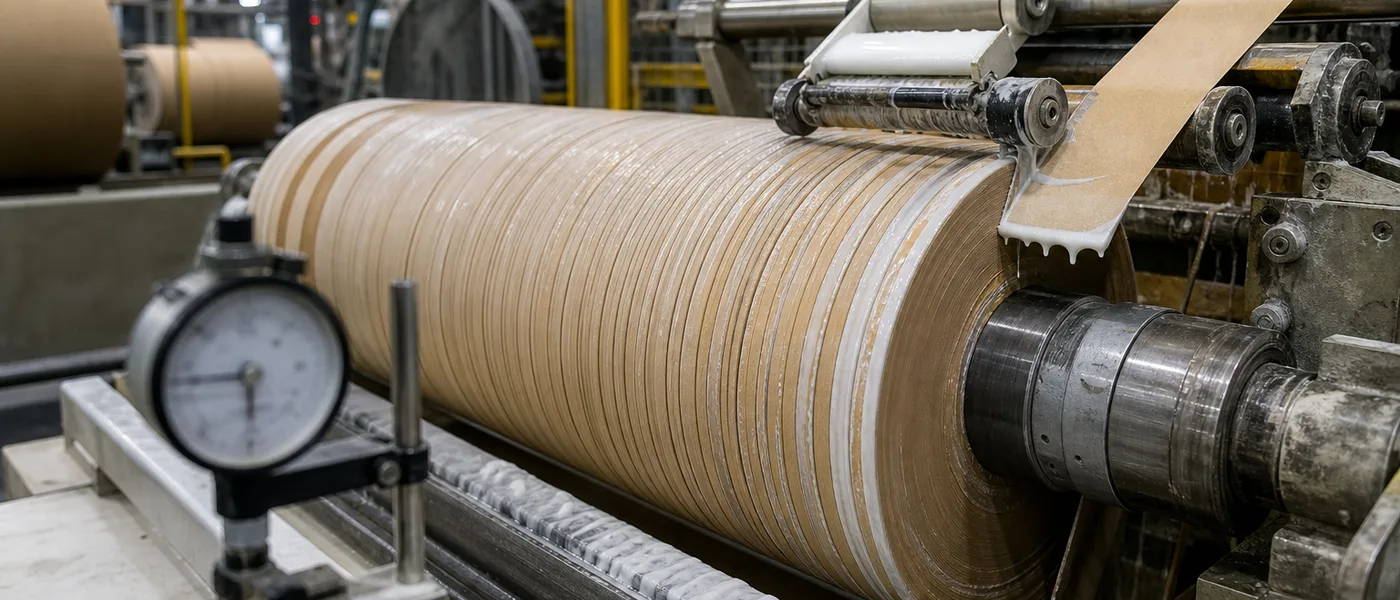
A line can appear productive while quietly building risk into the core. If adhesive laydown is too heavy, solids are not matched well to the job, or drying is lagging behind speed, the tube may carry too much water into later handling. That can distort dimensions, delay strength development, and create inconsistent crush behavior after conditioning.
- If the solution to a weak bond is always "add more glue," check whether the line is solving one problem by creating another.
4. Conditioned Crush Strength Falls Off Later
This one hurts because it often escapes the first trial. The cores feel solid right after winding, everyone relaxes, and then later testing or warehouse exposure tells a different story. If crush performance drops after humidity cycling, storage, or transport, the line may have qualified the wrong moment instead of the real end-use condition.
What to Log During a Real Trial
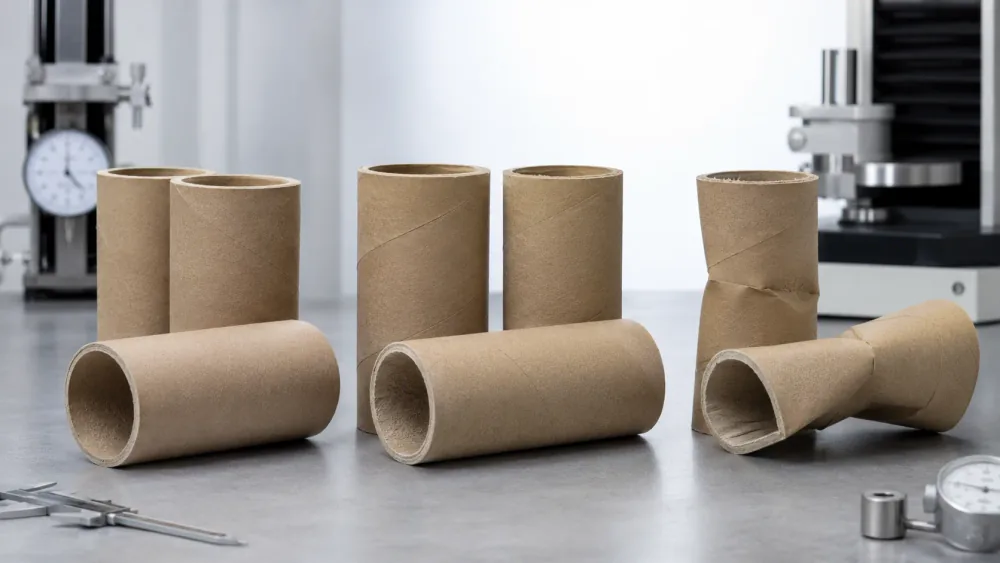
Record the actual speed range, not only the nominal target, because drift and acceleration behavior matter.
A chemistry comparison is weak if the laydown level changed without being documented.
Note dog-ears, edge cleanliness, soft cuts, and how often operators need to intervene.
Check whether the result still holds after storage or humidity exposure rather than only at line exit.
Do Not Assume the Adhesive Is the Only Variable
This is where good troubleshooting starts to look a little less dramatic and a lot more useful. Teams often change chemistry when the deeper issue is paper inconsistency, laydown control, drying imbalance, or a process setting that stopped working once speed increased. That does not mean chemistry does not matter. It means the line deserves an honest diagnosis before anyone declares a winner.
If you are no longer troubleshooting and are really comparing chemistry routes, read Starch vs. PVA for Paper Tube Adhesives. If purchasing is pushing for a bio-based option, the better companion piece is Are Starch-Based Paper Tube Adhesives Biodegradable?
Where Starch and PVA Usually Re-Enter the Conversation
- Starch or dextrin stays attractive where teams want paper affinity, a stronger bio-based story, and a line that is not asking for extreme early hold.
- PVA or PVAc tends to stay in play longer when wet tack, faster set behavior, cleaner cutoff, or stronger conditioned crush become the deciding issues.
- In real plants, the right answer is often a trial plan, not a slogan.
A More Useful Qualification Sequence
- Define the failure first: collapse at the mandrel, soft cut, splash, moisture load, or post-conditioning crush loss are not the same problem.
- Keep the trial conditions honest: same paper, same speed window, same add-on logic, same cutoff expectation.
- Watch the machine before the lab: buildup, stringing, operator interventions, and shape drift are all evidence.
- Validate after conditioning: if the application is demanding, a same-shift verdict is too early. Many teams anchor that check to a recognized paper-conditioning practice such as TAPPI T 402.
Need a realistic high-speed starting point?
Share your paper grade, winding speed, ply structure, and the failure mode you are trying to eliminate. That usually tells you more than asking for a generic high-speed paper tube glue.
Review Tube Winding OptionsFinal Takeaway
Paper tube cores do not usually fail on high-speed lines because one chemistry is morally better than another. They fail because the process asks the bond to form, stabilize, and cut cleanly inside a tighter window than before. The better troubleshooting move is to define the failure mode, keep the trial honest, and qualify the core after it has lived through real conditioning instead of only through first impressions.
Frequently Asked Questions
Why do paper tube cores fail only after the line speed increases?
Because higher speed reduces the process window. The adhesive has less time to build usable green strength, cutoff behavior becomes less forgiving, and moisture or conditioning problems that were previously hidden can start showing up clearly.
Are high-speed winding failures always caused by the adhesive?
No. Adhesive chemistry matters, but so do paper grade, ply tension, add-on level, drying balance, and cutoff setup. Good troubleshooting isolates the failure mode before changing chemistry.
What should I measure during a high-speed tube adhesive trial?
Record the actual speed range, glue add-on, early shape retention, cutoff quality, operator interventions, and finished-core crush after conditioning. Those points usually explain more than a pass-fail comment alone.
When does PVA usually make more sense than starch on a fast tube line?
Often when the line needs faster wet tack, cleaner cut quality, stronger early hold, or better conditioned crush. But the right answer still depends on the paper structure, speed range, and what failure you are trying to eliminate.
Stabilize cores on your winder
Request complimentary 1 kg lab material (shipping prepaid by recipient) after screening on your substrate and line conditions.
References
Technical Disclaimer: All technical data is based on standard laboratory conditions. Users should perform their own verification testing to confirm suitability for specific substrates, processes, and regulatory requirements. Senda Glue makes no warranties, express or implied, and assumes no liability for improper use of the products or reliance on this information.