At a Glance
- 150 m/min Qualified Winding Window
- 1000N+ Conditioned Crush Target
- Less Cutoff Intervention
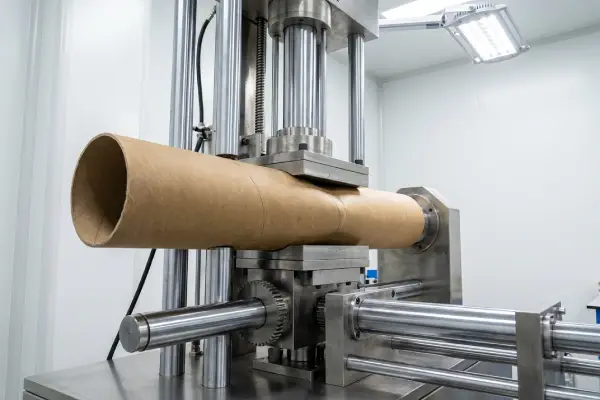
Final approval stayed tied to conditioned crush and geometry after storage, not only to how clean the core looked coming off the mandrel.
A faster spiral winder exposed green-strength and cutoff weakness
The converter was pushing a mixed tube program toward a tighter operating window, but the existing adhesive no longer built hold fast enough for the new speed range.
- Operators saw soft cuts, dog-ears, and occasional shape drift at the mandrel when speed increased.
- The line could make acceptable cores in the same shift, then lose crush confidence after storage and humidity exposure.
- Adding more adhesive improved initial feel but raised moisture load and made later dimensional stability less predictable.
A higher-solids winding system tuned around wet tack, add-on, and conditioned crush
Senda reworked the chemistry and the trial method together, keeping paper grade and laydown logic constant so the team could compare early hold, cutoff behavior, and post-conditioning performance honestly.
Products Used:
- High-Speed Tube Winding Adhesive Package
Built for faster green-strength development, lower moisture carry-through, and more stable cutoff quality.
The project succeeded because qualification stayed machine-side. Instead of declaring a winner from first impressions, the team tracked early shape retention, add-on consistency, cutoff cleanliness, and crush after conditioning on the same construction.
Qualification path
Failure mode mapping
The winding team separated late green-strength problems from cutoff instability and post-conditioning crush loss before changing chemistry.
Matched side-by-side machine trial
Paper grade, ply build, speed window, and add-on level were kept aligned so the comparison reflected chemistry fit rather than trial drift.
Conditioned performance review
Cores were checked again after storage and humidity exposure to confirm that the approved formula still held crush and geometry after the line trial ended.
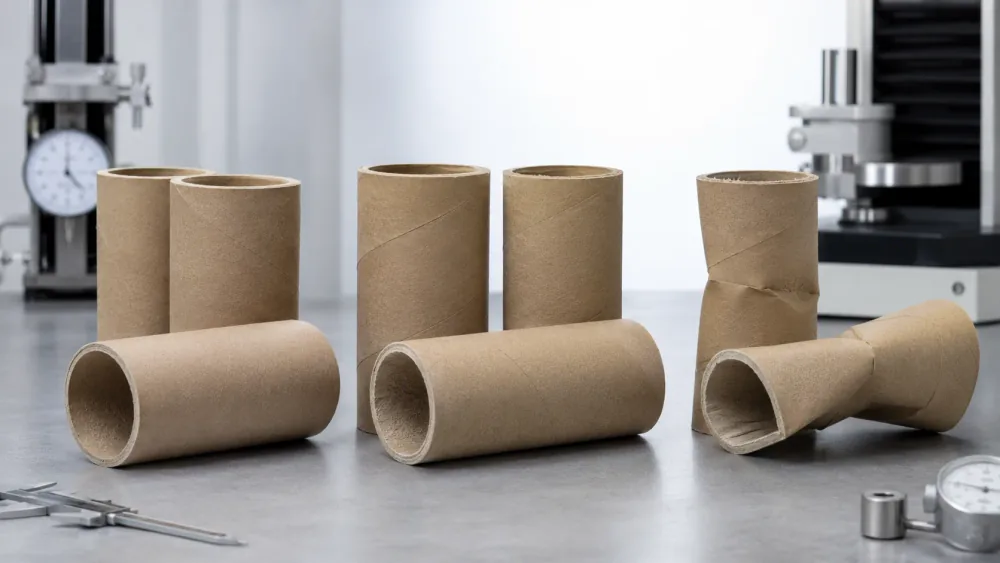
Conditioned comparison matters: stable fresh-cut feel is not enough on demanding core programs.
What changed on the line
- Earlier usable hold: Wet tack developed sooner at the mandrel, which reduced soft-cut behavior during acceleration.
- Cleaner cutoff behavior: The line ran with fewer dog-ears and less operator intervention around the cutter and glue station.
- More honest qualification logic: Approval shifted from same-shift feel to conditioned crush and dimensional stability under real storage conditions.
Validated production window
Validated production window
The line could hold a faster operating range without relying on over-application.
Final approval stayed tied to conditioned crush, not just fresh-off-line stiffness.
Same paper, same add-on logic, and the same cutoff expectation kept the comparison credible.
Related resources
- Starch vs. PVA for Paper Tube Adhesives: How Converters Actually Make the Call
Wet tack, add-on, and starch vs PVA trade-offs—the primary guide for this winding qualification.
- Maximizing Paper Core & Board Strength on High-Speed Converting Lines
Conditioned crush and cutoff discipline on faster tube and core lines.
- Request a tube winding trial
Prepaid sample for mandrel-line green strength, cutoff, and conditioned crush screening on your ply build.

" Our high-tension winding process for 10-inch cores used to cause frequent tube collapse. By switching to Senda's high-solid PVA, we achieved a consistent radial strength exceeding 1000N, which completely eliminated the collapse issues and reduced our production waste by 12%. "
Ready to Write Your Own Success Story?
Our technical engineers are ready to help you solve your specific adhesion challenges. Get in touch for a free consultation and sample testing.
Replicate This Success