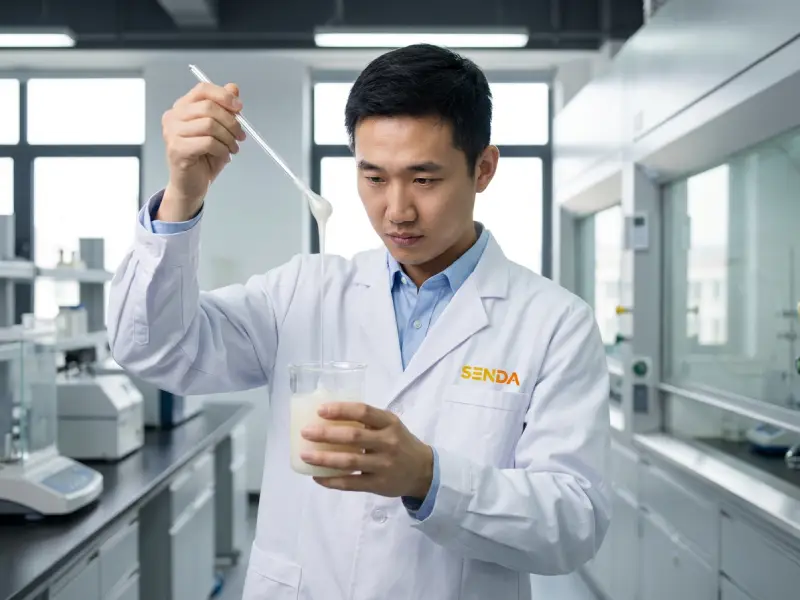
There is no universal winner between starch and PVA for paper tube adhesives. The better fit usually depends on line speed, early green strength, crush target, drying window, and how much sustainability language you actually need to defend with data.
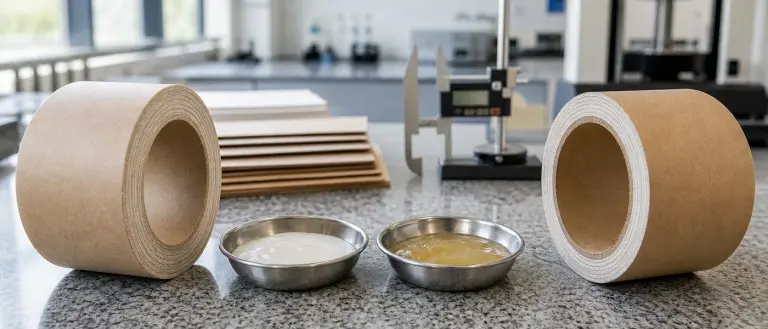
Table of Contents
- ·The Better Question Is Not "Which One Is Better?"
- ·Where Starch or Dextrin Usually Makes Sense
- ·Where PVA or PVAc Usually Wins the Trial
- ·A Practical Decision Grid
- ·Three Comparison Mistakes We See All the Time
- ·How to Decide Which Chemistry Gets the First Trial
- ·Final Takeaway
- ·Frequently Asked Questions
The Better Question Is Not "Which One Is Better?"
When a team asks whether starch or PVA is better for paper tube adhesives, they are usually trying to compress five separate decisions into one sentence. They are comparing chemistry, of course, but also line speed, crush targets, cleanup, and buyer documentation.
That is why these decisions get messy. One person is worried about moisture and cleanup. Another is worried about crush after storage. Someone in marketing is asking for a more bio-based story. Someone on the winding line just wants the core to hold shape cleanly at speed.
- If your main priority is renewable-content positioning and good paper affinity, starch or dextrin deserves a serious look.
- If your main priority is speed, green strength, and tougher crush targets, PVA or PVAc usually stays in the conversation longer.
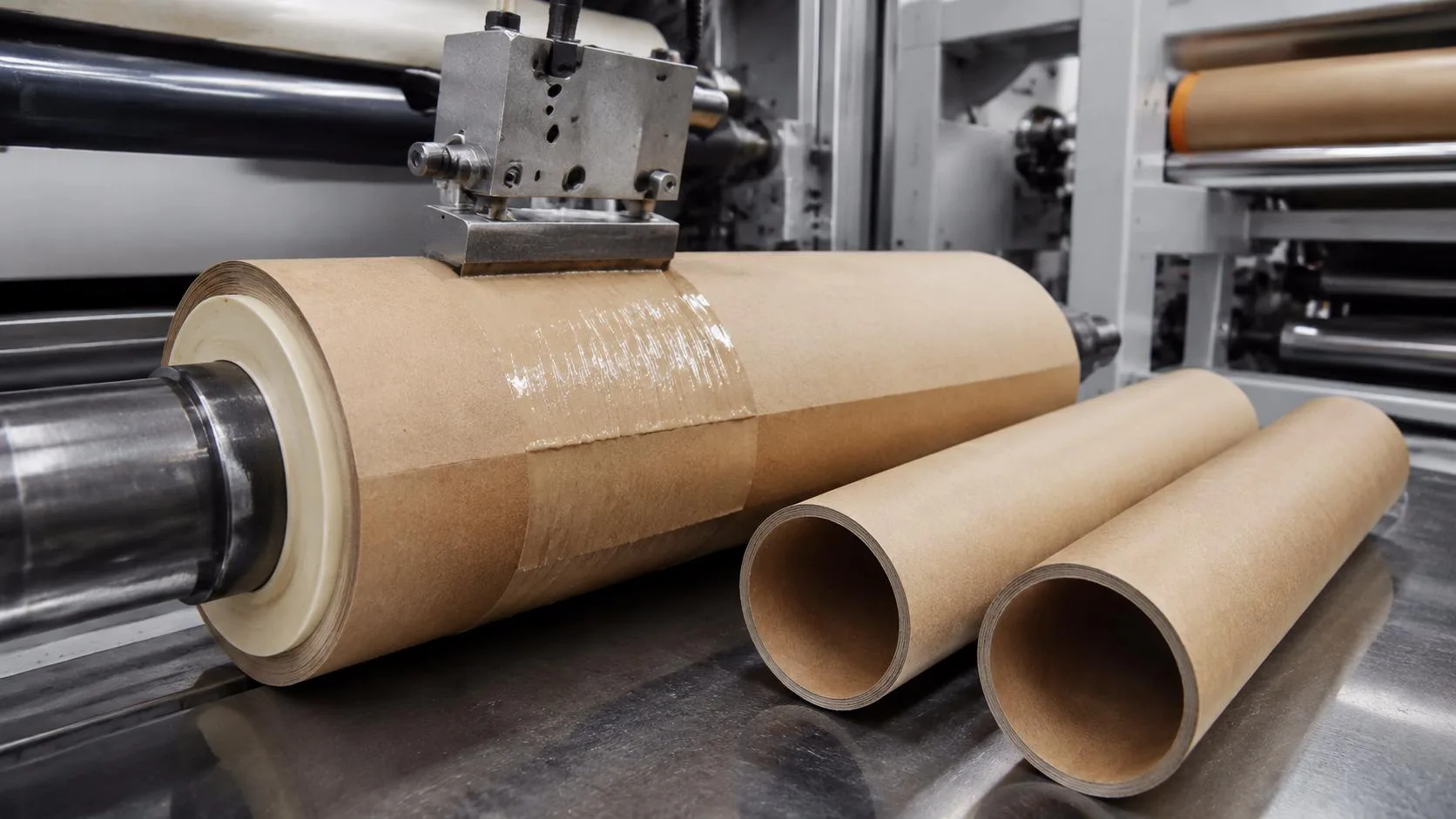
- If your line has multiple constraints at once, the answer may be a blend, a modified formulation, or a staged trial instead of a single resin call. Cross-check core & board strength and the high-speed winding case study on your former before locking starch vs. PVA.
Quick Take
Starch and dextrin are often easier to position as bio-based. PVA/PVAc is often easier to position for higher-speed stability and stronger early bond development. Neither route should be judged from claims alone. Judge them on the same paper, at the same speed, against the same finished-core requirement.
If the conversation inside your team is still mostly about sustainability wording and bio-based positioning, start with Are Starch-Based Paper Tube Adhesives Biodegradable? If the current problem is machine instability rather than chemistry theory, read Why Paper Tube Cores Fail on High-Speed Lines next.
Where Starch or Dextrin Usually Makes Sense
Starch and dextrin are still very real options in tube winding because they map well to a lot of paper-first applications. They can offer familiar processing, good affinity with paper fibers, and a more straightforward renewable-content conversation than a fully synthetic route.
- They often fit lines that already understand water-based behavior: teams know what acceptable viscosity drift looks like, how to manage drying, and what cleanup discipline is required.
- They often make more sense when the sustainability brief matters: if the project needs a more defensible bio-based story, starch and dextrin are easier to explain honestly.
- They are often good enough when the line is not asking for heroics: standard industrial tubes in relatively stable conditions can run very well on starch- or dextrin-based systems.
Where Teams Sometimes Overestimate Starch
The mistake is assuming that because a starch system sounds simpler or more natural, it will automatically meet a high-speed line's demands. It may not. Once early strength, cutoff cleanliness, moisture sensitivity, and post-conditioning crush become more demanding, the comparison gets less romantic and much more practical.
Where PVA or PVAc Usually Wins the Trial
PVA and PVAc stay popular in paper tube adhesives for one boring but important reason: they solve headaches. On demanding lines, teams usually do not switch because they fell in love with the chemistry. They switch because they need a faster-developing bond, more stable running behavior, or better finished-core strength.
- Higher-speed winding: when the line needs the core to stabilize quickly and cut cleanly, PVA/PVAc often holds up better.
- Heavier-duty cores: textile tubes, film cores, and other structures with higher crush expectations often keep PVA in the shortlist.
- More difficult plant conditions: if the line sees humidity swings, harder cutting expectations, or inconsistent substrate quality, synthetic water-based systems often give teams a wider operating window.
"The fastest way to waste time in a tube-adhesive trial is to compare chemistries by label instead of by failure mode. Ask what went wrong on the current line first. The answer usually tells you which route deserves the first sample."
A Practical Decision Grid
What Usually Tips the Decision
If the project needs a clearer bio-based position, starch or dextrin usually starts with an advantage.
If the line needs the core to build shape quickly at the mandrel, PVA/PVAc often tests better.
The faster the line and the cleaner the cutoff requirement, the more likely synthetic water-based systems stay competitive.
If the finished core must hold up after storage, shipping, or humidity changes, do not rely on fresh-off-line feel alone.
Three Comparison Mistakes We See All the Time
- Mistake 1: comparing cost per kilogram instead of cost per usable core. A cheaper adhesive can become the expensive option if it slows the line, increases moisture load, or drives reject rates.
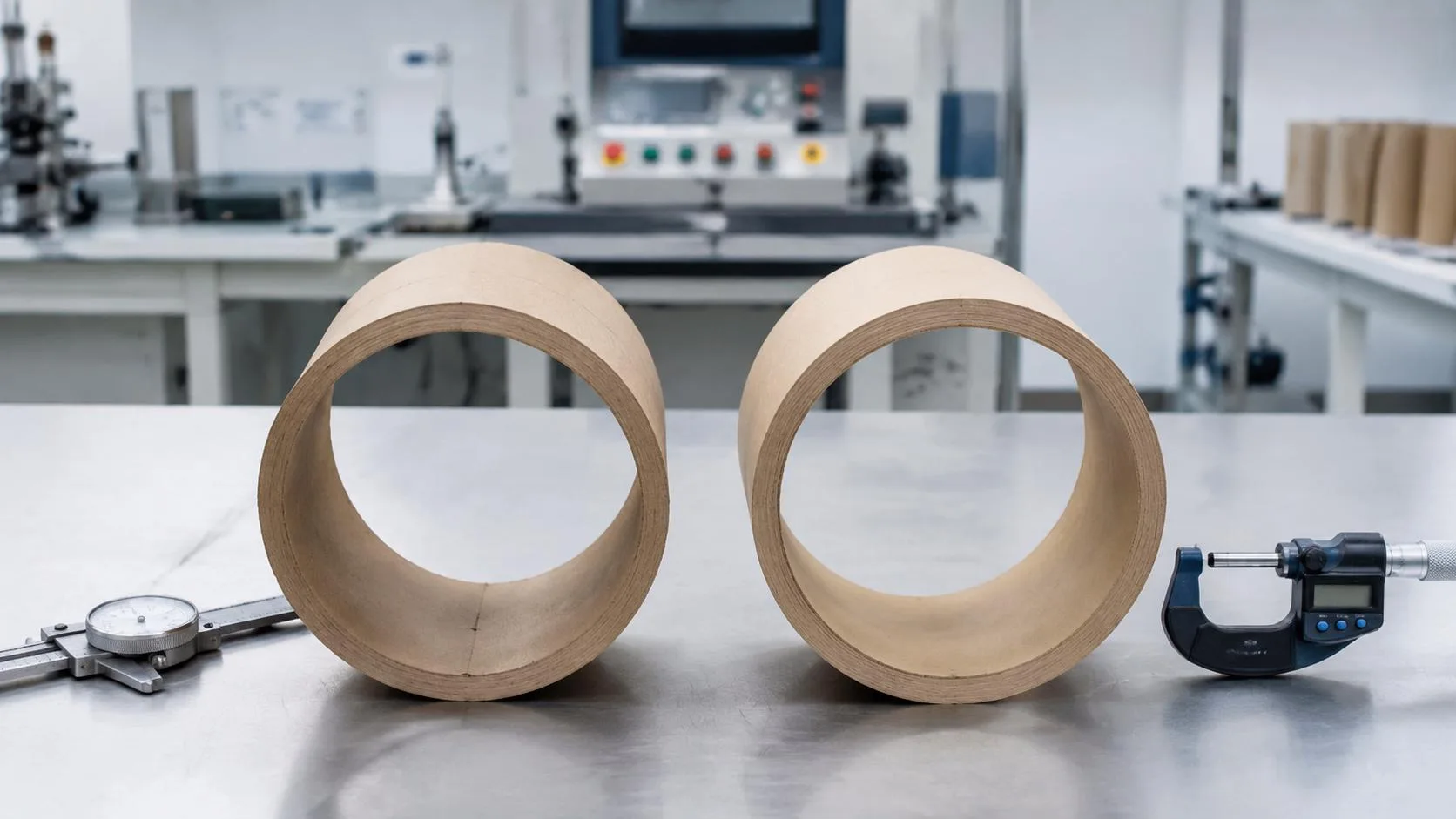
- Mistake 2: judging the bond before the core has lived a real life. If you never check the core after storage or humidity exposure, you may be selecting the wrong winner.
- Mistake 3: letting sustainability claims outrun technical evidence. If you want to say bio-based, recyclable-friendly, or biodegradable, make sure the exact product and formulation support the wording.
How to Decide Which Chemistry Gets the First Trial
If you need a quick operating rule, start from the pain point rather than the chemistry preference.
- If the current complaint is moisture load, broad sustainability positioning, or a desire for a more bio-based route, start with a starch or dextrin option.
- If the current complaint is poor early hold, slow cutting, collapse at speed, or weak conditioned crush, start with PVA/PVAc.
- If you have both sets of problems, trial both routes side by side using the same paper, same machine, same conditioning window, and the same crush and cut criteria.
Need a starting shortlist, not a chemistry lecture?
Send your paper grade, ply count, winding speed, and the failure you are trying to eliminate. That is usually enough to narrow the first trial to the right side of the starch-versus-PVA debate.
See Tube Winding OptionsFinal Takeaway
Starch and PVA are not rivals in the abstract. They are tools for different operating windows. The right choice is usually the one that solves the real line problem with the least drama while still supporting the claims your team wants to make. Start with the failure mode, validate after conditioning, and let the trial results do the talking.
Frequently Asked Questions
Is starch always cheaper than PVA for paper tube adhesives?
Not necessarily in real production terms. Even if the raw adhesive price is lower, the total cost can rise if the formula slows the line, increases moisture load, or creates more rejects.
Does PVA always produce a stronger paper core?
Not automatically. PVA/PVAc often performs well on demanding lines, but the real result depends on the paper, solids, add-on level, winding conditions, and how the finished core behaves after conditioning.
Can converters use blended or modified systems instead of choosing one route only?
Yes, in many projects they do. The practical answer is not always pure starch or pure PVA. Modified or blended systems are common when the line needs a balance of cost, paper affinity, green strength, and finished-core performance.
What is the best way to compare starch and PVA on a real line?
Run side-by-side trials on the same paper and machine, then evaluate not only wet running and cutoff but also conditioned crush, shape retention, and reject rate after storage or humidity exposure.
Compare tube adhesives on your line
Request complimentary 1 kg lab material (shipping prepaid by recipient) after screening on your substrate and line conditions.
References
Technical Disclaimer: All technical data is based on standard laboratory conditions. Users should perform their own verification testing to confirm suitability for specific substrates, processes, and regulatory requirements. Senda Glue makes no warranties, express or implied, and assumes no liability for improper use of the products or reliance on this information.