At a Glance
- 15% Higher Beam Strength
- 0 Delamination in Strap Test
- 25% Less Moisture Carry
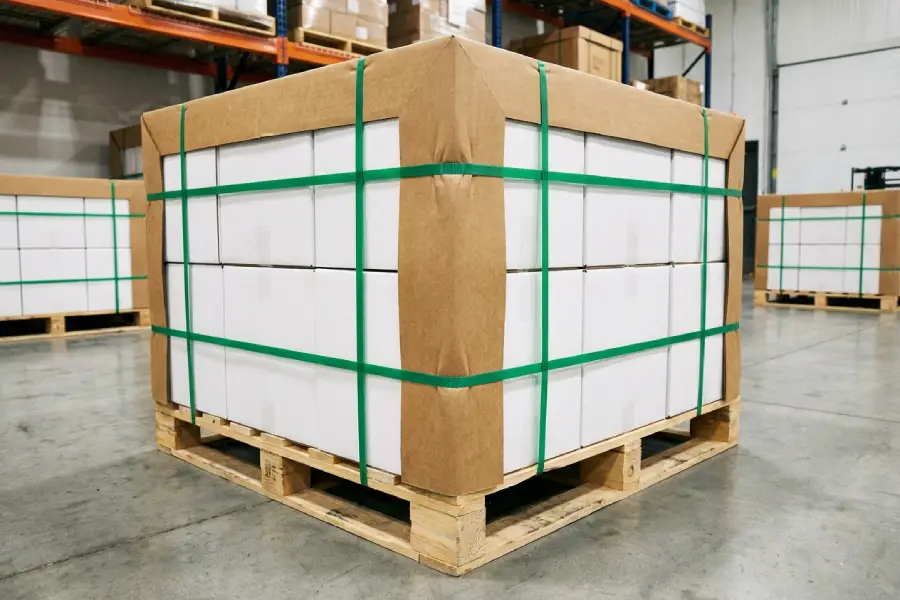
The qualification target was visible ply integrity under real strap tension, not only dry-lab peel.
Standard starch glue was not holding the laminate under strap load
The customer edge-protector program looked acceptable after drying, but heavy pallet strapping exposed a weak internal bond across thicker multi-ply profiles.
- Layer separation showed up first at the outside angle and propagated inward during strap tightening.
- High moisture levels slowed dry-to-cut stability and made it harder to hold consistent geometry on heavier profiles.
- Beam strength varied too much lot to lot for export-heavy protective-packaging work.
A higher-stiffness VAE route with tighter moisture and compression control
Senda shifted the lamination package toward a faster-setting, higher-shear bond so the plies locked together earlier and resisted strap-driven separation more consistently.
Products Used:
- V-Board Ply-Bonding System
Designed for strong internal bond, lower moisture carry, and better beam strength on V-board lines.
The improvement did not come from stiffness claims alone. The key was balancing internal bond strength with a lower water load so the profile could dry, hold shape, and survive strap tension without opening at the ply line.
Implementation path
Profile and paper build review
Senda reviewed ply count, wall thickness, and current glue spread to identify where the laminate was losing integrity under bending and strap pressure.
Strap-tension and stiffness checks
Trial boards were compared through strap loading and beam-strength review so the team could see whether the new bond held through real handling stress.
Line-window tuning
Application volume, compression pressure, and dry-to-cut timing were tightened to reduce moisture-driven variability on heavier runs.
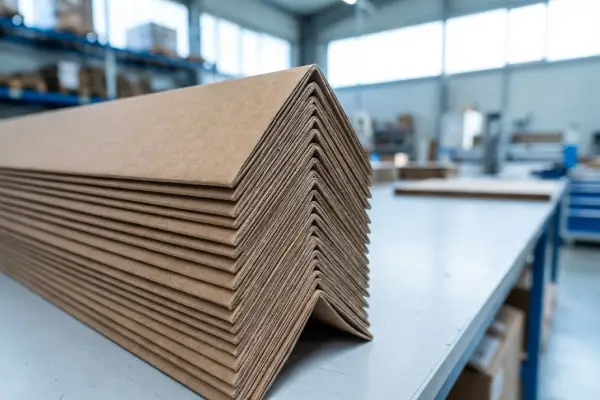
The finished profile needed stiffness and ply integrity to survive strapping, stacking, and export handling.
Why this story is publishable now
- Clear failure mode: The repo already ties the application to a specific defect: delamination under pallet strapping.
- Real qualification logic: Beam strength, dry-to-cut stability, and strap-tension performance are all manufacturing-side proof points.
- Conservative result language: The case can stay credible without inventing savings or customer quotes beyond the repo evidence.

Observed production outcome
Observed production outcome
The new lamination route tracked the beam-strength improvement target from strap-tension review.
Trial boards held their ply line through strap-tension review without visible opening.
Lower moisture load made heavy profiles easier to move into cutting and handling with less wait time.
Related resources
- Maximizing V-Board Rigidity: Coverage, Compression, and Paper Grade Selection
Lamination coverage and strapping-load logic paired with this edge-protector qualification.
- Request an edge-protector adhesive trial
Prepaid sample for V-board lamination and high-tension strapping hold screening on your paper grade.

" We faced constant delamination during high-tension strapping until we switched to Senda's VAE. It eliminated bond failure completely, and our V-board beam strength increased by 15% immediately. "
Ready to Write Your Own Success Story?
Our technical engineers are ready to help you solve your specific adhesion challenges. Get in touch for a free consultation and sample testing.
Replicate This Success