Machine-side practices for paper bag and sack lines: handle shear and fiber tear, bottom pasting wet tack, nozzle misting and stringing, multi-ply bonding, and FDA 175.105 food-bag compliance.
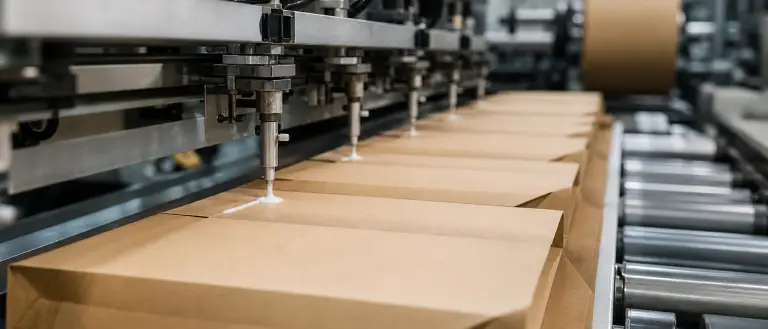
Table of Contents
- ·Handle Attachment: Shear vs. Peel
- ·Bottom Paste: Wet Tack and Fold Memory
- ·Nozzle Issues: Misting, Buildup, and Stringing
- ·Side Seam and Multi-Ply Sacks
- ·Speed-Up Without Open Seams
- ·Repulpable Routes and FDA 175.105 for Food Bags
- ·Field Evidence: 15 kg Handles and Cleaner Nozzles
- ·Startup Checklist
- ·Final Takeaway
- ·Frequently Asked Questions
On a bag line, three stations fail in different languages. Handles speak in pull-off and fiber tear; bottoms speak in creep and shape memory; nozzles speak in stringing, misting, and cleanup stops. If you only chase bond strength, you can easily trade one failure for another—stronger glue that fouls the applicator is not a win.
This guide is for paper bag and multi-wall sack supervisors tuning handle attachment, bottom pasting, and side-seam/ply bonding—the same application zones on our paper bag adhesives page. It reuses qualification language from our heavy-duty bag case; it does not replace your bag structural design review or load testing.
Handle Attachment: Shear vs. Peel
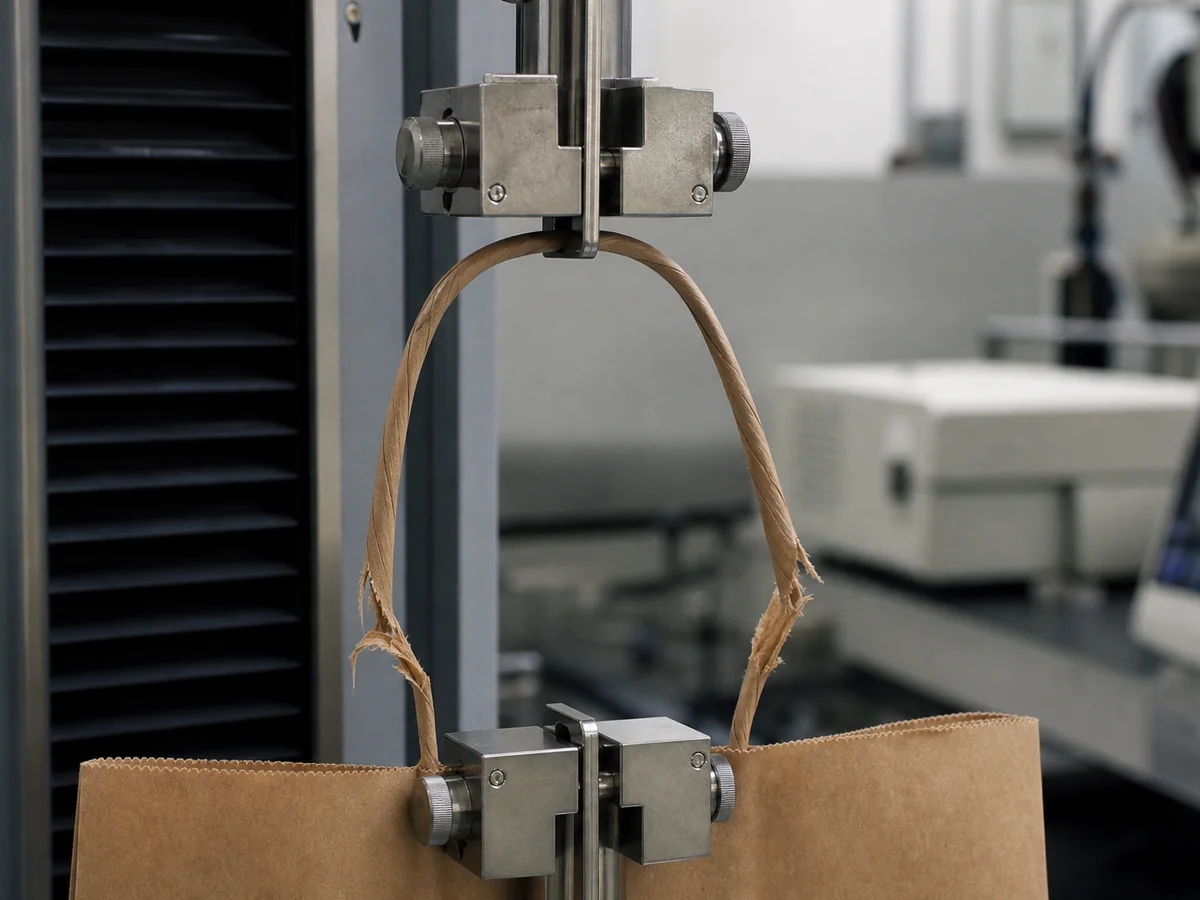
Handles fail in peel when the patch lifts from the face; they fail in shear when the strap pulls through the bond line. High-viscosity grades for handle zones are tuned for shear on kraft and recycled stocks. The pass/fail signal we use is fiber tear: paper fibers should rupture before the adhesive releases—if the film peels clean, the adhesive has not penetrated.
- Match viscosity to applicator: Nozzle vs. wheel vs. roller paths need different rheology (our matrix cites roughly 1,000–5,000 cps—use your TDS setpoint).
- Document handle fold and patch area: Small geometry changes shift peel stress even when glue weight stays constant.
- Load-test the actual bag build: Page FAQ cites heavy loads up to about 20 kg depending on bag design; case validation used a 15 kg heavy-load program.
Bottom Paste: Wet Tack and Fold Memory
Bottom pasting needs immediate wet tack so the fold holds shape before the next station. Summer heat and export-container humidity show up as bottom seal creep—the fold drifts open after stacking. Fast-setting grades in the 2–5 second window (per our formulation matrix) support high-speed lines when compression time is adequate.
Thermal stability to about 70°C is part of the page narrative for export climates—still validate on your paper moisture and warehouse profile.
Nozzle Issues: Misting, Buildup, and Stringing
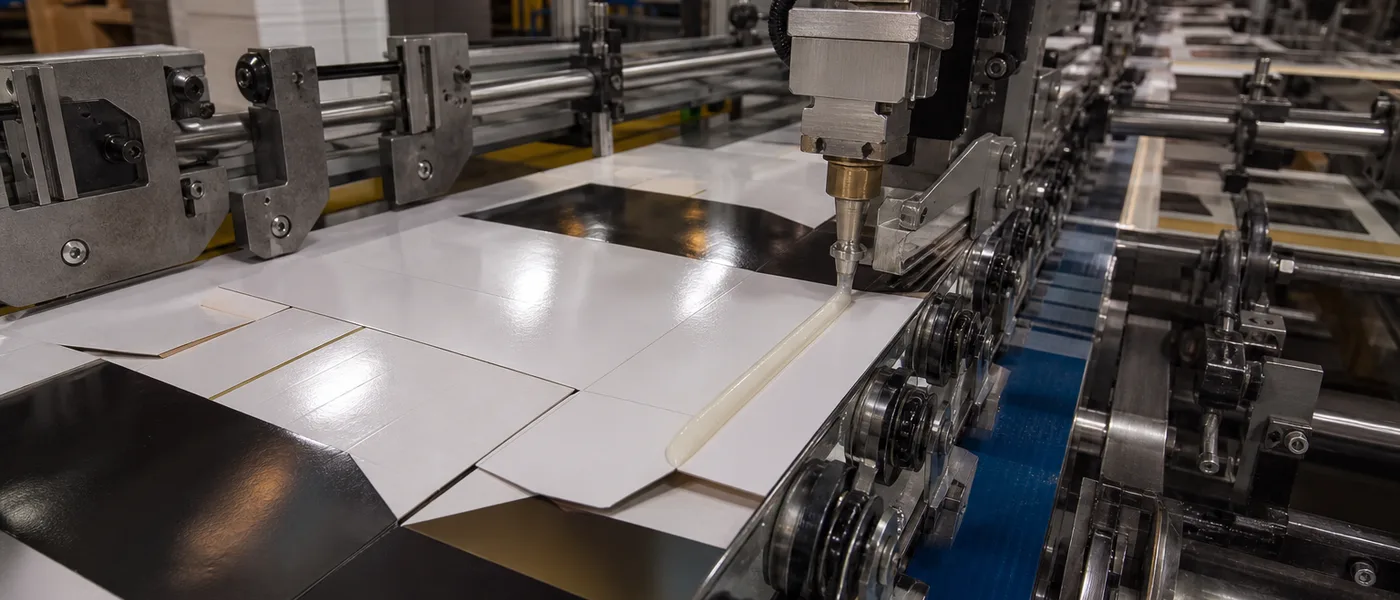
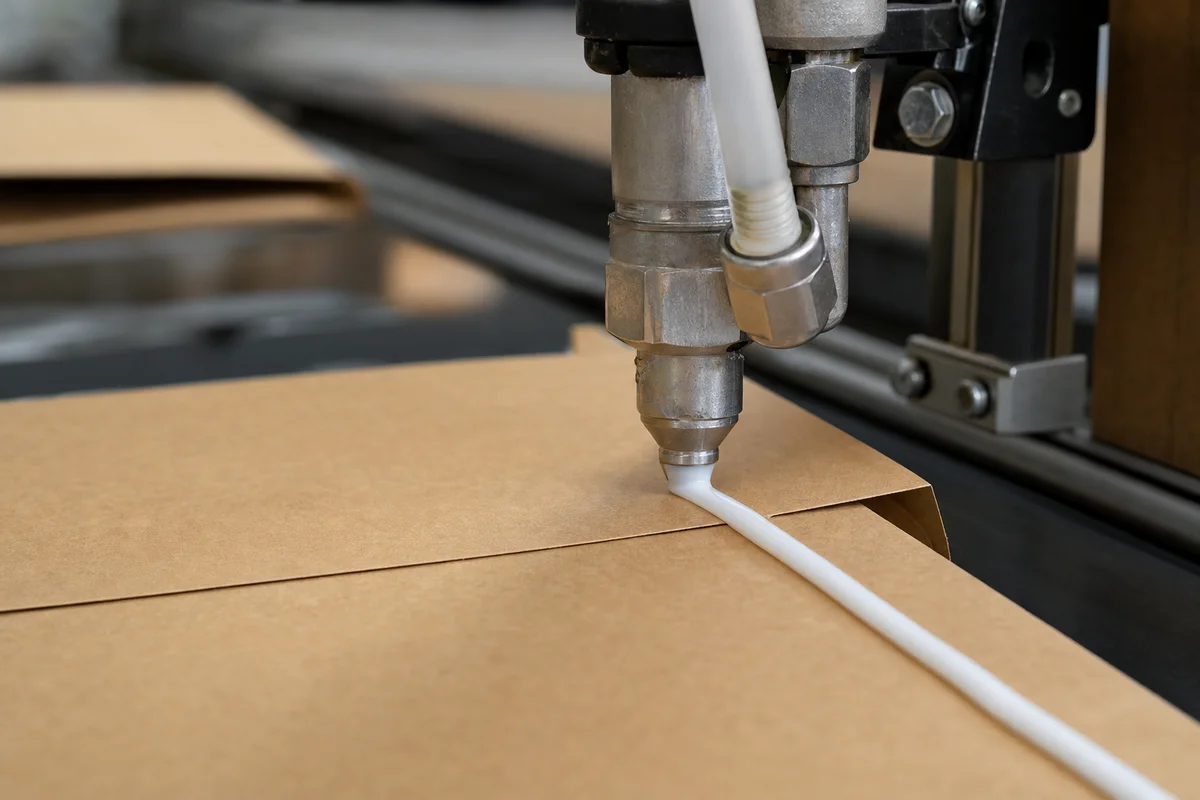
High-speed bag machines punish low-viscosity or overheated adhesive with misting and stringing, fouling guards and forcing cleanup stops. Anti-misting rheology is engineered for clean cutoff at the nozzle—our case converter reported fewer daily cleanup interventions after grade alignment.
Engineering Pro Tip
The 20% faster line speed claim in our application guide is tied to customer trial outcomes (see testimonial and case study)—not a universal speed guarantee. Increase speed only after handle, bottom, and nozzle KPIs are stable at the current setpoint.
Side Seam and Multi-Ply Sacks
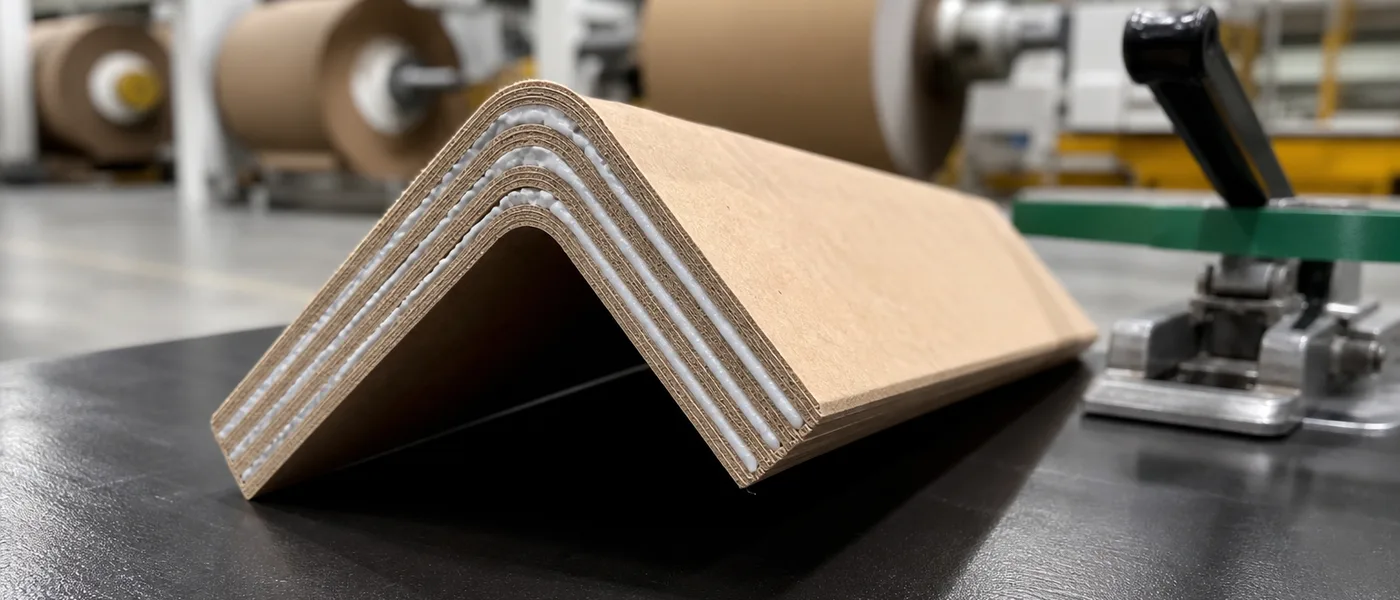
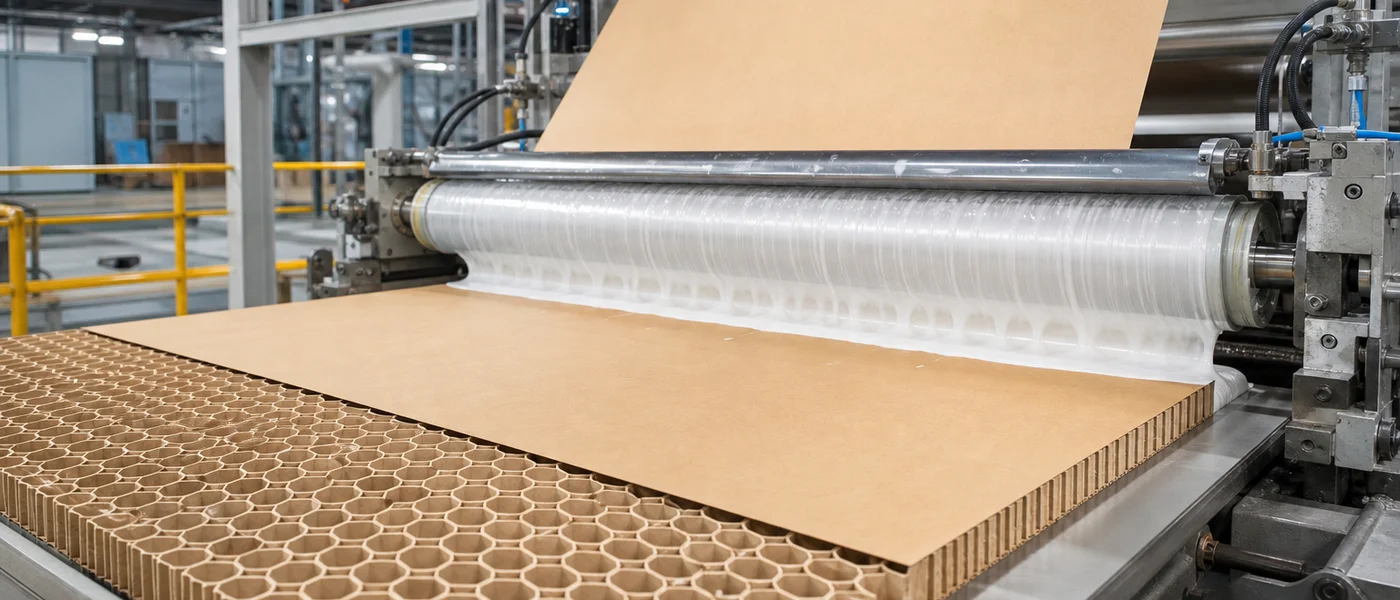
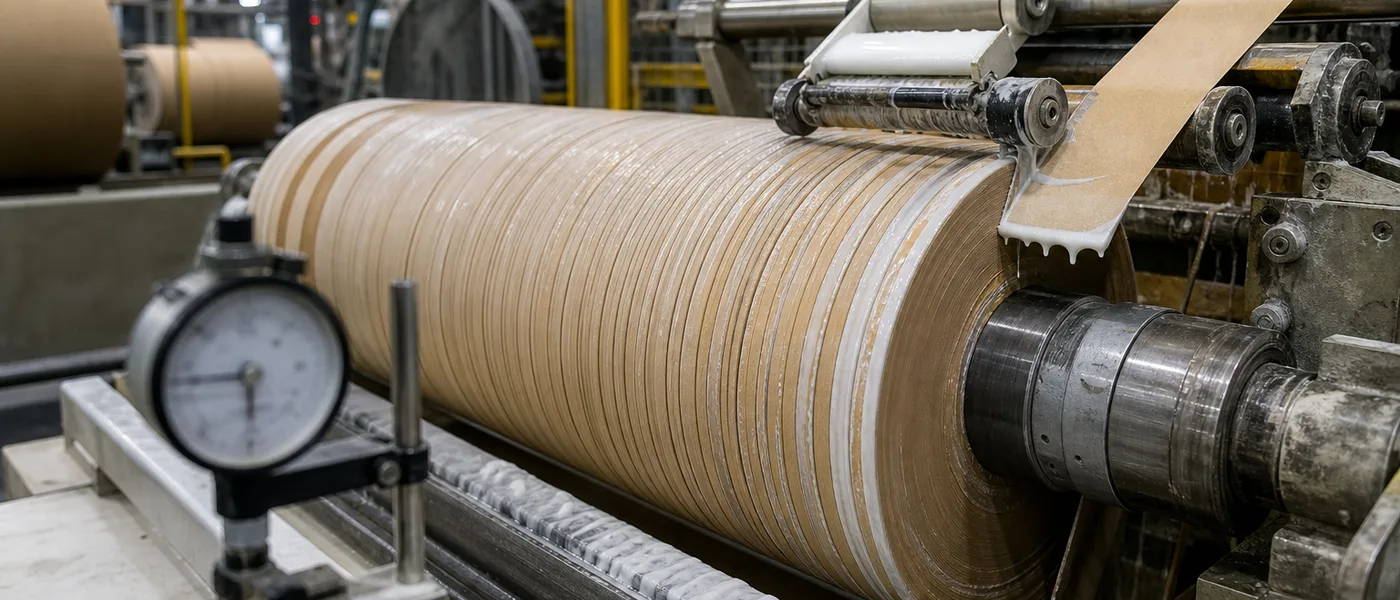
Carrier bags and multi-wall industrial sacks share machinery vocabulary but different stress. Longitudinal side seams need rapid set for flat, wrinkle-free tubes; ply-bonding and bottomers on cement/flour sacks need starch/emulsion blends that survive heavy fill and vibration. Specify station-specific grades rather than one viscosity for the whole plant.
Handles Pulling Off or Bottoms Creeping Open?
Review paper bag and sack adhesives for fiber-tear handle grades, bottom pasting, and clean nozzle running—with trial pail support.
See Paper Bag AdhesivesSpeed-Up Without Open Seams
Faster set (<2 s on some grades per capabilities copy) only helps when compression belts and fold timing match. Tune glue weight, viscosity, and machine speed together—raising speed while adding coat weight often increases stringing. Windmöller & Hoelscher-class lines are named on the page as examples; document your OEM and applicator type when requesting a TDS.
Repulpable Routes and FDA 175.105 for Food Bags
Water-based emulsions on our page are designed to disperse in repulping and align with FDA 21 CFR 175.105 for indirect food-contact packaging. Low-odor, taste-neutral grades protect flour and grocery formats. For direct-contact or barrier questions, see food contact adhesives and our water-based adhesive overview.
Field Evidence: 15 kg Handles and Cleaner Nozzles
A bag converter running heavy-duty formats faced handle pull-off, bottom creep, and nozzle fouling on the same program. After balancing fiber tear, bottom hold, and cleaner cutoff, the line qualified 15 kg heavy-load handles, reduced cleanup stops, and supported a 20% higher production-rate target versus the prior adhesive—details in the paper bag handle and bottom stability case study.
Startup Checklist
- Name the failure: handle peel, bottom creep, or nozzle fouling.
- Pull-test handles for fiber tear on production paper lot.
- Hold bottom folds through stack/ship humidity simulation.
- Log nozzle temperature, pressure, and coat weight before speed changes.
- Confirm 175.105 documentation for food-adjacent bags.
- Request 20 kg trial pail for on-machine validation (1 kg lab sample for screening).
Final Takeaway
Paper bag optimization is three stations, one rheology plan. Match shear and fiber tear on handles, wet tack on bottoms, and clean machining at the nozzle—then chase speed. Send bag design, paper grade, and applicator photos if you want a structured trial recommendation.
Frequently Asked Questions
What load can bags made with your adhesive handle?
Heavy-duty builds on our page are validated up to about 20 kg depending on bag size and design; our published case study used a 15 kg heavy-load qualification—always test your exact handle geometry and paper.
Will this work on high-speed bag machines?
Yes. We tune rheology to your speed and applicator (nozzle, wheel, or roller) to limit misting and stringing. Specify OEM and maximum rated speed when requesting a grade.
Can you adjust viscosity for my equipment?
We customize in the roughly 1,000–5,000 cps range per application zone. One plant-wide viscosity rarely fits handle, bottom, and side-seam stations equally well.
Do you supply adhesives for multi-wall sacks?
Yes—starch and emulsion blends for multi-wall tubing (ply bonding) and bottomers on cement, chemical, and food-powder sacks.
Is the adhesive repulpable?
Our water-based bag grades are designed to disperse during repulping to minimize stickies. Run your internal repulp verification on production paper and coat weight.
Trial bag adhesives on your line
Request complimentary 1 kg lab material (shipping prepaid by recipient) after screening on your substrate and line conditions.
References
Technical Disclaimer: All technical data is based on standard laboratory conditions. Users should perform their own verification testing to confirm suitability for specific substrates, processes, and regulatory requirements. Senda Glue makes no warranties, express or implied, and assumes no liability for improper use of the products or reliance on this information.