At a Glance
- 15 kg Heavy-Load Validation
- 20% Faster Line Speed
- Less Cleanup Intervention
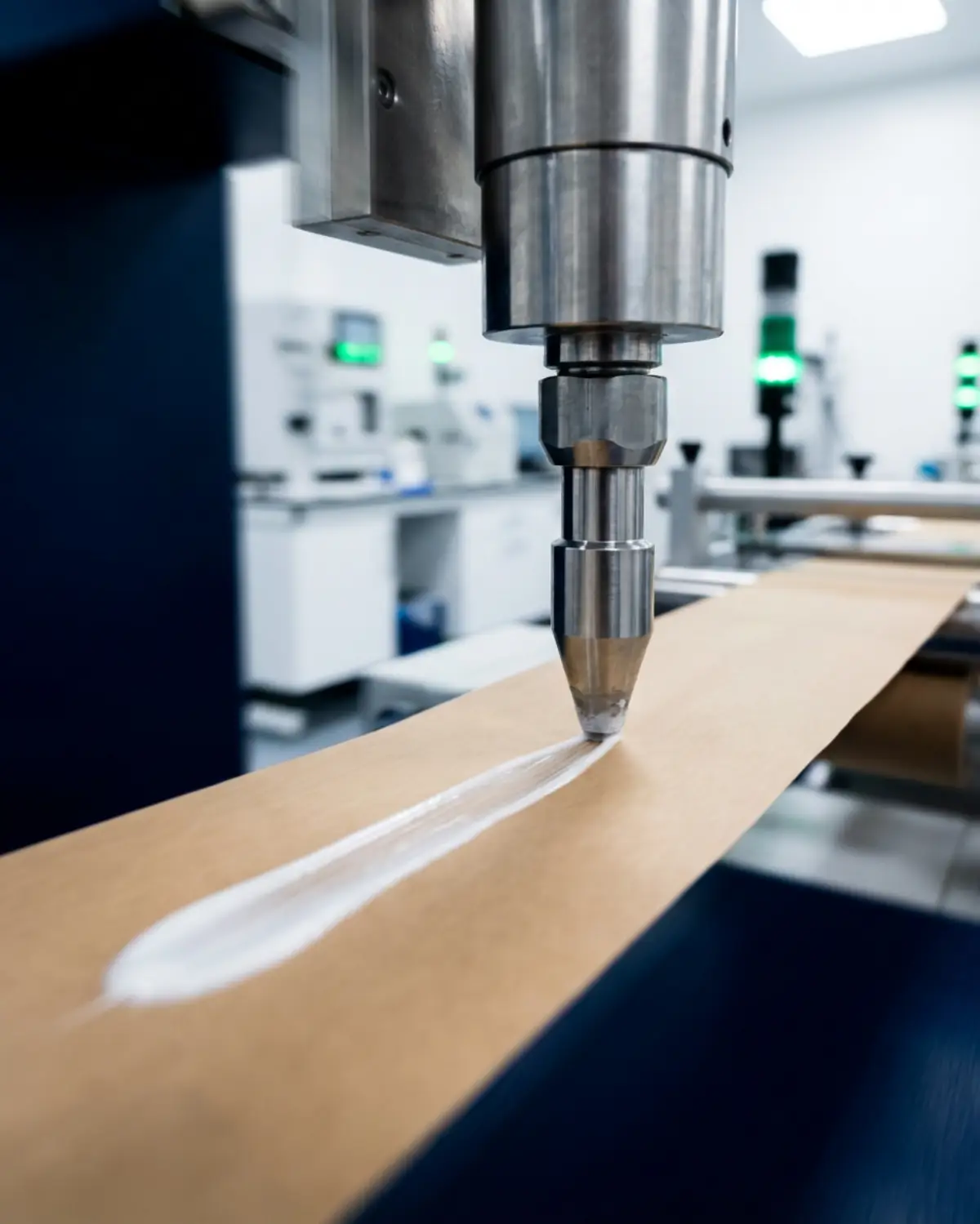
Cleaner nozzle behavior mattered almost as much as bond strength because repeated cleanup stops were slowing the bag line down.
Handle pull-off, bottom creep, and nozzle fouling were showing up on the same bag program
The converter was supporting heavy-duty carrier bags and sack formats, but the existing adhesive package could not keep structural hold, machine cleanliness, and output rate in balance.
- Handle attachments were releasing too easily on heavier bags, especially when the paper stock or folding consistency drifted.
- Bottom folds could creep after forming, which weakened shape retention during stacking and outbound handling.
- Operators were also losing time to nozzle stringing and cleanup, so improving bond strength alone would not have solved the production problem.
A bagmaking adhesive package tuned for fiber tear, bottom hold, and cleaner high-speed application
Senda treated the project as a process-fit problem, balancing viscosity, wet tack, and set speed so the adhesive could lock the bag structure quickly without creating more mess on the line.
Products Used:
- Heavy-Duty Bagmaking Adhesive
Built for handle attachment, bottom pasting, and cleaner nozzle performance on fast paper bag lines.
What made the trial credible was that it did not separate bond strength from machine behavior. The approved grade had to hold the handle, keep the bottom shape from drifting, and still run with a cleaner cutoff profile instead of trading one failure mode for another.
Qualification sequence
Bag structure and paper review
The team compared paper absorbency, handle design, bottom fold geometry, and target bag load before changing the adhesive package.
Load and shape-retention checks
Trial bags were reviewed for handle retention, fiber tear mode, and bottom stability under the heavy-load condition already used on the customer main format.
Line-window tuning
Viscosity, application amount, and machine speed were adjusted together so the stronger bond did not come at the cost of more stringing, splash, or cleanup stops.
Cleaner application mattered almost as much as bond strength because repeated nozzle cleanup was slowing the bag line down.
What changed for the bag program
- Stronger handle retention: The approved grade built a more reliable fiber-tear style bond on heavy-load handle attachments instead of letting the handle patch release first.
- Better bottom-shape hold: Bottom folds stayed more stable after forming, reducing creep risk on stacked or transported bags.
- Cleaner machine behavior: The converter no longer had to accept as much stringing and nozzle fouling just to get the bond strength the bag needed.

Validated operating window
Validated operating window
The approved bag build was reviewed against the heavy-load condition already called out in the solution evidence.
The faster-setting adhesive supported the higher production-rate target already set for that application.
Cleaner cutoff and less nozzle fouling reduced routine stops compared with the previous bagmaking adhesive.
Related resources
- Optimizing Paper Bag Production: Handles, Bottom Paste, and Nozzle Discipline
Handle bond, bottom paste, and nozzle discipline for heavy-duty bag programs.
- Request a paper bag adhesive trial
Prepaid sample for handle and bottom bond screening on your bag weight and paper grade.

" Our previous glue couldn't handle 15 kg heavy-duty bags. Senda's formulation solved the handle failures, reduced daily cleanup, and let us run the line 20% faster. "
Ready to Write Your Own Success Story?
Our technical engineers are ready to help you solve your specific adhesion challenges. Get in touch for a free consultation and sample testing.
Replicate This Success