Cigarette adhesive performance is best qualified on the real production window, not by lab data alone. This guide helps buyers and plant teams evaluate line speed, paper grades, bond points, cleanliness, set window, and supplier documentation before changing adhesive chemistry.
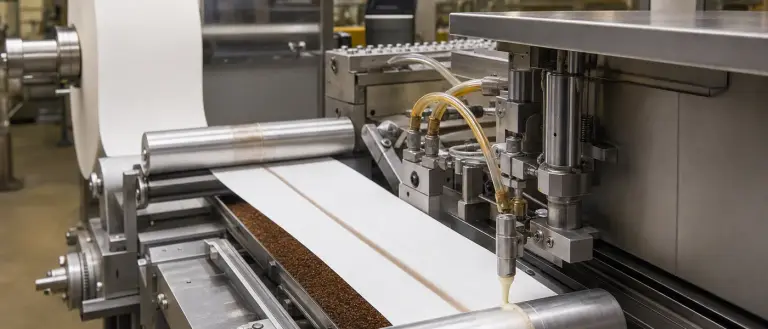
Table of Contents
- ·Why Cigarette Adhesive Qualification Starts at the Machine
- ·Document the Line Context Before Comparing Adhesives
- ·Match Each Bond Point to Its Real Performance Requirement
- ·Evaluate Paper Grades, Absorbency, and Surface Behavior
- ·Qualify Line Speed, Open Time, and Compression Timing Together
- ·Control Stringing, Pickup Drift, and Adhesive Transfer
- ·Check Machine Cleanliness and Temperature Stability
- ·Build a Practical Qualification Trial Plan
- ·Review Supplier Documents Before Approval
- ·Troubleshoot Common Qualification Failures
- ·Requalify After Paper, Speed, Equipment, or Supplier Changes
- ·Field Evidence
- ·Final Takeaway
- ·Frequently Asked Questions
Why Cigarette Adhesive Qualification Starts at the Machine
A cigarette adhesive system should not be judged by viscosity, solids, or a sample label alone. Those details matter, but they do not prove that the adhesive will run cleanly on a real cigarette production line. Start from the cigarette adhesives application page for bond-point options, then use the industrial qualification checklist for cross-application trial discipline. The real test is whether the adhesive can transfer, wet the paper, hold the bond, and stay stable under the plant’s actual speed, substrate mix, application method, and compression sequence.
Many adhesive problems appear first as machine symptoms. Operators may see stringing at the nozzle, pickup drift on the paper, open seams, filter movement, poor folding, glue build-up, or more frequent cleanups. These symptoms are often blamed on the adhesive right away. Sometimes the adhesive is the issue. Other times, the root cause is paper absorbency, nozzle wear, temperature drift, wrong glue amount, poor compression timing, or a trial performed at a slower speed than normal production.
That is why cigarette adhesive qualification should be built around the line window. The goal is not to “prove” that one adhesive is perfect for every bond point. The goal is to confirm where it performs reliably, where it needs adjustment, and where a different grade may be safer. A good qualification process looks at the full sequence: adhesive supply, application, transfer, open time, compression, initial bond strength, downstream handling, and finished pack appearance.
For buyers, this approach also reduces purchasing risk. A lower-cost adhesive may look attractive on paper, but if it increases rejects, cleanup time, or changeover instability, the real cost can be higher. A higher-performance adhesive may also be unnecessary if the bond point is simple and the line window is forgiving. The best decision comes from testing the adhesive against actual machine conditions, not from comparing technical data sheets in isolation.
Use this checklist as a practical guide before approving a new cigarette adhesive, changing paper grades, moving to a new supplier, or requesting a production-scale trial.
Document the Line Context Before Comparing Adhesives
Before a supplier recommends a cigarette adhesive, the plant should document how the line actually runs. This step sounds basic, but it prevents many false conclusions during qualification. Without line context, two adhesives may be compared under conditions that do not reflect daily production.
Start with the applicator. Record whether the line uses a glue wheel, nozzle, spray, jetting system, or hybrid application setup. Include the applicator model if available, nozzle size, pump type, glue hose condition, pot or tank arrangement, and typical cleaning routine. Adhesive performance can change when the same chemistry is used through different application systems.
Next, record the real running speed range. Do not qualify only at a comfortable trial speed if the line normally runs faster. Lower-speed trials can hide stringing, delayed set, pickup drift, and compression timing issues. A reliable qualification should include the normal operating range and, where practical, the upper range used during routine production. This does not mean the adhesive supplier should promise a universal maximum speed. It means the buyer and supplier should agree on the specific line window being tested.
Paper grades also need to be listed by bond point. Tipping paper, plug wrap, filter material, inner frame, carton board, and packaging substrates can all respond differently to the same adhesive. Paper absorbency, surface treatment, coating, porosity, moisture level, and storage condition can affect glue transfer and bond formation.
A simple line context record should include:
| Qualification Item | What to Record | Why It Matters |
|---|---|---|
| Line speed range | Normal speed, trial speed, upper operating range | Confirms that the adhesive is tested under real conditions |
| Applicator type | Glue wheel, nozzle, jetting, spray, or hybrid | Affects transfer, stringing, and cleanup |
| Bond point | Tipping, plug wrap, seam, pack, carton | Each bond has a different set and compression need |
| Paper grade | Supplier, grade, absorbency, coating, width | Paper changes can shift adhesive behavior |
| Adhesive settings | Temperature, pressure, viscosity target, coat weight | Helps compare trials fairly |
| Cleaning routine | Frequency, method, downtime, residue location | Shows whether the adhesive runs cleanly |
| Defect history | Open seams, pickup drift, stringing, loose packs | Connects trial results to real production risk |
This information gives both the buyer and adhesive supplier a fair baseline. It also helps avoid a common mistake: changing chemistry before confirming that the machine, substrate, and process window are stable.
Match Each Bond Point to Its Real Performance Requirement
A cigarette adhesive system may include several bond points, and each one has a different job. One adhesive grade may work well in one location but perform poorly in another. For this reason, qualification should separate bond points rather than treating the whole line as one adhesive problem.
For tipping and filter bonding, pickup stability and placement repeatability are critical. The adhesive must transfer consistently without skipping, smearing, or forming strings. The bond must hold through cutting, handling, and downstream movement. If the adhesive is too slow to set, the filter or tipping paper may shift. If it dries too quickly, it may not wet the paper properly before compression.
For plug wrap and seam applications, the set window becomes very important. The adhesive must remain open long enough to allow proper positioning, then build strength quickly enough to prevent seam lift. A poor fit may appear as open seams, weak overlap areas, or intermittent failures after the product has already moved away from the bonding station.
For pack and carton bonding, the focus changes again. Folding, compression, board stiffness, coating, and visual pack integrity matter more. The adhesive must support clean folding without squeeze-out, staining, delayed bond formation, or visible deformation. A pack adhesive may need a different balance of tack, open time, and final bond strength than a tipping adhesive.
The best practice is to qualify each bond point separately, even when products come from the same supplier portfolio. Ask: What does this bond need to survive? Does it need fast initial tack? Clean machining? Longer open time? Resistance to spring-back? Better wetting on a coated surface? Lower stringing? A single “good adhesive” answer is rarely enough.
A useful bond-point checklist includes:
| Bond Point | Key Qualification Focus | Common Warning Signs |
|---|---|---|
| Tipping and filter | Pickup stability, placement repeatability, clean transfer | Stringing, filter movement, adhesive skips |
| Plug wrap | Fast set, low stringing, seam security | Open seam, edge lift, glue build-up |
| Longitudinal seam | Wetting, compression timing, bond continuity | Weak overlap, delayed opening |
| Pack folding | Compression window, board response, visual appearance | Loose flap, squeeze-out, poor folding |
| Carton sealing | Bond strength, board coating compatibility, set speed | Carton pop-open, slow handling strength |
This method helps buyers avoid overgeneralizing trial results. Passing one bond point does not automatically qualify the adhesive for every other position.
Stringing or Open Seams?
Review cigarette adhesive grades by bond point and machine window.
Cigarette Adhesive SolutionsEvaluate Paper Grades, Absorbency, and Surface Behavior
Paper grade changes are one of the most common reasons an adhesive that once ran well begins to create defects. Even when the adhesive formula has not changed, a new paper supplier, coating level, porosity range, or moisture condition can shift the bonding window.
Highly absorbent paper may pull water or liquid phase into the substrate quickly. This can reduce open time and cause the adhesive to lose wet tack before compression is complete. In some cases, the bond may look acceptable at first but show weak hold after cutting or handling. On the other hand, low-absorbency or coated paper may keep the adhesive closer to the surface. That can improve wetting in some cases, but it can also increase smearing, delayed set, or movement before compression.
Tipping paper, plug wrap, and packaging board should not be treated as interchangeable substrates. Each has its own surface behavior. A small change in coating, caliper, or surface energy can alter adhesive pickup. Even storage conditions can matter. Paper exposed to humidity variation may run differently from paper kept in a stable environment.
During qualification, test every paper grade that will be used in real production. If the buyer expects the adhesive to work across multiple grades, the trial should include those grades. Do not approve the adhesive on the easiest substrate and assume it will behave the same on the most difficult one.
A strong paper-grade qualification should answer these questions:
- Does the adhesive transfer evenly to each paper grade?
- Does pickup remain stable over a continuous run?
- Does the adhesive wet the surface before it sets?
- Does the paper absorb the adhesive too quickly?
- Does coating slow down set or create sliding?
- Does the bond remain stable after cutting, folding, or packing?
- Does a supplier change require requalification?
When paper is part of the problem, changing adhesive viscosity alone may not fix it. The supplier may need to adjust grade selection, solids profile, tack development, or application settings. The buyer should also confirm whether paper specifications and incoming quality checks are tight enough to support repeatable bonding.
Qualify Line Speed, Open Time, and Compression Timing Together
Line speed affects almost every part of cigarette adhesive performance. As speed increases, the time between adhesive application and compression becomes shorter. The adhesive has less time to transfer, level, wet the substrate, and build initial strength. This is why a trial at slow speed can be misleading.
The key concept is the set window. The adhesive must stay open long enough for correct bond formation, but it must set quickly enough to hold the product as it moves downstream. If the open time is too short, the adhesive may dry or skin before compression. If the set is too slow, the bond may shift, smear, or open later.
Compression timing is just as important. Some defects are not caused by weak adhesive chemistry but by a mismatch between adhesive open time and the machine’s real sequence. If compression occurs too late, the adhesive may not wet properly. If compression is too brief or uneven, the bond may not form consistently. If the product is disturbed before initial strength develops, seams or packs may open after the bonding station.
A practical speed qualification should include:
| Trial Step | Purpose | What to Watch |
|---|---|---|
| Start-up observation | Check transfer after idle or startup | Skips, blobs, delayed flow |
| Normal speed run | Confirm standard production behavior | Pickup drift, open seams, stringing |
| Upper range run | Stress the process window | Loss of placement, poor set, residue |
| Continuous run | Check heat, viscosity, and cleanliness stability | Nozzle build-up, glue pot skinning |
| Stop-start cycle | Simulate realistic production interruptions | Plugging, dried adhesive, restart defects |
Avoid making broad speed claims unless they are tied to a defined machine, substrate, and trial condition. A better qualification statement is: “The adhesive was tested on this line, with these paper grades, within this speed range, using these settings.” That type of record is more useful than a general promise.
Control Stringing, Pickup Drift, and Adhesive Transfer
Stringing and pickup drift are two of the clearest signs that the adhesive, applicator, or process window is not stable. They can also create secondary problems such as machine contamination, visual defects, inconsistent bond weight, and more frequent cleaning.
Stringing may occur when the adhesive stretches between the applicator and substrate instead of breaking cleanly. It may be influenced by viscosity, temperature, adhesive rheology, nozzle condition, line speed, or distance between applicator and substrate. Stringing is not always solved by lowering viscosity. In some cases, a different adhesive grade or equipment adjustment is needed.
Pickup drift means the adhesive amount or placement changes over time. This can happen because of pump variation, pressure changes, paper behavior, temperature drift, worn applicator parts, or build-up near the glue delivery point. The result may be intermittent defects that are difficult to catch during a short lab-style trial.
During qualification, the team should look beyond the first few minutes of production. A clean start does not prove long-run stability. Run long enough to observe whether adhesive builds up on nozzles, wheels, guides, rollers, folding tools, or compression areas. Record cleanup intervals before and after the trial so the impact is visible.
Important transfer checks include:
- Adhesive bead or pattern consistency
- Glue placement repeatability
- Edge cleanliness
- Stringing at production speed
- Build-up around nozzles or wheels
- Glue amount stability during continuous running
- Restart behavior after short stops
- Visual condition of the bonded product
A well-qualified adhesive should support stable transfer within the agreed process window. If it only works when the machine is freshly cleaned, running slowly, or using one narrow paper grade, that limitation should be documented before approval.
Check Machine Cleanliness and Temperature Stability
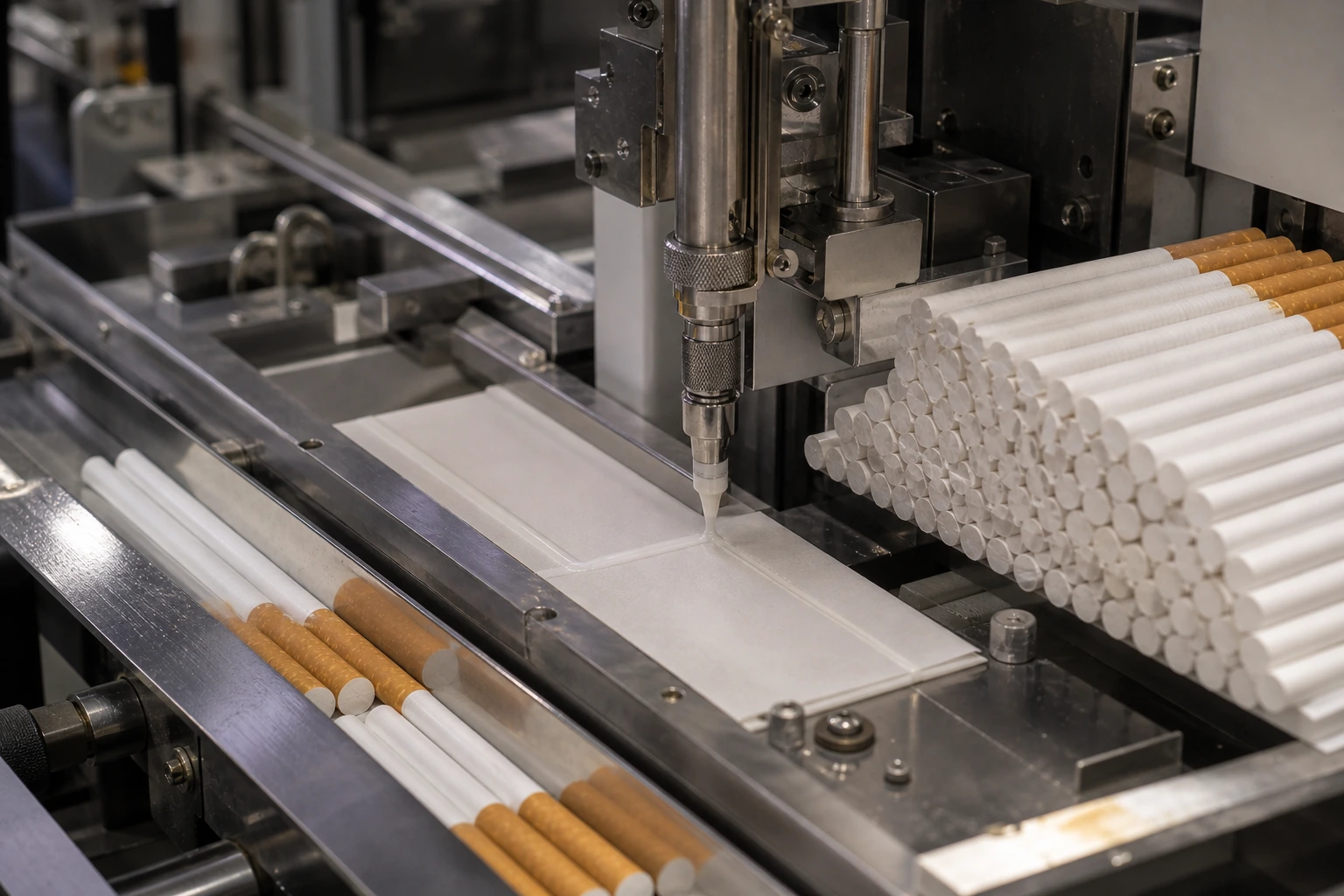
Machine cleanliness is not just a housekeeping issue. It is part of adhesive qualification. Residue, dried adhesive, worn nozzles, clogged filters, and contaminated glue paths can make a good adhesive look bad. They can also make trial results impossible to compare.
Before testing a new cigarette adhesive system, the line should be cleaned according to a clear procedure. Old adhesive residue should be removed where practical, especially from tanks, hoses, nozzles, glue wheels, and contact surfaces. Mixing unknown residues with a new adhesive can create false defects such as gel particles, plugging, poor flow, or unstable viscosity.
Temperature stability also deserves attention. Adhesives can respond differently to heat or cold depending on their chemistry and use conditions. Temperature drift in glue pots, hoses, ambient plant areas, or stored materials can change viscosity and transfer behavior. If the plant runs in a wide temperature or humidity range, this should be considered during qualification.
The trial record should include cleaning status, adhesive age, storage condition, line temperature, and any temperature settings used by the application system. This information may seem minor, but it helps explain why an adhesive trial passed one day and failed the next.
A simple cleanliness control plan can include:
| Area | Check Before Trial | Check After Trial |
|---|---|---|
| Glue tank or pot | Old residue, skinning, contamination | Build-up, sediment, cleaning effort |
| Hoses and filters | Flow restriction, blockage | Pressure change, residue |
| Nozzles or wheels | Wear, clogging, alignment | Stringing, dried adhesive |
| Guides and rollers | Existing glue contamination | Fresh transfer marks |
| Compression area | Surface cleanliness, alignment | Squeeze-out, bonded residue |
Cleanliness data helps both sides make better decisions. If a trial fails on a dirty line, the result may not reflect the adhesive. If a trial passes only after unusually deep cleaning, the buyer should still ask whether the adhesive can support normal production routines.
Build a Practical Qualification Trial Plan
A strong qualification plan should be simple enough for the plant to run, but detailed enough to support a buying decision. The plan should define what will be tested, how success will be judged, and what information will be recorded.
Start by selecting the bond points. Do not test only the easiest application. Include the bond points where failures have occurred or where adhesive cost, speed, or cleanliness matters most. Next, choose the paper grades. Include the main production grade, any high-risk grade, and any grade expected to be used after supplier changes.
Then define the machine conditions. Record line speed, adhesive temperature if applicable, application pressure, coat weight or glue amount, nozzle or wheel settings, compression timing, and startup conditions. Use the plant’s normal operating settings where possible. If settings must be changed, document them clearly.
The trial should also define acceptance criteria. These criteria do not need to be complicated, but they should be observable. Examples include stable pickup, no repeated open seams, acceptable cleanup interval, no visible pack deformation, consistent restart behavior, and acceptable bond hold after downstream handling.
A buyer-focused trial plan might look like this:
| Stage | Action | Output |
|---|---|---|
| Pre-trial | Collect TDS, SDS, compliance statements, sample label, batch code | Supplier document file |
| Line setup | Clean equipment, record settings, confirm paper grades | Baseline condition |
| Short run | Check transfer, placement, and visible defects | Early fit assessment |
| Normal run | Run at actual production speed | Process window evidence |
| Stress check | Include stop-starts or upper speed range where practical | Stability evidence |
| Post-run | Inspect bonded products and machine cleanliness | Approval or adjustment decision |
| Documentation | Record results, limits, and requalification triggers | Internal qualification record |
This kind of plan makes the decision clearer. It also helps the buyer explain the result internally to production, quality, purchasing, and management teams.
Review Supplier Documents Before Approval
A good adhesive trial should be supported by clear supplier documentation. The most common documents include the TDS, SDS, product label, batch information, and any relevant regulatory or restricted substance statements requested by the buyer.
The TDS should help the plant understand basic handling and application guidance. It may include appearance, viscosity range, solids content, pH, application method, storage guidance, and shelf-life information. These values should not be treated as the only qualification criteria, but they help confirm whether the delivered adhesive matches the expected product.
The SDS is important for safe handling, storage, transport, and workplace communication. Buyers should review it with their internal EHS or safety team. Do not rely on informal claims when formal documents are required.
Regulatory and compliance requests vary by market, product construction, customer requirement, and region. Some buyers may ask for statements related to FDA, REACH, RoHS, EN 71-3, or other restricted substance frameworks. The supplier should not make broad claims unless the statement is accurate for the product and supported by the right documentation. Buyers should also confirm whether the statement applies to the adhesive as supplied, the finished product, a specific use case, or a specific regulatory scope.
For REACH-related review, teams often refer to official resources from the European Chemicals Agency, such as the ECHA REACH overview. The buyer should still confirm the latest requirements with qualified regulatory staff or advisors.
Useful supplier questions include:
- What is the recommended bond point for this adhesive?
- What application systems has it been tested with?
- What paper or substrate types are known to be sensitive?
- What TDS and SDS documents are available?
- What is the MOQ for production orders?
- What is the normal lead time?
- Can the supplier provide a lab sample or plant trial quantity?
- Are batch traceability and retained samples available?
- Which compliance statements can be provided, and what is their exact scope?
Strong documentation does not replace a line trial. It supports the trial and reduces uncertainty before the buyer commits to approval.
Troubleshoot Common Qualification Failures
When a cigarette adhesive trial fails, the first question should not be “Is the adhesive bad?” A better question is “Which part of the bonding sequence failed?” This helps the team separate chemistry issues from process issues.
The table below gives a practical starting point:
| Symptom | Possible Causes | What to Check First |
|---|---|---|
| Stringing | Viscosity mismatch, nozzle distance, speed, temperature, adhesive rheology | Applicator condition, viscosity range, line speed |
| Open seam | Short open time, poor compression, low glue amount, paper absorbency | Compression timing, paper grade, glue placement |
| Pickup drift | Pump variation, build-up, paper change, pressure drift | Pump pressure, nozzle/wheel cleanliness, paper lot |
| Loose filter | Slow set, poor placement, movement before bond forms | Transfer pattern, compression, downstream handling |
| Glue build-up | Over-application, poor break-off, dirty equipment | Coat weight, nozzle condition, cleanup interval |
| Pack flap opens | Board stiffness, coating, slow set, weak compression | Board grade, fold pressure, adhesive amount |
| Squeeze-out | Too much adhesive, wrong viscosity, excessive pressure | Glue amount, compression setting, application width |
| Restart defects | Adhesive drying during stop, nozzle plugging, pot skinning | Stop-start behavior, cleaning routine, adhesive exposure |
This approach gives the supplier useful evidence. Instead of saying “the adhesive failed,” the buyer can say, “At normal speed, pickup drift appeared after 40 minutes on this paper grade,” or “Open seams increased after a stop-start cycle.” That level of detail makes corrective action faster and more accurate.
Requalify After Paper, Speed, Equipment, or Supplier Changes
A cigarette adhesive system should not be approved once and forgotten. Requalification is needed when the production window changes in a way that may affect bonding.
The most obvious trigger is a paper supplier or paper grade change. Even when the new paper looks similar, absorbency and surface behavior may not be the same. Requalification is also wise after changes in line speed, applicator hardware, nozzle size, glue wheel condition, compression tooling, or cleaning procedure.
Supplier-side changes can also trigger review. If the adhesive grade changes, the manufacturing site changes, the specification is updated, or the buyer receives a new compliance statement, the quality team should decide whether a full or partial requalification is needed.
A practical requalification rule is simple: if the change affects transfer, wetting, open time, compression, set speed, safety documentation, or compliance scope, review it before routine production. The review may be short, but it should be documented.
Suggested requalification triggers include:
- New paper supplier
- New paper coating or absorbency range
- Higher production speed
- New nozzle, glue wheel, or applicator setup
- Change in compression timing
- New adhesive grade
- Change in adhesive storage condition
- Repeated defects after a stable period
- Updated TDS, SDS, or compliance requirement
- Customer complaint linked to bond integrity
This process protects the plant from hidden risk. It also helps purchasing teams avoid approving changes based only on cost or availability.
Field Evidence
A cigarette converter reduced pickup drift, applicator buildup, and seam-related stops after matching adhesive rheology and set behavior to the real pickup window. Use the cigarette line pickup stability case study as a practical companion to this checklist.
Final Takeaway
Cigarette adhesive qualification is machine-window first. A successful trial should prove that the adhesive can run on the real line, at the real speed, with the real paper grades, through the real bond sequence. Lab data, TDS values, and supplier claims are useful, but they are not enough on their own.
The best process separates each bond point, records actual running conditions, checks paper behavior, monitors stringing and pickup stability, confirms compression timing, and documents cleanliness before and after the run. This gives buyers a clearer view of performance and helps suppliers recommend the right adhesive grade without guessing.
Before changing chemistry, stabilize the process. Before approving a supplier, test the full window. Before scaling up, document what passed, what failed, and what conditions must be preserved.
Frequently Asked Questions
Should we qualify one adhesive for all cigarette bond points?
Not automatically. Tipping, plug wrap, seam, pack, and carton bonds may require different performance balances. One adhesive may work across more than one point, but each bond point should still be tested separately under real production conditions.
What is the first machine symptom of a poor adhesive fit?
Common early signs include stringing, pickup drift, open seams, glue build-up, loose filters, and restart defects. These symptoms do not always prove the adhesive is wrong, but they show that the bonding window needs review.
Why should we test at actual line speed instead of a slower trial speed?
A slower trial can hide problems that appear only during normal production. At higher speed, open time, transfer, compression timing, and initial bond formation all become more demanding. Qualification should reflect the real running range.
How often should we requalify after a paper supplier change?
A paper supplier change should trigger at least a focused review. If absorbency, coating, porosity, moisture behavior, or surface finish changes, a line trial is recommended before full approval.
What documents should buyers request from an adhesive supplier?
Buyers commonly request the TDS, SDS, product label, batch information, storage guidance, shelf-life details, and relevant compliance statements. Depending on the market and customer requirement, buyers may also request statements related to FDA, REACH, RoHS, EN 71-3, or other frameworks.
Can viscosity alone predict cigarette adhesive performance?
No. Viscosity is useful, but it does not fully predict transfer, stringing, wetting, set speed, or bond strength on a specific line. Adhesive performance depends on chemistry, substrate, application system, speed, temperature, and compression timing.
What should we record during a cigarette adhesive trial?
Record the line speed, paper grade, applicator setup, adhesive settings, glue amount, compression timing, cleaning condition, run length, observed defects, restart behavior, and final bond appearance. Good records make supplier troubleshooting much easier.
When should we change adhesive chemistry instead of adjusting the machine?
Consider a chemistry change when the process window is stable but defects continue across normal settings, clean equipment, and approved paper grades. If the issue is caused by worn nozzles, poor compression, unstable temperature, or paper variation, changing adhesive alone may not solve the problem.
Validate cigarette line bond windows before scale-up
Request a complimentary 1 kg lab material sample (shipping prepaid by recipient) after screening your substrate, bond point, application method, and real line conditions. Our team can help review paper grade, line speed, set window, and supplier document requirements before your plant trial.
References
Technical Disclaimer: All technical data is based on standard laboratory conditions. Users should perform their own verification testing to confirm suitability for specific substrates, processes, and regulatory requirements. Senda Glue makes no warranties, express or implied, and assumes no liability for improper use of the products or reliance on this information.