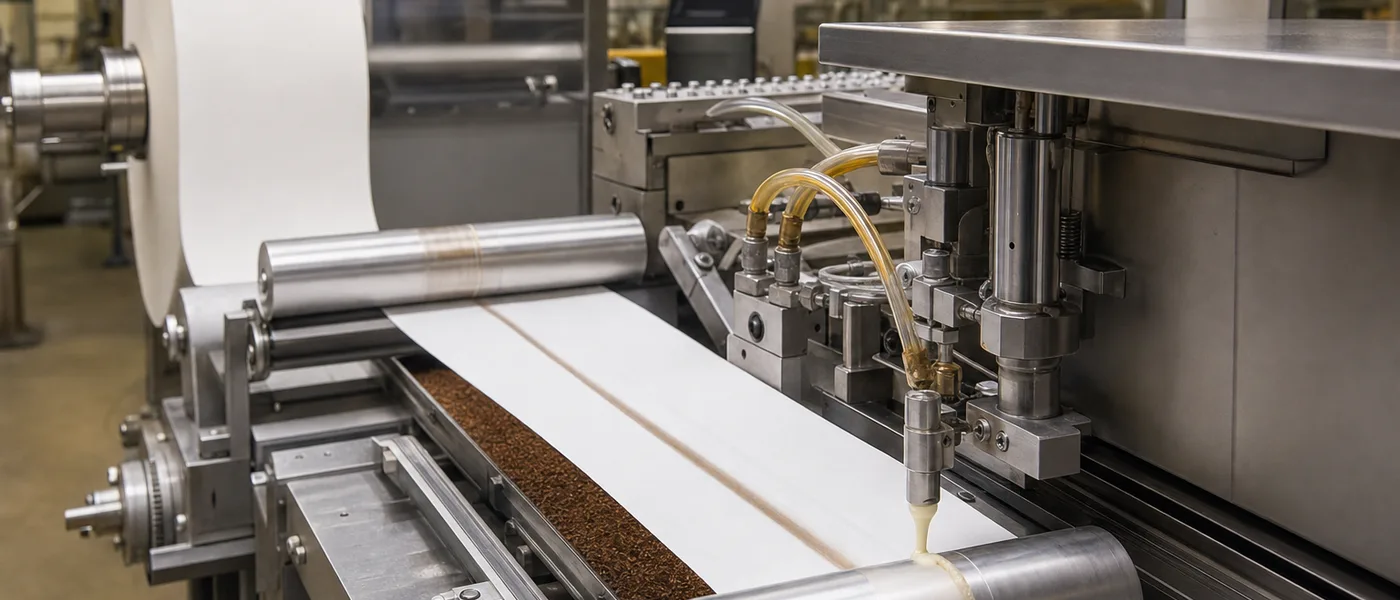
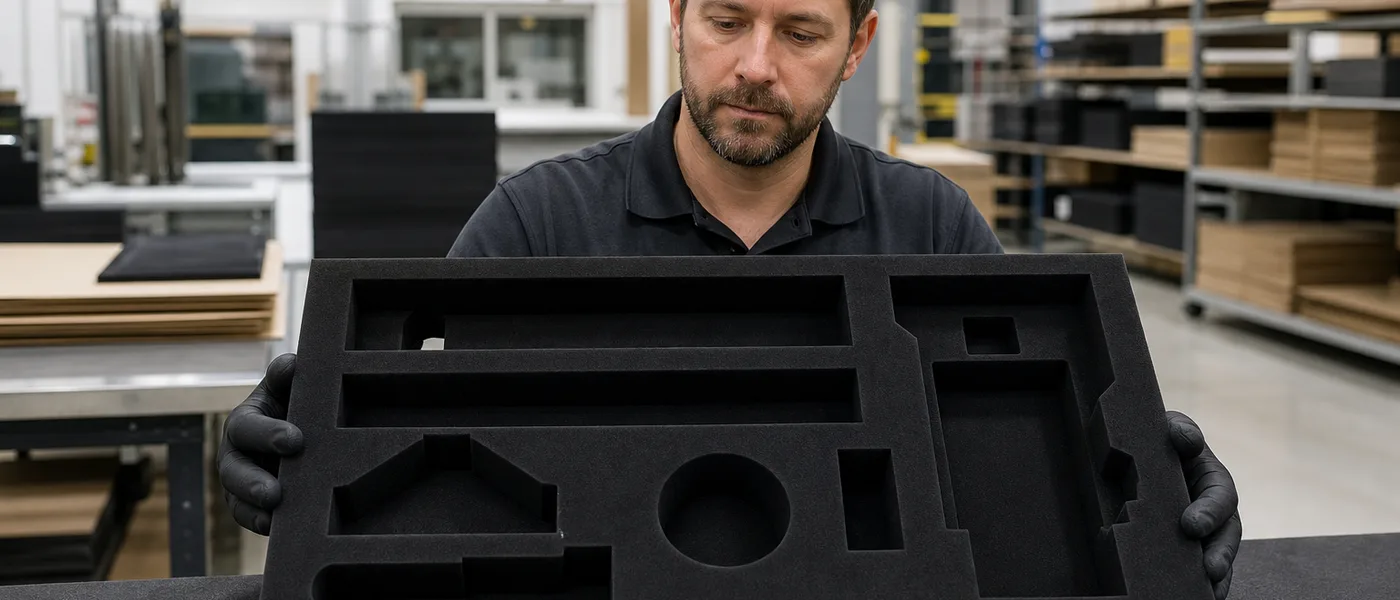
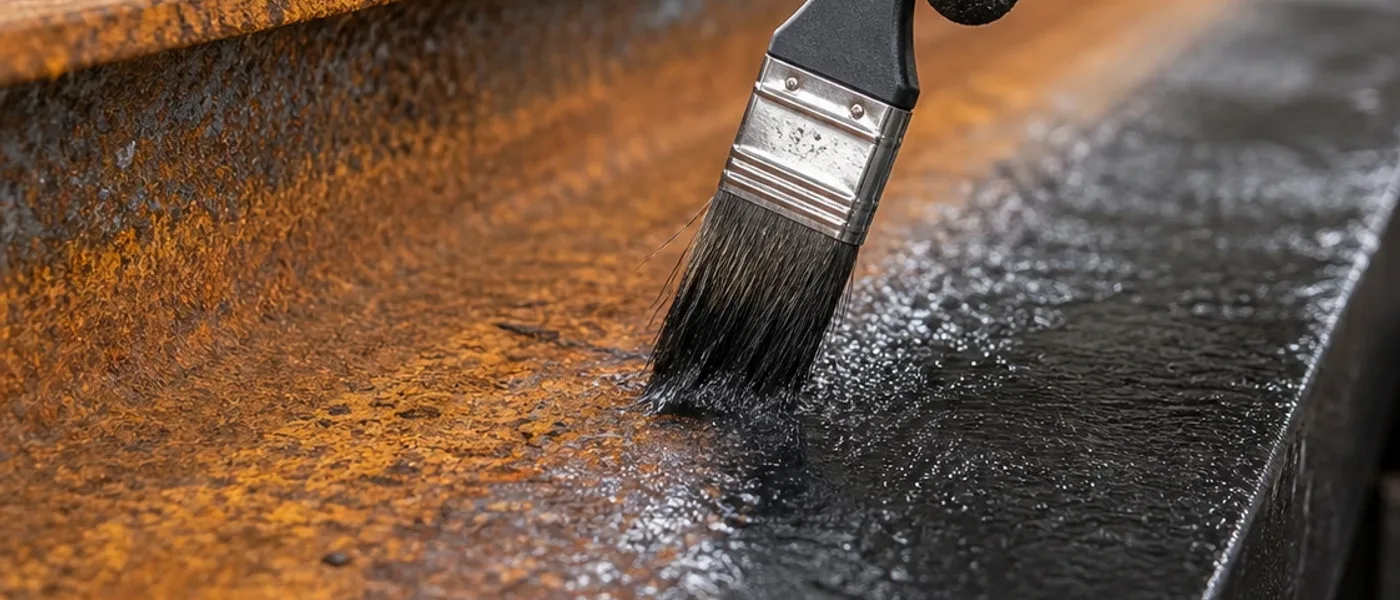
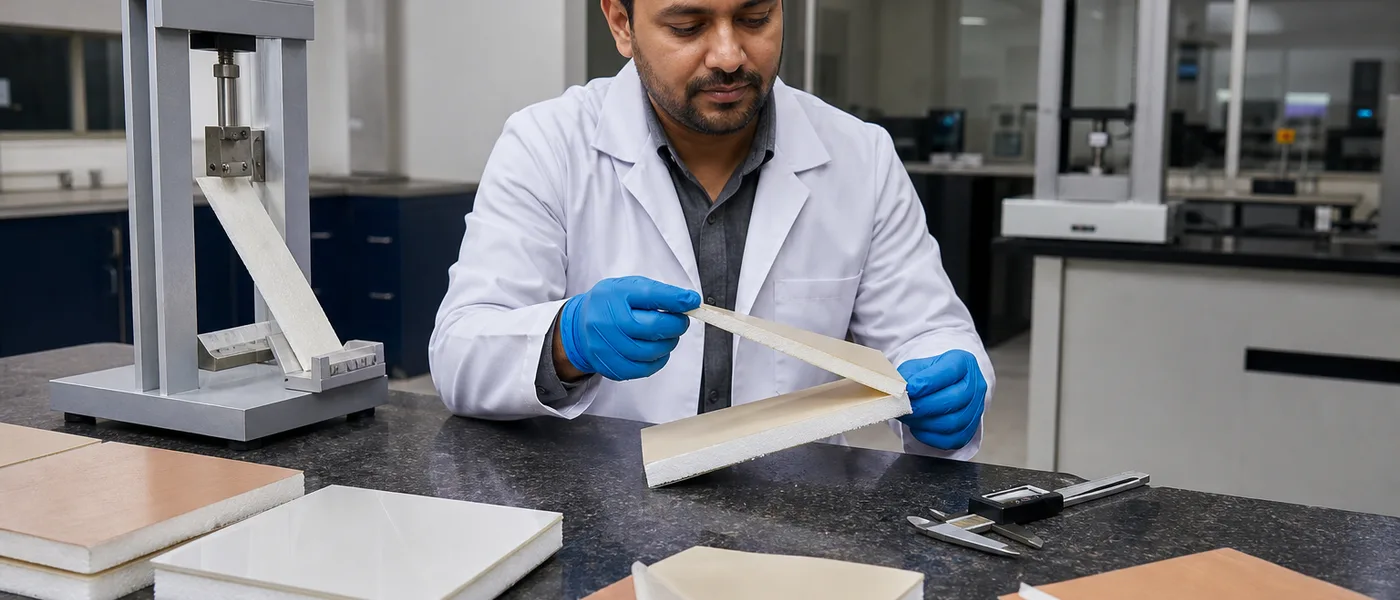
Industrial adhesive qualification should connect substrate condition, application window, line behavior, failure mode, supplier documents, and scale-up limits before bulk approval. A useful approval process tests the adhesive system on real materials, real equipment, and real production conditions instead of relying on lab tack or generic data alone.
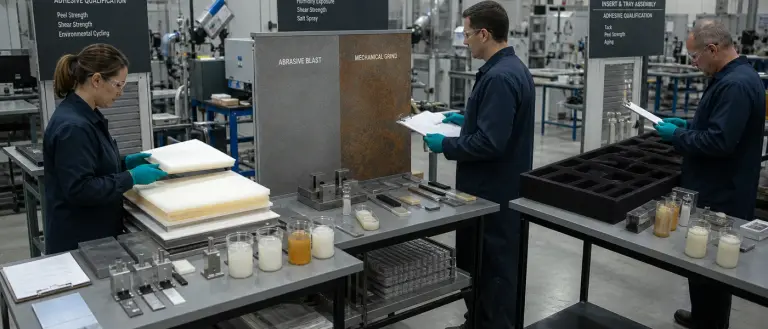
Table of Contents
- ·Why Industrial Adhesive Approval Should Not Start With Lab Tack Alone
- ·Step 1 — Define the Real Substrate Condition
- ·Step 2 — Map the Application Window
- ·Step 3 — Validate Line Behavior Under Real Conditions
- ·Step 4 — Identify the Failure Mode Before Changing Chemistry
- ·Step 5 — Confirm Documentation Readiness
- ·Step 6 — Route the Trial to the Right Deep Guide
- ·Build a Practical Industrial Adhesive Qualification Trial Record
- ·Approval Gates Before Bulk Purchase
- ·Field Evidence
- ·Final Takeaway
- ·Frequently Asked Questions
Why Industrial Adhesive Approval Should Not Start With Lab Tack Alone
Industrial specialty adhesives often look promising during early sampling. A lab coupon may bond well, a hand test may feel strong, and the TDS may show values that appear close to the buyer’s target. Yet production failures still happen when the adhesive reaches the real line.
The reason is simple: an adhesive is not used in isolation. It works as part of a system that includes the substrate, surface condition, application method, coat weight, open time, compression, cure or dry window, line speed, cleanup routine, storage condition, and final service stress. If one part of that system changes, the adhesive result can change too.
Many industrial adhesive rejects show up as line symptoms rather than simple bond failure. A plant may see edge lift, stringing, nozzle build-up, pickup drift, open seams, fiber shedding, primer blistering, stain-through, poor wet-out, adhesive ooze, or delayed set. These symptoms should not be treated as proof that the adhesive is “bad” until the process window is checked.
A practical approval process should move in this order:
substrate reality → application window → line behavior → failure mode → documentation readiness → scale-up decision
That sequence helps buyers avoid two common mistakes. The first mistake is approving an adhesive because it passed a lab tack test. The second is changing chemistry before checking surface contamination, application amount, open time, dry time, primer handoff, or line speed.
A good qualification should answer these buyer questions:
| Buyer Question | Qualification Focus |
|---|---|
| What surface is the adhesive bonding to? | Surface energy, porosity, corrosion, coating, paper grade, fiber, contamination |
| Can the adhesive be applied repeatably? | Applicator type, coat weight, nozzle, roller, spray, screen, glue wheel |
| Does the process window match production? | Open time, dry time, set time, cure schedule, compression, line speed |
| What failure mode appears first? | Peel, shear, creep, shedding, blistering, stain-through, open seam |
| Are supplier documents ready? | TDS, SDS, batch label, MOQ, lead time, scoped compliance documents |
| Can the result scale? | Trial quantity, production settings, cleaning interval, requalification triggers |
For procurement teams, this approach turns adhesive approval into a controlled decision. Instead of asking whether one product is “strong enough,” the buyer can ask whether the adhesive system works on the actual substrate, under the actual process conditions, with the documents needed for production approval.
Step 1 — Define the Real Substrate Condition
Substrate condition is the starting point for every industrial adhesive qualification. The same adhesive can behave differently on smooth film, porous board, rusted steel, fabric, rubber, flock fiber, cigarette paper, coated wrap stock, foam, or powder-coated metal. If the substrate is described only by a marketing name, the supplier may not have enough information to recommend the right material.
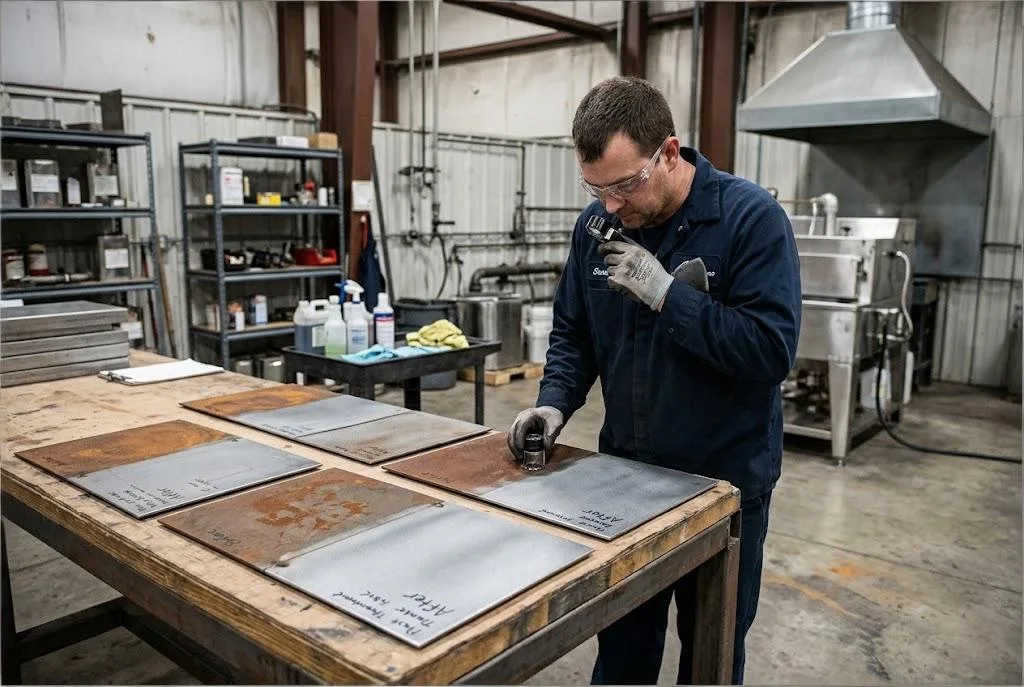
The buyer should document what the adhesive will touch. This includes the base material, surface finish, coating type, porosity, surface energy, contamination risk, storage condition, and any surface treatment. It is also helpful to photograph the substrate before and after application, especially when the failure mode appears at edges, seams, corners, pits, textured areas, or compressed zones.
Different adhesive applications need different substrate questions:
| Application Area | Substrate Questions to Ask |
|---|---|
| Industrial PSA | Is the surface LSE? Is there silicone, oil, dust, release liner transfer, or foam dust? |
| Rust-prep | Is the steel lightly rusted, pitted, scaled, oily, wet, or coated with old paint? |
| Flocking | What fiber type, fiber length, denier, substrate porosity, and surface preparation are used? |
| Cigarette adhesive | Which paper grade, absorbency range, bond point, and line speed are involved? |
| Decorative wrap | Is the wrap textured, dyed, fabric-like, coated, or sensitive to stain-through? |
| Packaging or regulated route | Does the use case require scoped FDA, EN 71-3, REACH, or RoHS document review? |
Surface contamination should be treated as a real process variable. Oil, mold release, dust, moisture, primer residue, corrosion products, paper sizing, plasticizer migration, and silicone transfer can all mimic adhesive weakness. A plant may think the adhesive has low strength when the real issue is a weak boundary layer between the adhesive and substrate.
A clear substrate record should include:
| Record Item | What to Capture |
|---|---|
| Material name | Film, foam, steel, board, paper, rubber, fabric, coating, or other |
| Supplier and grade | Substrate supplier, grade, lot, coating, finish |
| Surface condition | Smooth, textured, porous, corroded, coated, treated, contaminated |
| Surface prep | Cleaning, abrasion, corona, flame, primer, wipe, dust removal |
| Storage condition | Temperature, humidity, age, exposure, packaging condition |
| Failure area | Edge, seam, corner, pit, cavity, face panel, overlap, fold |
| Photos | Before trial, after prep, after bonding, after handling |
This step protects both buyer and supplier. If the trial is approved on clean lab panels but production uses dusty foam, rusty steel, low-surface-energy plastic, or textured wrap stock, the approval may not predict real line performance.
Step 2 — Map the Application Window
After the substrate is defined, the team should map the application window. This means recording the conditions under which the adhesive is applied, transferred, positioned, compressed, cured, dried, or handled.
An adhesive that works well at one speed may fail at another. A material that bonds cleanly when applied by hand may string through a nozzle. A coating that looks stable in a lab cup may drift during a shift. A bond that holds after 24 hours may fail if the part is loaded immediately. These differences are why production approval must include process details.
The application window may include:
| Process Variable | Why It Matters |
|---|---|
| Applicator type | Nozzle, spray, roller, screen, brush, glue wheel, slot die, or hand application |
| Coat weight | Controls wet-out, set time, squeeze-out, stain-through, retention, or peel |
| Open time | Defines how long the adhesive remains workable before bonding or flocking |
| Set or dry time | Affects handling, trimming, brushing, packing, or primer handoff |
| Cure schedule | Controls final strength, flexibility, odor, brittleness, or retention |
| Compression | Influences wet-out, seam hold, foam recovery, wrap appearance, or pack integrity |
| Line speed | Changes transfer time, dwell, pickup stability, and cleanup behavior |
| Temperature and humidity | Affect viscosity, drying, corrosion risk, electrostatic transfer, and wet-out |
| Stop-start behavior | Reveals skinning, plugging, stringing, restart defects, or pot drift |
The application window should be measured at real production conditions where practical. A slower trial speed may hide stringing, delayed set, open seams, pickup drift, or edge ooze. A short run may not reveal nozzle build-up, liner release drift, cure delay, or cleanup burden. A clean start may not show what happens after several stop-start cycles.
For specialty buyers, the goal is not to demand a universal guarantee. The goal is to define a qualified window. For example, a useful approval statement might say that the adhesive was tested on a specific substrate, with a specific applicator, inside a specific open-time and line-speed range, using a specific dry or cure schedule.
That is much stronger than saying the adhesive “worked in the lab.”
Step 3 — Validate Line Behavior Under Real Conditions
Line behavior is where many industrial adhesive decisions become clear. The adhesive may pass a bench test, but production teams still need to know whether it runs cleanly, transfers consistently, and supports the downstream sequence.
Each application has its own line symptoms. PSA converting may reveal edge ooze or matrix stripping trouble. Flocking may reveal patchy density or shedding after brushing. Rust-prep may appear acceptable until primer wet-out fails. Cigarette adhesives may show stringing, pickup drift, or open seams at real speed. Decorative wrap adhesives may show stain-through, seam halos, or odor after closed-box storage.
The trial should include normal line conditions, not only the easiest setup. Check start-up, continuous running, stop-start behavior, cleanup interval, and post-handling results. A good adhesive system should be evaluated across the process steps that matter to the buyer’s product.
| Line Behavior | What It May Indicate |
|---|---|
| Stringing or splash | Viscosity, applicator geometry, temperature, line speed, adhesive rheology |
| Nozzle or wheel build-up | Drying behavior, contamination, machine cleanliness, pot life |
| Edge ooze | Coat weight, adhesive softness, storage temperature, die pressure |
| Pickup drift | Pump pressure, paper grade, substrate absorbency, applicator wear |
| Open seam | Open time, compression timing, paper behavior, glue amount |
| Flock shedding | Under-cure, poor coat weight, weak substrate prep, early brushing |
| Primer blistering | Moisture, salt, residue, poor dry time, weak surface preparation |
| Stain-through | Wrap absorbency, adhesive amount, compression, drying profile |
| Creep or sliding | Shear balance, service load, temperature, adhesive cohesion |
| Odor after packing | Incomplete drying, enclosed storage, adhesive selection, substrate interaction |
Production teams should also document cleanup. A material that bonds well but causes frequent downtime, clogged equipment, excessive residue, or operator handling problems may not be practical. Line approval should include both performance and usability.
The best trial record includes photos, operator notes, defect timing, run length, cleanup interval, and any setting changes made during the trial. This helps prevent a common problem: a trial passes because an experienced operator adjusted the process carefully, but the approved settings are never documented for routine production.
Step 4 — Identify the Failure Mode Before Changing Chemistry
Changing adhesive chemistry too early can make troubleshooting harder. Before switching to a different grade, the team should identify where and how the failure occurs.
Failure mode tells the supplier what to fix. A peel failure from the substrate is different from cohesive split inside the adhesive. Foam tear is different from adhesive release. Flock shedding after brushing is different from low flock density before cure. Primer blistering is different from poor converter reaction. A cigarette seam opening at high speed is different from poor pickup at startup.
A practical failure-mode table can guide the next step:
| Failure Mode | First Checks | Route to Deep Guide |
|---|---|---|
| Edge lift or creep | Surface energy, coat weight, peel/shear balance, dwell time | /blog/industrial-psa-qualification-guide |
| Die-cut ooze or liner trouble | Coat weight, carrier, liner release, conversion speed | /blog/industrial-psa-qualification-guide |
| Blistering after primer | Rust level, moisture, residue, dry time, primer handoff | /blog/rust-prep-system-qualification-guide |
| Patchy flock or shedding | Fiber type, coat weight, substrate prep, cure, brushing | /blog/flocking-adhesive-qualification-guide |
| Cigarette open seam or pickup drift | Paper grade, line speed, bond sequence, set window | /blog/cigarette-adhesive-system-qualification-checklist |
| Decorative wrap stain-through | Wrap texture, board pairing, adhesive amount, compression | /blog/decorative-wrap-qualification-reach-fda |
| Odor in closed packaging | Drying profile, substrate interaction, storage, sensory review | Decorative wrap or packaging-specific guide |
| Weak wet-out on coated or LSE surface | Surface energy, contamination, primer/treatment need | Industrial PSA or specialty substrate guide |
The trial report should name the failure mode as clearly as possible. Instead of saying “adhesion failed,” record whether the adhesive released from the substrate, split internally, pulled fibers, tore foam, lifted old coating, opened a seam, or left residue.
This level of detail reduces unnecessary product changes. Sometimes the correct fix is surface cleaning. Sometimes it is coat weight. Sometimes it is cure time, primer compatibility, line speed, paper grade, compression, or humidity control. Only after these factors are understood should the team decide whether a different adhesive chemistry is needed.
Step 5 — Confirm Documentation Readiness
Industrial adhesive approval also requires document readiness. A sample may perform well, but purchasing, QA, EHS, export, or customer compliance teams may still need formal supplier documents before bulk approval.
The basic document pack usually includes the TDS, SDS, product label, batch code, storage guidance, shelf-life information, MOQ, lead time, and any customer-required statements. These documents should be tied to the exact product grade being tested, not a similar product family.
| Document | Buyer Use |
|---|---|
| TDS | Application guidance, viscosity or solids range, open time, storage, drying or cure notes |
| SDS | Safety handling, PPE, transport, storage, disposal, hazard communication |
| Product label | Grade confirmation, batch number, shelf-life tracking |
| Batch code | Traceability for trial and production approval |
| Trial report | Substrate, application window, line behavior, failure mode, photos |
| MOQ and lead time | Purchasing approval, shutdown planning, launch timing |
| REACH-related statement, when relevant | EU customer or internal restricted substance review |
| RoHS-related statement, when relevant | Electronics or customer-specific document review |
| FDA-related statement, when relevant | Food-adjacent or packaging use case review, scoped to the actual construction |
| EN 71-3-related statement, when relevant | Toy-adjacent or customer-specific review, scoped to the product and use case |
Compliance wording should stay careful. Do not turn document availability into broad claims such as “FDA approved,” “REACH compliant,” “RoHS certified,” or “food safe” unless the exact product, use case, construction, regulation, and supporting documents justify that wording. In most industrial adhesive qualification articles, safer language is “product-specific document review” or “scoped compliance review.”
This step is especially important for export programs, food-adjacent packaging, toy-adjacent packaging, electronics supply chains, premium retail launches, or customer audits. The supplier should clarify what the document covers, when it was issued, and whether it applies to the adhesive as supplied, the finished construction, or a specific customer requirement.
Documentation does not replace a line trial. It supports the line trial and helps the buyer approve the material responsibly.
Which Specialty Route Fits Your Line?
Browse PSA, rust converter, flocking, and cigarette adhesive clusters with case-backed qualification paths.
Industrial Specialty SolutionsStep 6 — Route the Trial to the Right Deep Guide
A pillar checklist should help the buyer decide where to go next. Not every adhesive problem belongs in the same technical guide. The right route depends on the failure mode, substrate, application method, and final approval requirement.
Use this routing table as a starting point:
| Buyer Situation | Recommended Next Guide |
|---|---|
| PSA edge lift, creep, foam lamination, die-cutting, liner release | /blog/industrial-psa-qualification-guide |
| Rusted steel, field repair, converter application, primer blistering | /blog/rust-prep-system-qualification-guide |
| Flocked trays, rubber profiles, fiber shedding, patchy flock density | /blog/flocking-adhesive-qualification-guide |
| Cigarette tipping, plug wrap, seam, pack bond, pickup drift | /blog/cigarette-adhesive-system-qualification-checklist |
| Luxury rigid boxes, decorative wrap, stain-through, invisible seams | /blog/decorative-wrap-qualification-reach-fda |
| General trial planning, sample review, substrate screening | /technical-services |
| Specialty product family overview | /industrial-specialty |
This routing step helps buyers avoid overgeneralized advice. A PSA peel table will not solve primer blistering on converted rust. A rust-prep guide will not solve flock fiber retention. A decorative wrap article will not answer cigarette line-speed questions. Each specialty application needs its own evidence.
The pillar checklist remains useful because every route still starts with the same logic: define the substrate, map the process window, observe line behavior, identify the failure mode, and collect the right documents before approval.
Build a Practical Industrial Adhesive Qualification Trial Record
A trial record protects the buyer, plant team, supplier, and quality department. It shows exactly what was tested and what conditions must be preserved during scale-up. Without a record, a successful sample can become difficult to repeat.
A practical record should include:
| Trial Record Item | What to Record |
|---|---|
| Project name | Product, part, line, customer, or launch name |
| Adhesive grade | Supplier, product code, batch, sample date |
| Substrate | Material, supplier, grade, surface condition, storage |
| Surface preparation | Cleaning, abrasion, treatment, primer, drying time |
| Application method | Nozzle, spray, roller, screen, glue wheel, brush, hand application |
| Application amount | Coat weight, wet film, number of coats, glue amount, or setting |
| Process timing | Open time, set time, dry time, cure time, recoat window |
| Line settings | Speed, pressure, compression, temperature, humidity |
| Stop-start behavior | Restart defects, plugging, skinning, stringing, build-up |
| Performance test | Peel, shear, brushing, primer handoff, odor, visual inspection, handling |
| Failure mode | Adhesive release, cohesive split, substrate tear, shedding, blistering, stain |
| Documentation | TDS, SDS, batch label, MOQ, lead time, scoped compliance documents |
| Approval limits | Conditions that must not change without requalification |
Photos are valuable. Capture the substrate before preparation, after preparation, after adhesive application, after bonding, and after the final handling test. For rust-prep, photograph before conversion, after conversion, and after primer. For flocking, photograph before brushing and after brushing. For PSA, photograph edges, lifted zones, die-cut edges, and failure surfaces. For decorative wrap, photograph corners, seams, and face panels after drying.
The goal is to make the approval repeatable. A good trial record should allow a different operator, buyer, or QA reviewer to understand what passed and why.
Approval Gates Before Bulk Purchase
Before bulk approval, buyers should define approval gates. These gates help avoid a rushed decision based on a successful small sample.
| Approval Gate | Pass Question |
|---|---|
| Substrate gate | Was the adhesive tested on the real substrate or a representative production sample? |
| Surface gate | Were contamination, cleaning, treatment, and storage conditions documented? |
| Process gate | Was the actual application method used or closely simulated? |
| Line gate | Was the adhesive tested at real speed, pressure, timing, and stop-start conditions? |
| Performance gate | Did the part pass the final handling or service review that matters to the product? |
| Documentation gate | Are TDS, SDS, batch, MOQ, lead time, and scoped compliance documents available? |
| Scale-up gate | Are sample conditions close enough to production conditions to support approval? |
| Requalification gate | Are change triggers clearly listed for future review? |
Change triggers should be written down before routine supply begins. Requalification may be needed if the substrate supplier changes, the paper grade changes, the foam grade changes, the steel condition changes, the applicator changes, the line speed increases, the primer changes, the cure schedule changes, or the customer adds a new document requirement.
Bulk approval should mean that the adhesive system has passed the defined window. It should not mean that the adhesive is approved for every material, every line, or every future use.
Field Evidence
Field evidence should support the buyer’s actual application. A case study is useful only when it matches the substrate, process, and failure mode closely enough to guide the next step.
For this pillar article, preserve or add internal links that help buyers move from the general checklist to the correct specialty route:
Useful field evidence may include:
| Evidence Type | Why It Helps |
|---|---|
| Substrate photos | Confirms the real surface and failure area |
| Trial settings | Shows whether line conditions were realistic |
| Before/after defect photos | Helps identify the failure mode |
| Application notes | Shows how the adhesive was applied and controlled |
| Handling or service review | Connects trial results to actual use |
| Cleanup record | Shows whether production use is practical |
| Document pack | Supports QA, EHS, purchasing, or customer approval |
| Known limits | Prevents overuse outside the qualified window |
Known limits are not a weakness. They make the approval safer. A responsible supplier should explain where more testing is needed, where a different specialty guide applies, and when a buyer should involve the primer supplier, coating engineer, compliance team, or customer approval team.
Final Takeaway
Industrial adhesive qualification is a system decision. The buyer should not approve a material based only on lab tack, a generic peel number, a clean coupon, or a broad supplier claim.
A strong approval process starts with the actual substrate, maps the application window, validates line behavior, identifies the failure mode, confirms supplier documents, and records the limits for scale-up. It also routes the buyer to the right deep guide when the problem belongs to PSA, rust-prep, flocking, cigarette adhesives, decorative wrap, or another specialty application.
Before bulk approval, ask one practical question:
Did this adhesive system pass on the real surface, through the real process, under the real conditions, with the documents needed for production?
If the answer is yes and the approval limits are documented, the buyer is in a much stronger position to scale. If the answer is unclear, run the trial again with better records before committing to production supply.
Frequently Asked Questions
What MOQ applies to industrial specialty grades?
MOQ depends on the adhesive type, production route, packaging format, customization level, and raw material availability. For early screening, buyers may request a smaller lab sample. For plant validation, the trial quantity should be large enough to test the real substrate, application method, line behavior, cleanup, and final handling review.
Do you provide TDS and REACH documentation?
Senda can provide available product documents for review, including TDS and SDS. REACH-related documents may be requested when relevant to the buyer’s market, customer file, or internal restricted substance review. Any regulatory or compliance statement should be scoped to the exact product, document date, and intended use case.
When should we branch from this checklist to a specialty guide?
Branch to a specialty guide when the failure mode is clear. Use the industrial PSA guide for edge lift, creep, foam lamination, or liner issues. Use the rust-prep guide for corrosion and primer handoff. Use the flocking guide for fiber retention or shedding. Use the cigarette adhesive guide for tipping, plug wrap, seam, and line-speed issues. Use the decorative wrap guide for stain-through, invisible seams, odor, and luxury rigid box qualification.
Why is lab tack not enough for production approval?
Lab tack can show early stickiness, but it does not prove performance on the real substrate, real line speed, real coat weight, real cure schedule, real humidity, or real service load. Production approval should include process behavior, failure mode review, and final-use handling tests.
What should be recorded during an industrial adhesive trial?
Record the substrate, surface condition, preparation method, adhesive grade, batch, application method, coat weight or glue amount, open time, dry or cure time, line speed, temperature, humidity, compression, stop-start behavior, cleanup, observed defects, failure mode, photos, and supplier documents.
Who should be involved in adhesive qualification?
The best review usually includes purchasing, production, QA, maintenance or engineering, EHS where needed, and the supplier’s technical team. For coating systems, primer handoff, food-adjacent packaging, toy-adjacent packaging, or export programs, the buyer may also need the customer’s compliance or coating approval team.
When should an approved adhesive system be requalified?
Requalification is recommended when the substrate, supplier, surface treatment, paper grade, fiber type, steel condition, primer, line speed, applicator, coat weight, cure schedule, packaging route, customer requirement, or compliance document requirement changes. Requalification is also recommended when a stable process begins showing new failure modes.
Can one adhesive be approved for multiple substrates?
It can be considered, but each substrate should be tested separately. A result on smooth PET does not automatically qualify untreated PP, foam, rubber, textured paper, rusted steel, or coated board. Approval should be tied to the tested substrate and process window.
How should regulated routes be handled?
Regulated or customer-controlled routes should be handled through scoped document review. FDA, EN 71-3, REACH, RoHS, or other document requests should be tied to the exact product, market, construction, customer requirement, and use case. Avoid broad claims unless the supporting evidence and wording are precise.
Can Senda provide lab material for screening?
Yes. Senda can review your substrate, surface condition, application method, line conditions, failure mode, and document needs before sample screening. A complimentary 1 kg lab material request can support early testing, but production approval should still be based on your actual process and qualification record.
Run qualification on your equipment
Request complimentary 1 kg lab material (shipping prepaid by recipient) after screening on your substrate and line conditions.
References
Technical Disclaimer: All technical data is based on standard laboratory conditions. Users should perform their own verification testing to confirm suitability for specific substrates, processes, and regulatory requirements. Senda Glue makes no warranties, express or implied, and assumes no liability for improper use of the products or reliance on this information.