At a Glance
- 35% Fewer Seam-Related Stops
- 2 Bond Steps Qualified
- 8 hr Cleaner Applicator Run
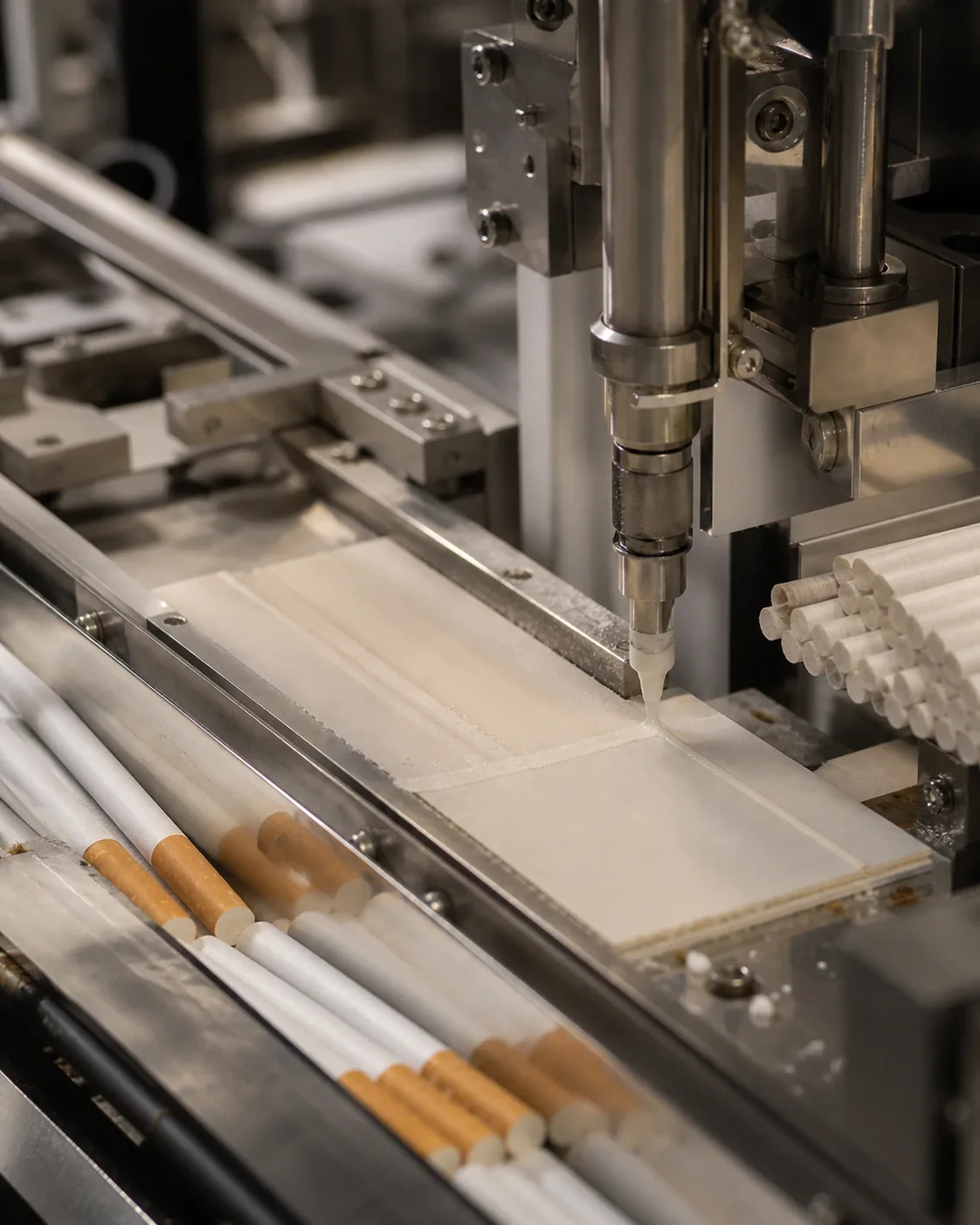
The machine window mattered because pickup consistency, set timing, and nozzle cleanliness all had to hold on the same running line.
Pickup drift and buildup were narrowing the usable window before the shift was over
The converter was running tipping, seam, and downstream bonding steps at production speed, but the adhesive window was too sensitive to normal process variation.
- Pickup drift forced repeated adjustments because small shifts in transfer or paper response quickly changed bond placement and seam consistency.
- Stringing and adhesive buildup around the applicator increased cleaning pressure and made the line feel less stable as the shift progressed.
- When the team chased faster set to protect seam integrity, the machine sometimes paid for it elsewhere through a narrower transfer window and more operator intervention.
A cigarette adhesive route tuned around rheology, transfer stability, and machine-matched set timing
Senda treated the issue as a machine-window problem, aligning viscosity behavior and bond formation with the actual pickup, compression, and closure sequence so line cleanliness and seam consistency could be judged together.
Products Used:
- Stable Pickup / Clean-Running Cigarette Grade
Designed for cleaner transfer, lower stringing risk, and bond formation that stays closer to the real high-speed machine cycle.
What made the qualification credible was that machine cleanliness and seam performance stayed in scope together. The accepted route did not solve buildup by sacrificing bond timing, and it did not solve seam closure by asking operators to live inside an even narrower pickup window.
Qualification path
Bond-step mapping
The team separated tipping pickup, seam formation, and downstream pack behavior so the real failure mode could be challenged before changing formulation.
Transfer and cleanliness comparison
Candidate grades were reviewed for pickup stability, stringing tendency, and buildup around application points while the same line-speed logic stayed in place.
Machine-side release
Final approval stayed tied to whether the line ran cleaner, held a more stable transfer window, and reduced seam-related interruptions during normal production rather than in a short lab-only check.
The machine window mattered because pickup consistency, set timing, and nozzle cleanliness all had to hold on the same running line.
What changed on the line
- Steadier transfer at speed: The approved route held a more usable pickup window on tipping and seam points without constant shift-by-shift correction.
- Cleaner applicator behavior: Lower buildup and stringing pressure helped the line stay cleaner for longer between interventions.
- Less seam-stop pressure: Bond formation stayed closer to the real machine sequence, which reduced the chance that seam weakness would turn into repeat interruptions.

Validated machine window
Validated machine window
The approved route stayed tied to tipping pickup and seam formation instead of one generic cigarette glue test.
Bond formation stayed closer to the real machine sequence, reducing repeat interruptions during normal production.
Release stayed tied to reduced buildup pressure at the application point across a full shift review.
Related resources
- Qualifying a Cigarette Adhesive System: Line Speed, Paper Grades, and Bond Sequence
Pickup stability and applicator cleanliness—the checklist paired with this line qualification.
- Request a cigarette adhesive trial
Prepaid sample for pickup transfer and seam stability screening at your line speed window.

" We were spending too much time correcting pickup drift and cleaning adhesive buildup around the applicator. Senda helped us tune a system that ran cleaner at speed, held a more stable transfer window, and gave us fewer seam-related stops during the shift. "
Ready to Write Your Own Success Story?
Our technical engineers are ready to help you solve your specific adhesion challenges. Get in touch for a free consultation and sample testing.
Replicate This Success