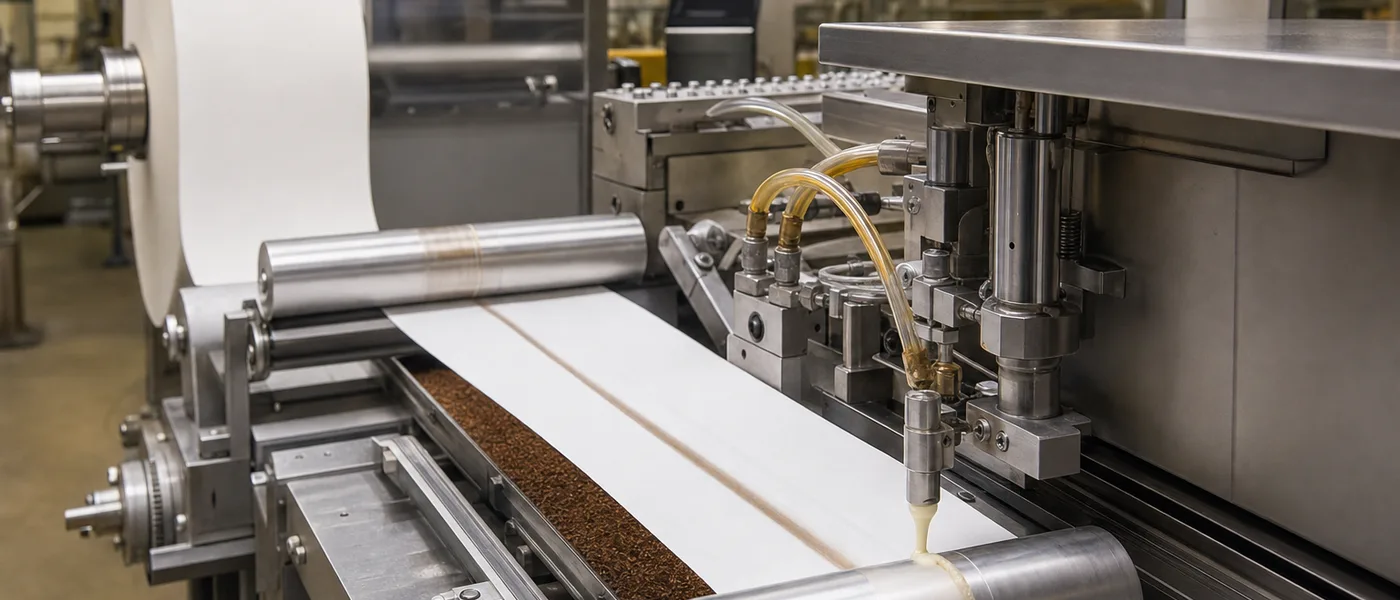
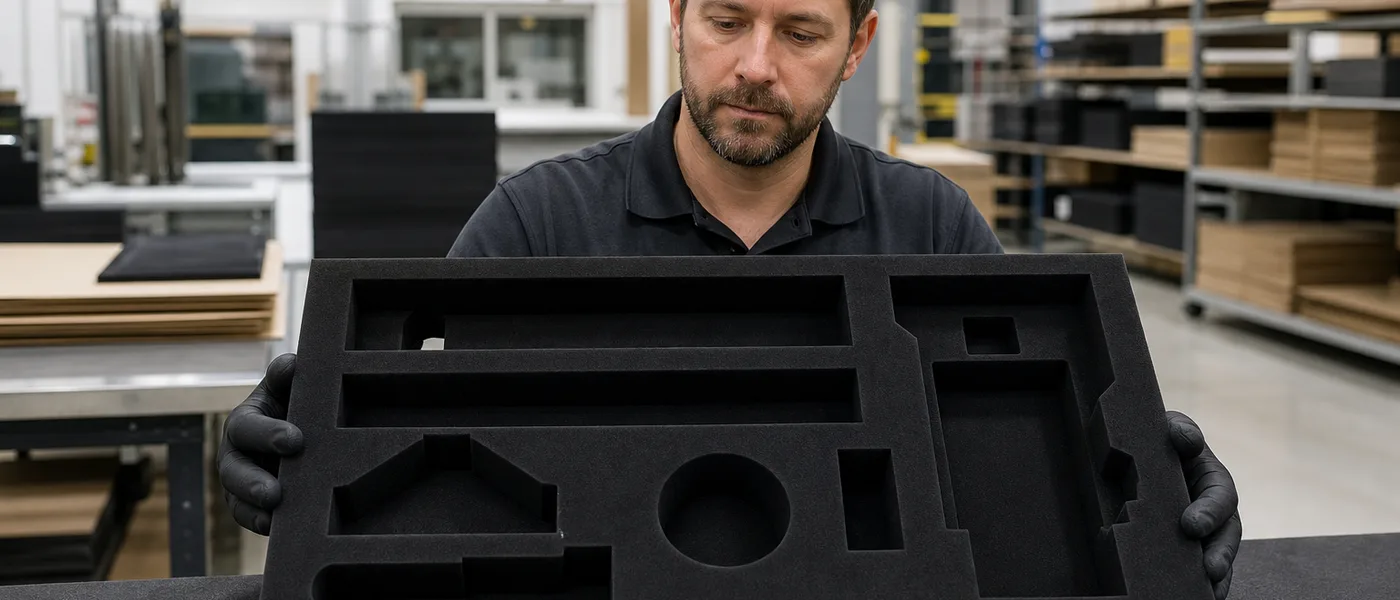
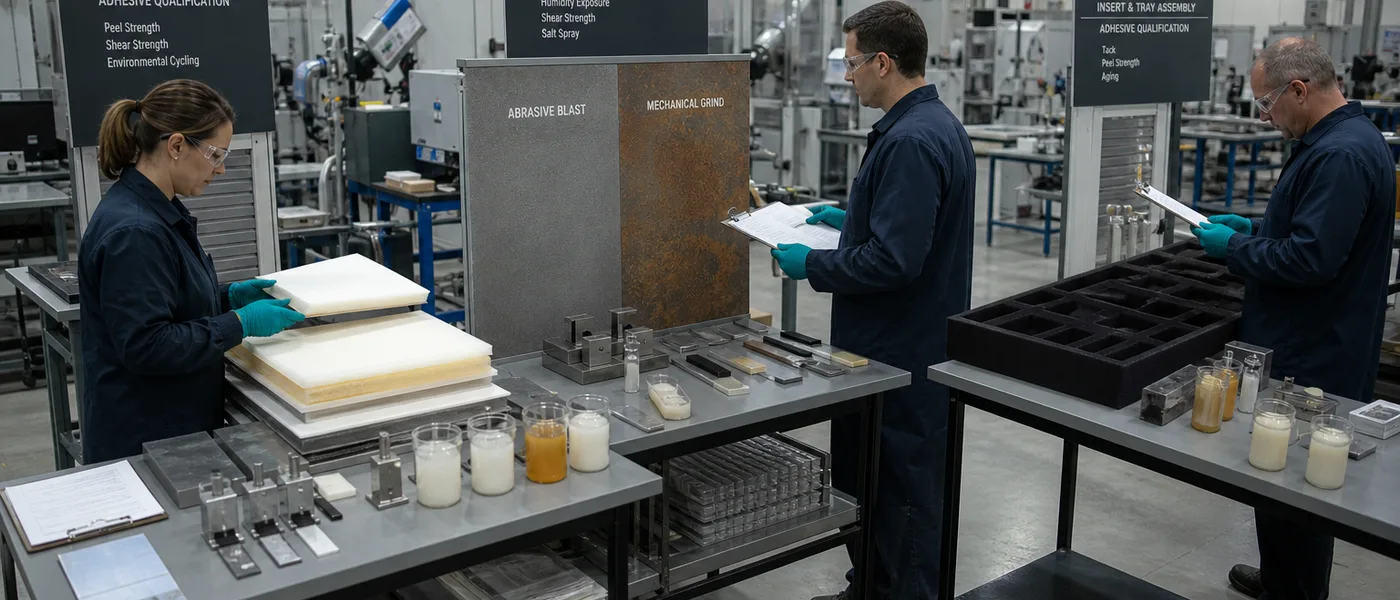
Industrial PSA qualification should connect substrate surface energy, surface preparation, coat weight, carrier or liner selection, peel/shear balance, edge lift, creep, conversion behavior, and service environment before production approval. A useful trial should test the actual substrate, actual laminate stack, actual converting process, and actual load case instead of approving a grade from generic peel values.
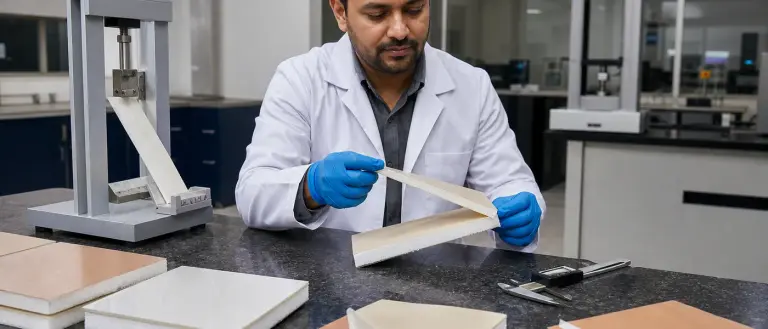
Table of Contents
- ·Why Industrial PSA Qualification Starts With the Failure Mode
- ·Surface Energy, Wet-Out, and Contact Area
- ·Surface Preparation and Contamination Control
- ·Coat Weight, Caliper, and Adhesive Mass
- ·Carrier, Liner, Foam, and Laminate Stack Design
- ·Peel, Shear, Tack, and Cohesion Balance
- ·Dwell Time, Lamination Pressure, and Bond Build
- ·Service Environment: Heat, Cold, Humidity, UV, and Chemicals
- ·Conversion and Application: Slitting, Die-Cutting, Matrix, and Edge Ooze
- ·Build a Practical Industrial PSA Qualification Trial
- ·Supplier Documents and Buyer Review
- ·Common Industrial PSA Failure Modes and First Checks
- ·Field Evidence
- ·Final Takeaway
- ·Frequently Asked Questions
Why Industrial PSA Qualification Starts With the Failure Mode
Industrial PSA failures rarely arrive as one clean problem. They usually appear as edge lift, creep, foam delamination, early peel, liner release trouble, die-cutting mess, adhesive ooze, or bond drift after heat, cold, humidity, or load. The easy answer is to ask for “more tack” or a higher peel number. In many cases, that answer is too simple.
A pressure-sensitive adhesive is part of a complete system. The final result depends on the substrate, surface energy, surface cleanliness, coat weight, carrier, liner, lamination pressure, dwell time, converting process, service temperature, and load direction. A PSA that looks strong on a standard steel panel may still fail on PE, PP, powder coat, foam, painted metal, rubber, textured plastic, or a contaminated production surface.
This is why industrial PSA qualification should start with the failure mode. Before changing polymer platform, increasing coat weight, or switching liner, the team should name the defect clearly. Is the adhesive lifting from the substrate? Is the adhesive splitting inside itself? Is the foam tearing? Is the liner releasing too hard? Is the matrix stripping poorly? Is the part creeping under load? Each answer points to a different correction.
A buyer should also avoid approving PSA only from generic peel tables. Peel data can be useful, especially when the test method, substrate, dwell time, and environment are known. But it does not prove performance on every industrial part. A reliable PSA trial should include the real substrate, real laminate stack, real conversion process, and real service stress.
| Buyer Question | Qualification Focus |
|---|---|
| Is the PSA wetting the real substrate? | Surface energy, contamination, treatment, dwell time |
| Is the coat weight repeatable? | Application method, caliper, die-cutting, squeeze-out |
| Is the carrier or liner part of the problem? | Release level, liner transfer, foam cell structure |
| Is the load peel-heavy or shear-heavy? | Load direction, dwell, compression, service temperature |
| Will the process convert cleanly? | Slitting, die-cutting, edge ooze, matrix stripping |
For procurement teams, this approach makes supplier comparison more useful. Instead of asking only for a stronger PSA, the buyer can explain the application window: substrate type, surface finish, lamination pressure, required thickness, conversion method, load direction, and expected service condition. That information helps Senda recommend a PSA construction that fits the process rather than guessing from a single peel target.
Surface Energy, Wet-Out, and Contact Area
Surface energy controls how easily a PSA can wet the substrate. When the adhesive wets the surface well, it can build more real contact area. When wet-out is poor, the PSA may touch only the high points of the substrate. The bond may feel sticky at first, yet still lift later at edges, corners, curves, or loaded areas.
LSE materials need special attention. PE, PP, some TPO materials, certain powder coats, and some textured plastics can be difficult for many PSA systems. Treated films may also change over time, so the buyer should confirm the surface condition at the point of lamination, not only when the film was produced. PET and PVC often appear easier to wet than PE or PP, but they can still show stress-sensitive lift, plasticizer effects, or aging changes depending on the construction.
Foam surfaces bring another challenge. A foam may compress during lamination and then recover later. If the PSA does not maintain enough contact after recovery, edge lift or internal delamination can appear. Rough surfaces, textured plastics, coated facestocks, and painted parts can also reduce real contact area even when the surface looks clean.
Initial finger tack can mislead the trial team. A PSA may feel aggressive to the hand but still fail after dwell, aging, or load. Finger tack does not prove wet-out, shear strength, cohesion, liner compatibility, or long-term edge stability. A better trial checks bond development over time and compares the failure mode after peel, shear, heat, cold, or service simulation.
| Substrate Condition | PSA Risk | Trial Check |
|---|---|---|
| PE/PP or other LSE plastic | Poor wet-out and edge lift | Surface energy, primer/treatment need |
| PET or PVC film | Good apparent wetting but stress-sensitive lift | Peel/shear after dwell and aging |
| Foam | Low real contact area, compression recovery | Lamination pressure, cell structure |
| Powder coat or paint | Surface chemistry variation | Actual finish, cure state, contamination |
| Rubber or elastomer | Plasticizer or oil migration | Aging, staining, creep review |
| Dusty or oily surface | False “weak PSA” diagnosis | Cleaning method and handling control |
The most useful surface test is the one that matches the real part. If the final application is on a powder-coated metal bracket, a polished stainless steel peel panel will not answer the buyer’s real question. If the final application is on a foam gasket, a flat PET coupon may only be an early screen.
Surface Preparation and Contamination Control
Many PSA failures are caused by the surface, not the adhesive. Dust, oil, silicone, fingerprints, mold release, plasticizer migration, foam dust, powder residue, and liner transfer can all create a weak boundary layer. When that happens, the PSA may look like it has poor peel, even though the real issue is poor wetting or contamination.
Surface preparation should be documented during qualification. A vague note such as “surface cleaned before bonding” is not enough for plant QA. Record the cleaning method, wipe material, cleaning liquid if used, drying time, handling method, glove use, and time between cleaning and lamination. For treated films or LSE plastics, record whether corona, plasma, flame treatment, primer, or another treatment was used.
The time between treatment and lamination can matter. Some treated surfaces may lose treatment effect over storage or handling. Some primers need a defined dry time before PSA application. Some plastics carry release agents or processing aids that migrate to the surface. These details should be part of the trial record.
Common contamination checks include:
| Contamination Source | Possible Effect | Trial Control |
|---|---|---|
| Silicone or release agent | Low wet-out, fish-eye, edge lift | Isolate liner, check handling and converting area |
| Oil or fingerprints | Early peel, weak spots | Glove control and cleaning method |
| Foam dust | Weak boundary layer | Vacuum, air blow, or wipe before lamination |
| Powder coat residue | Inconsistent adhesion | Test actual finish and cure state |
| Liner transfer | False adhesive weakness | Compare liner lots and release levels |
| Moisture | Bond drift or poor wet-out | Record humidity and substrate condition |
If a trial fails, do not change PSA chemistry before checking surface preparation. A controlled cleaning step may solve the problem, or it may reveal that the substrate needs treatment, primer, or a different PSA platform.
Coat Weight, Caliper, and Adhesive Mass
Coat weight is one of the most important PSA qualification variables. It affects wet-out, peel, shear, edge lift, die-cutting, ooze, bleed, cold tack, cost, and conversion speed. But there is no universal coat-weight table that works for every substrate and end use.
Lower coat weight can improve converting cleanliness, reduce edge ooze, lower material cost, and support tight die-cutting. However, it may not provide enough adhesive mass to wet rough, porous, textured, or LSE surfaces. Higher coat weight can improve contact on difficult surfaces, but it can also increase ooze, creep, bleed, liner release issues, and matrix stripping trouble.
The right coat-weight band should be qualified against the actual part. A smooth film label may need a very different adhesive mass than a foam laminate, gasket, vibration pad, appliance component, trim part, industrial panel, or mounting tape. Thermal-sensitive facestocks also need caution. Overcoating can create distortion, squeeze-out, or conversion problems without fixing the real edge-lift cause.
| Coat Weight Direction | Potential Benefit | Potential Risk |
|---|---|---|
| Lower coat weight | Cleaner die-cut, lower cost, less ooze | Poor wet-out, lower peel, edge lift |
| Higher coat weight | More contact area, better rough-surface wetting | Edge ooze, slower conversion, bleed, creep |
| Narrow tolerance | Repeatable conversion and performance | Requires process control |
| Wide tolerance | Easier early sampling | Harder troubleshooting later |
The buyer should ask how coat weight is controlled and how much variation is expected. If a trial sample passes at the high side of coat weight but production runs near the low side, field results may change. If coat weight is too high, the PSA may pass early peel but fail during slitting, die-cutting, shipping, or warm warehouse storage.
For coated PSA materials, connect this review to coating quality. Coating defects, streaks, voids, ribbing, edge bead, or slot-die instability can create local weak areas that look like random adhesive failure. If the defect pattern follows the coating direction, review the coating process before changing facestock or carrier.
Carrier, Liner, Foam, and Laminate Stack Design
Industrial PSA performance depends on the full construction, not only the adhesive layer. Transfer tape, double-coated tape, film carrier, scrim, foam tape, tissue carrier, release liner, and differential release design can all change how the product converts and performs.
A transfer tape gives adhesive mass without a permanent carrier. It can be useful when conformability is needed, but it may require careful handling and liner control. A film carrier can improve dimensional stability and support die-cutting. A scrim or tissue carrier may help with handling, thickness, or internal strength. A foam tape can provide gap filling and compression behavior, but foam grade, density, cell structure, and recovery become part of the qualification.
The liner is also part of the system. Release level affects converting speed, matrix stripping, hand application, automation, liner curl, and risk of false test results. A liner that releases too easily can create handling issues. A liner that releases too tightly can distort die-cut parts, slow production, or make lab peel results look better or worse than they really are. Differential release liners should be confirmed in the exact converting sequence.
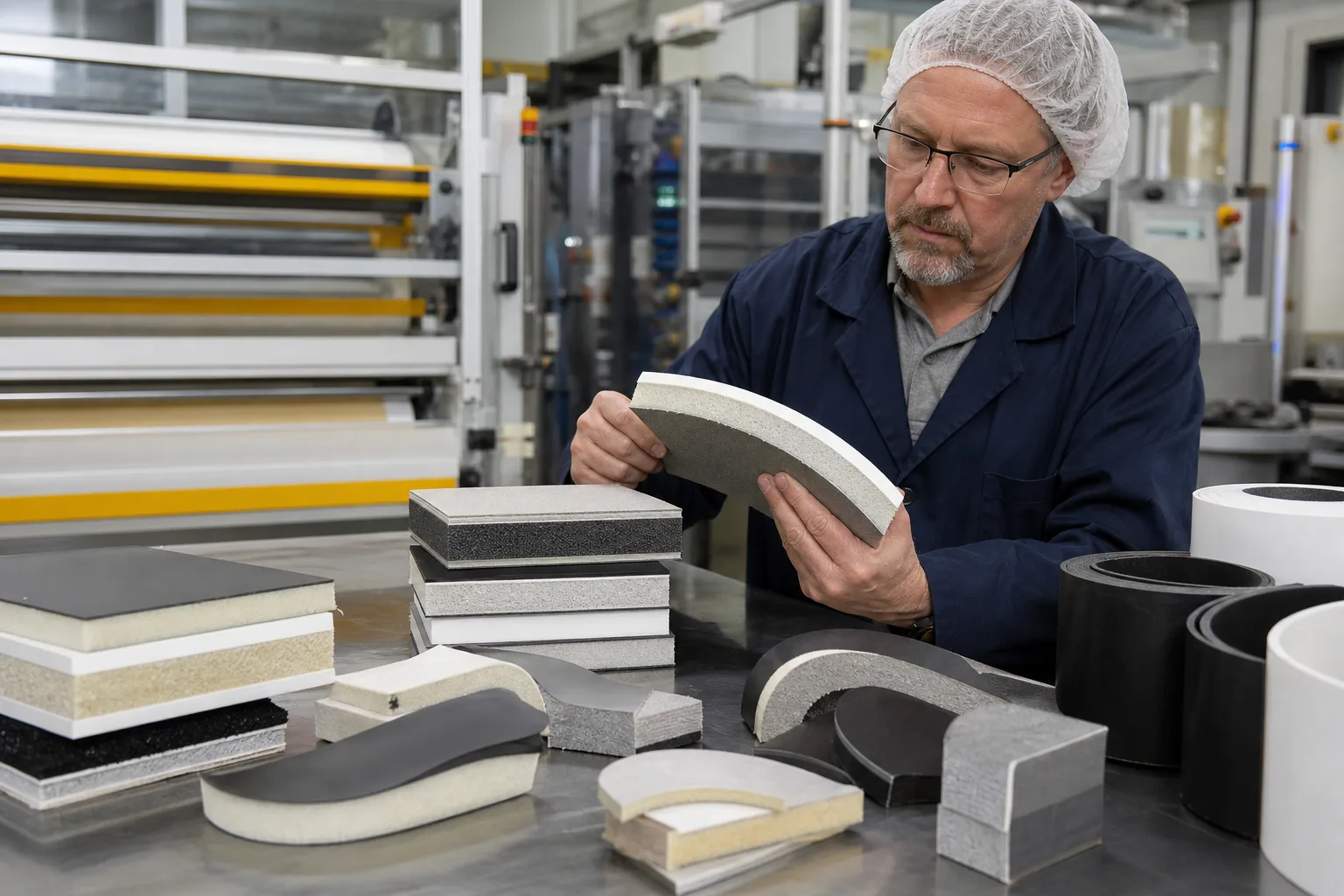
A practical laminate-stack review should include:
| Construction Element | Why It Matters |
|---|---|
| Transfer adhesive | Conformability, adhesive mass, liner handling |
| Film carrier | Dimensional stability, die-cut support, load distribution |
| Foam carrier | Gap filling, compression recovery, stress distribution |
| Scrim or tissue | Handling, internal support, thickness control |
| Release liner | Release force, curl, matrix stripping, automation |
| Differential release | Correct unwind and application sequence |
| Laminate thickness | Fit, compression, gasket function, edge profile |
When foam is involved, identify where the failure occurs. If the foam tears, the PSA may not be the weak point. If the adhesive separates from the foam skin, the foam surface or lamination pressure may need review. If the adhesive creeps under load, cohesion and service temperature may be more important than initial tack.
Edge Lift on Laminated Foam?
See general PSA grades and laminated foam case evidence.
Industrial PSA SolutionsPeel, Shear, Tack, and Cohesion Balance
High peel is not always better. Industrial PSA selection is a balance between peel, shear, tack, cohesion, wet-out, convertibility, and service stability. A PSA that grabs fast may creep under load. A PSA with high shear may wet difficult substrates more slowly. A very soft adhesive may show strong initial tack but ooze during die-cutting or warm storage. A high-cohesion adhesive may resist creep but need more dwell time or pressure to build peel.
Peel strength helps show removal force in a defined test geometry, but it does not prove long-term holding power. Shear testing helps show holding under load, but it does not prove wet-out on LSE substrates. Tack tests can show quick grab, but they do not prove aging, heat resistance, or edge stability. Cohesion tells the team about internal adhesive strength, but it does not prove substrate anchorage.
| Property | What It Tells You | What It Does Not Prove Alone |
|---|---|---|
| Initial tack | Early contact behavior | Long-term holding power |
| 180° peel | Removal force in one geometry | Static shear or creep resistance |
| Shear | Holding under load | Wet-out on difficult substrates |
| Loop tack | Fast grab tendency | Aging or environmental stability |
| Cohesion | Internal film strength | Substrate anchorage |
This is why failure mode matters. If the part peels from an LSE plastic, wet-out and surface treatment may be the first issues. If the part slides under load at warm temperature, shear and cohesion may be more important. If a foam laminate fails inside the foam, the foam grade and compression recovery should be checked. If a die-cut part oozes, coat weight and adhesive softness may need review.
PSTC test methods are useful references for PSA tape testing, including common areas such as peel and shear, but standard methods cannot represent every tape construction, substrate, and industrial use case by themselves. Use standard tests as a common language, then add application-specific trials for the actual part. (Pressure Sensitive Tape Council)
Dwell Time, Lamination Pressure, and Bond Build
PSA bonds are often time-dependent. Wet-out continues after lamination as the adhesive flows into microtexture and builds contact area. A peel test performed immediately after bonding may not show the same result as a test after 24 hours, 72 hours, heat aging, or service conditioning.
Lamination pressure also matters. Low pressure may leave poor contact area, especially on rough, textured, or foam surfaces. Excessive pressure can distort foam, squeeze adhesive, cause edge ooze, or damage delicate facestocks. The right pressure depends on the substrate, adhesive mass, carrier, thickness, and application method.
Temperature can help or hurt. A warm lamination process may improve flow and contact in some cases, but it can also increase ooze or stress sensitive materials. Cold application may reduce tack and wet-out. A part that bonds well in a lab at room temperature may fail in a cold warehouse or outdoor installation.
A good qualification should record:
| Bond-Build Variable | What to Record |
|---|---|
| Lamination pressure | Nip pressure, hand roller pressure, press setting, or application method |
| Lamination speed | Line speed, hand application timing, automation rate |
| Dwell before testing | Immediate, 20 min, 24 h, 72 h, or customer method |
| Bonding temperature | Substrate and room temperature where practical |
| Part geometry | Flat, curved, folded, compressed, gasketed, or edge-loaded |
| Compression set | Foam or soft substrate recovery after lamination |
| Handling after bonding | Time before die-cutting, packing, loading, or installation |
The trial should match the buyer’s real process. If production parts are bonded by hand, a lab press may overstate performance. If production parts are laminated through a nip, a hand roller may not show the real failure mode. If parts are loaded immediately after application, test immediate handling. If parts sit for two days before use, include that dwell time.
Service Environment: Heat, Cold, Humidity, UV, and Chemicals
Industrial PSA qualification should include the environment the part will actually face. Heat, cold, humidity, UV, cleaning chemicals, oils, plasticizers, compression, vibration, and load can all change PSA performance.
Heat can increase flow, creep, ooze, or edge movement. Cold can reduce tack, make the adhesive feel harder, or expose poor wet-out. Humidity can affect some substrates, edges, liners, or facestocks. UV and light exposure may change exposed materials, especially if the adhesive edge or carrier is visible. Chemicals, oils, and plasticizers can swell or soften an adhesive depending on the construction.
| Service Condition | PSA Risk | What to Test |
|---|---|---|
| Heat | Creep, ooze, edge flow | Shear after heat exposure |
| Cold | Tack loss, brittle failure | Peel and handling at low temperature |
| Humidity | Edge lift, substrate change | Humidity aging and edge review |
| UV or light exposure | Aging or surface change | Product-specific exposure review |
| Chemicals or oils | Swelling, staining, adhesive softening | Contact or splash scenario |
| Compression or load | Foam recovery, creep | Real part stress profile |
Avoid broad claims such as “high temperature resistant” unless the test condition, duration, substrate, and acceptance result are defined. A practical qualification statement should describe the specific condition tested. For example, it is more useful to say that the PSA construction was reviewed under the buyer’s stated heat exposure and load condition than to make a general heat-performance claim.
Conversion and Application: Slitting, Die-Cutting, Matrix, and Edge Ooze
A PSA construction must not only bond well; it must also convert cleanly. Many industrial PSA rejections appear before the part ever reaches end use. The converter may see adhesive stringing, edge ooze, liner curl, poor die-cut edges, matrix breaks, adhesive transfer to tooling, blocked rolls, or unstable release during application.
Slitting can reveal adhesive softness, edge flow, roll winding pressure problems, or poor liner support. Die-cutting can reveal coat weight variation, liner mismatch, die gap issues, adhesive flow, and matrix stripping limits. Matrix stripping is especially sensitive when parts have small shapes, tight radii, narrow webs, or high adhesive mass.
Warm warehouse storage can also change behavior. A roll or sheet that converts well when fresh may show blocking, ooze, or release change after storage. Roll pressure, storage temperature, liner selection, and adhesive softness all matter.
Conversion checks should include:
| Conversion Area | What to Watch |
|---|---|
| Slitting | Edge ooze, adhesive smear, roll blocking |
| Die-cutting | Clean edges, die strike, adhesive flow, liner cut control |
| Matrix stripping | Breaks, part lifting, adhesive stringing |
| Liner release | Too tight, too easy, curl, differential release errors |
| Roll storage | Telescoping, blocking, edge flow |
| Application | Part pickup, placement, liner removal, automation fit |
If conversion fails, changing facestock may not be the first correction. Review PSA coating defects, slot-die coating stability, coat weight, liner release, die condition, and storage conditions before changing the full construction.
Build a Practical Industrial PSA Qualification Trial
A useful industrial PSA trial should be designed around the real application. The buyer should test the actual substrate, laminate stack, coat weight range, liner, carrier, lamination method, converting process, dwell time, service condition, and load case.
Start with the failure mode or performance goal. If the issue is edge lift on foam, include foam grade, compression recovery, edge geometry, and dwell time. If the issue is creep, include load direction, temperature, and shear review. If the issue is die-cut mess, include the converter’s die, liner, matrix stripping condition, and storage profile.
| Trial Item | What to Record |
|---|---|
| Substrate | Material, finish, surface treatment, supplier |
| PSA construction | Transfer, film carrier, foam, double-coated, liner |
| Coat weight | Target, tolerance, measured value if available |
| Lamination method | Pressure, speed, dwell, nip condition |
| Dwell before testing | Immediate, 24 h, 72 h, or customer method |
| Test method | Peel, shear, tack, rub, flex, aging, customer test |
| Environment | Temperature, humidity, heat/cold exposure |
| Failure mode | Adhesive, cohesive, substrate tear, edge lift, creep |
| Conversion result | Die-cutting, slitting, matrix, liner release, ooze |
The trial should include both performance and process results. A PSA that bonds well but cannot be die-cut cleanly may not be practical. A PSA that converts beautifully but creeps under load may not be safe for the final application. The best approval record states what passed, under what conditions, and what changes would trigger requalification.
Supplier Documents and Buyer Review
Supplier documents help the buyer connect material properties, safety review, purchasing approval, and trial records. They do not replace testing on the real part.
The TDS should provide product properties, construction details where available, suggested substrates, application guidance, storage information, and handling notes. The SDS should be reviewed for safety, storage, transport, and workplace handling. Product labels and batch details help with traceability during qualification and scale-up.
For some applications, buyers may request compliance statements. FDA 21 CFR 175.105 should be reviewed only when the PSA use case involves a relevant food-packaging adhesive scope. The official regulation addresses adhesives used as components of articles intended for packaging, transporting, or holding food under prescribed conditions, so any statement should be product-specific and tied to the actual construction and intended use. (eCFR)
| Document | Buyer Use |
|---|---|
| TDS | Product properties, suggested substrates, application guidance |
| SDS | Handling, safety, storage, transport |
| Product label | Grade, batch, shelf-life tracking |
| Trial report | Substrate, coat weight, tests, failure mode |
| Compliance statement, when relevant | FDA 21 CFR 175.105 or customer file support |
| MOQ and lead time | Trial planning and purchasing approval |
Purchasing should also confirm MOQ, lead time, sample size, liner availability, roll width, slit tolerance, packaging, shelf-life, and storage limits. A technically suitable PSA may still create launch delays if the liner, width, or MOQ does not match the converter’s process.
Common Industrial PSA Failure Modes and First Checks
Industrial PSA troubleshooting should begin with where the failure occurs. Did the adhesive release from the substrate? Did the adhesive split inside itself? Did the carrier fail? Did the foam tear? Did the liner transfer? Did the edge lift only after heat or humidity? Each detail matters.
| Failure Mode | Possible Causes | First Checks |
|---|---|---|
| Edge lift | Poor wet-out, LSE substrate, low coat weight | Surface energy, dwell, coat weight |
| Creep | Low cohesion, heat, high load | Shear, service temperature, load direction |
| Early peel | Contamination, low pressure, insufficient dwell | Cleaning, lamination pressure, dwell time |
| Edge ooze | Excess coat weight, warm storage, soft adhesive | Coat weight, storage, die design |
| Poor die-cutting | Adhesive flow, die gap, liner release | Die condition, liner, coating defects |
| Foam delamination | Foam tear, weak carrier, compression recovery | Foam grade, carrier, failure mode |
| Liner release trouble | Release level mismatch, liner curl, aging | Liner spec, storage, converting speed |
| False peel pass | Non-representative panel or liner effect | Real substrate, dwell, application pressure |
| Bond drift after aging | Heat, humidity, chemicals, plasticizer migration | Service simulation and aged peel/shear |
This table should be used before changing polymer platform. In many cases, a PSA issue is really a surface preparation issue, a liner issue, a coating tolerance issue, a conversion issue, or a service-environment mismatch.
Field Evidence
Field evidence should help the buyer qualify the full PSA process, not just admire a finished sample. The most useful evidence connects a real substrate, laminate stack, coat weight, conversion method, and failure mode.
Preserve or add internal links that help the buyer qualify the full process:
A good field evidence file may include:
| Evidence Type | Why It Helps |
|---|---|
| Substrate photo | Confirms real surface and finish |
| Laminate stack description | Shows carrier, liner, foam, and adhesive construction |
| Coat weight record | Connects performance to adhesive mass |
| Conversion notes | Shows die-cutting, slitting, matrix, and liner behavior |
| Failure mode photos | Identifies adhesive, cohesive, foam, or substrate failure |
| Aging or service review | Connects result to heat, cold, humidity, or load |
| Known limits | Prevents overuse outside the qualified window |
Known limits are valuable. A PSA that performs well on PET may not be right for untreated PP. A foam tape that works in compression may not work under peel-heavy load. A high-tack adhesive may not be the right choice for warm shear load. Good field evidence should make these limits clear.
Final Takeaway
Industrial PSA approval is not a single peel number. It is a full process decision that connects surface wet-out, coat-weight control, laminate stack design, carrier and liner behavior, peel/shear balance, conversion quality, service-environment testing, and the real failure mode on the real part.
Before changing PSA chemistry, define the failure. Before increasing coat weight, check surface energy, dwell, pressure, liner, and conversion impact. Before approving bulk supply, test the actual substrate, actual laminate stack, actual converting process, and actual load case.
A practical qualification record helps procurement, converters, laminators, plant QA teams, and suppliers make the same decision from the same evidence. That is the difference between buying a PSA from a generic table and approving a PSA system that fits the application window.
Frequently Asked Questions
Should I fix peel or shear first?
Start with the failure mode. If the part lifts away from the substrate, review wet-out, surface energy, contamination, dwell time, and peel. If the part slides or creeps under load, review shear, cohesion, service temperature, coat weight, and load direction. Changing only peel may not solve a shear-heavy failure.
Why does an industrial PSA lift at the edge after passing an initial peel test?
Edge lift can appear when the PSA has poor wet-out, the substrate has low surface energy, the part has memory or stress, the coat weight is too low, the lamination pressure is not enough, or the dwell time is too short. Heat, humidity, foam recovery, and curved geometry can also expose edge stress after the initial peel test.
How does this relate to labeling PSAs?
Labeling PSA knowledge is useful, but industrial PSA applications often involve thicker laminates, foam, carriers, die-cut parts, load-bearing conditions, rougher substrates, and harsher service environments. A label-grade peel result should not be assumed to qualify an industrial mounting, bonding, gasket, foam, or component application.
When should we review coating defects before changing facestock?
Review coating defects when failures appear in repeating lanes, streaks, voids, edge bands, or machine-direction patterns. If coat weight is inconsistent, changing facestock may not solve the problem. Check PSA coating quality, slot-die settings, liner release, and conversion behavior before changing the full construction.
Does higher coat weight always improve PSA performance?
No. Higher coat weight can improve wet-out on rough or difficult surfaces, but it can also cause edge ooze, bleed, creep, slower conversion, matrix stripping trouble, and higher cost. Coat weight should be qualified as a band for the actual substrate, laminate stack, die-cut design, and service load.
How should LSE plastics be qualified?
Use the actual LSE plastic, not a generic test panel. Record the material grade, surface treatment, cleaning method, dwell time, lamination pressure, and service condition. PE, PP, TPO, and other LSE materials may need primer, corona, plasma, flame treatment, or a PSA designed for LSE wet-out, depending on the application.
What should be recorded during an industrial PSA trial?
Record the substrate, surface finish, surface treatment, PSA construction, carrier, liner, coat weight, lamination pressure, dwell time, test method, environment, service exposure, conversion result, and failure mode. Include photos of edge lift, creep, delamination, ooze, liner trouble, or die-cut defects when they appear.
When should PSA be requalified?
Requalify when the substrate, surface treatment, coat weight, carrier, liner, foam grade, die-cut design, lamination pressure, service temperature, chemical exposure, supplier, or customer requirement changes. Requalification is also recommended when a stable application begins showing edge lift, creep, early peel, or conversion defects.
What documents should purchasing request from the supplier?
Purchasing should request the TDS, SDS, product label, batch information, shelf-life or storage guidance, MOQ, lead time, liner details, roll or sheet format, trial report, and any product-specific compliance statement required by the customer. FDA 21 CFR 175.105 review should be requested only when the use case makes that scope relevant.
Can Senda provide lab material for PSA screening?
Yes. Senda can review the substrate, surface energy, laminate stack, coat-weight target, carrier or liner requirement, converting process, and service conditions before sample screening. A complimentary 1 kg lab material request can support early qualification, but final approval should be based on the buyer’s real substrate, process, and load case.
Screen industrial PSA on your line
Request complimentary 1 kg lab material (shipping prepaid by recipient) after screening on your substrate, laminate stack, coat-weight target, converting process, and service conditions.
References
Technical Disclaimer: All technical data is based on standard laboratory conditions. Users should perform their own verification testing to confirm suitability for specific substrates, processes, and regulatory requirements. Senda Glue makes no warranties, express or implied, and assumes no liability for improper use of the products or reliance on this information.