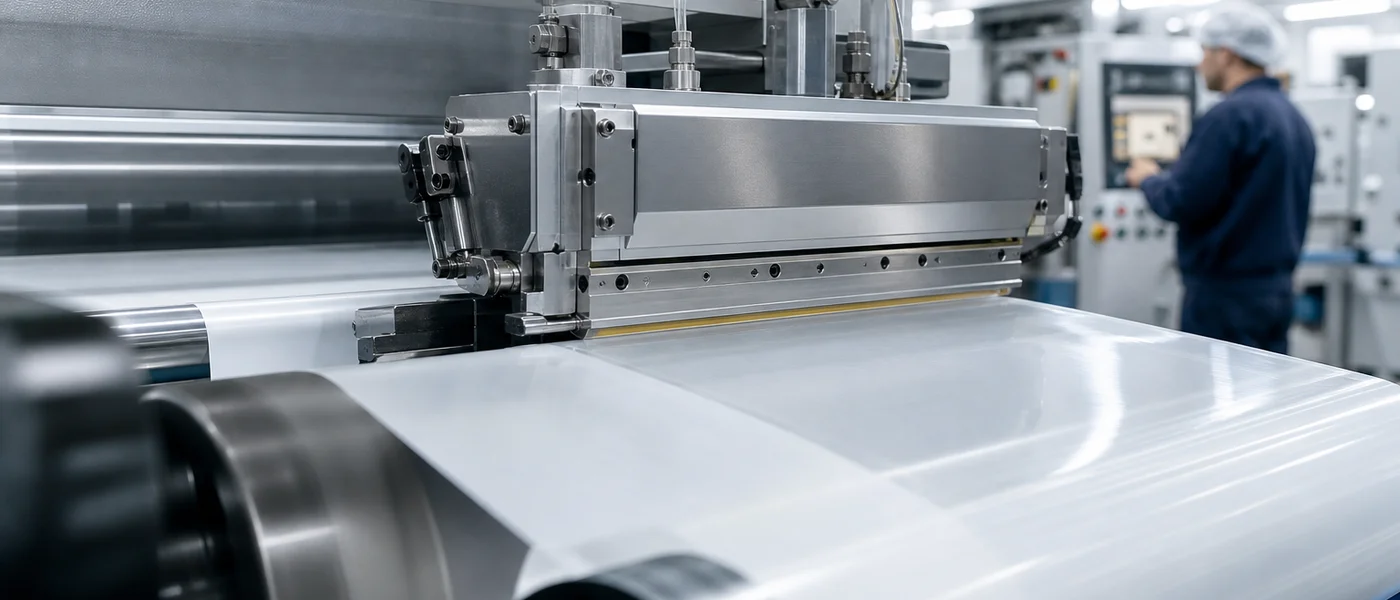
Diagnose streaking, chatter, edge ooze, and uneven coat weight on slot die and roll coaters—plus shear retention and aging stability for BOPP, foam, and masking tape constructions.
Table of Contents
Tape coating defects sort into four visible families on the rewind: streaks and voids on the web, chatter from unstable flow, edge ooze after storage, and coat-weight bands that only show up under backlight. Each has a different root cause—rheology, die geometry, tension, or cohesion balance—and fixing one by cranking viscosity often creates another.
This guide is a defect catalog for specialty tape coaters on slot die and roll lines—the companion to our
slot die PSA coating optimization guide (setup and coat-weight discipline on logistics labels). Thermal bleed-through on thin facestock is a label converter problem, not the same as tape edge ooze on thick BOPP builds.
Defect Catalog: Four Types
Streaking
Continuous or periodic lines in the coat—often die lip contamination, gel particles, or temperature bands in the bulk tank. Clean lips and filter hot melts; for emulsions, check batch age and bacterial spoilage in starch-contaminated systems.
Chatter Marks
Regular cross-web ribbing from pressure pulsation, shim flutter, or viscosity inside/outside the coatability window. Chatter is not “low tack”; it is unstable flow at your web speed—capabilities cite streak-free laydown above 200 m/min on tuned grades.
Edge Ooze
Adhesive migration past the roll edge in hot warehouse storage, causing telescoping, blocking, and unwind surprises. Cohesion that is too soft for temperature lets polymer creep; cohesion that is too stiff can narrow the coating window—balance is the project.
Uneven Coat Weight
GSM drift across the web from die gap, rubber roll hardness, or tension variation. Downgrades rolls and shows up later as shear failure on carton sealing tapes under flap tension.
Root Causes: Rheology, Die, Tension, Cure
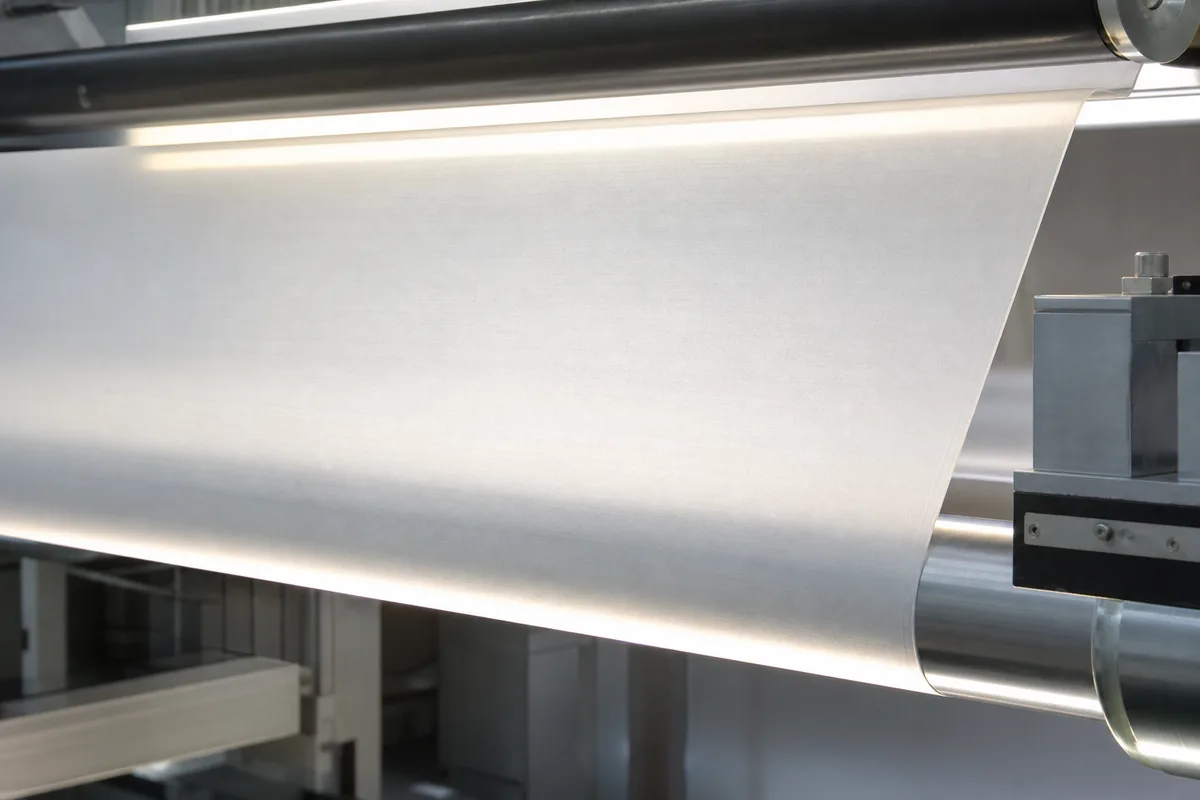
- Rheology: Melt index, gel content, or emulsion solids outside the coatability band → stringing or voids.
- Die: Worn lips, mis-set gap, or dried edge buildup → streaks and local heavy spots.
- Tension: Unstable web stretch → coat-weight bands and chatter coupling to line speed.
- Cure / cohesion: Under-cured hot melt or soft cohesion → edge ooze; over-stiff → coatability loss.
High-Shear Tape Constructions
Carton sealing tapes need high internal cohesion so flaps do not pop under memory force. Mounting tapes target high peel on LSE plastics (matrix cites peel targets such as >25 N/inch on some grades—confirm test method). Masking tapes need clean removal after heat; FAQ references baking cycles up to about 160°C for specialized acrylic masking routes.
Aging and UV Yellowing (Qualitative)
Page copy references 24+ month aging stability with UV-resistant formulations—that means designed for extended aging studies, not an automatic warranty on every warehouse climate. Watch yellowing, ooze, and shear drop on retained rolls quarterly in hot regions.
Engineering Pro Tip
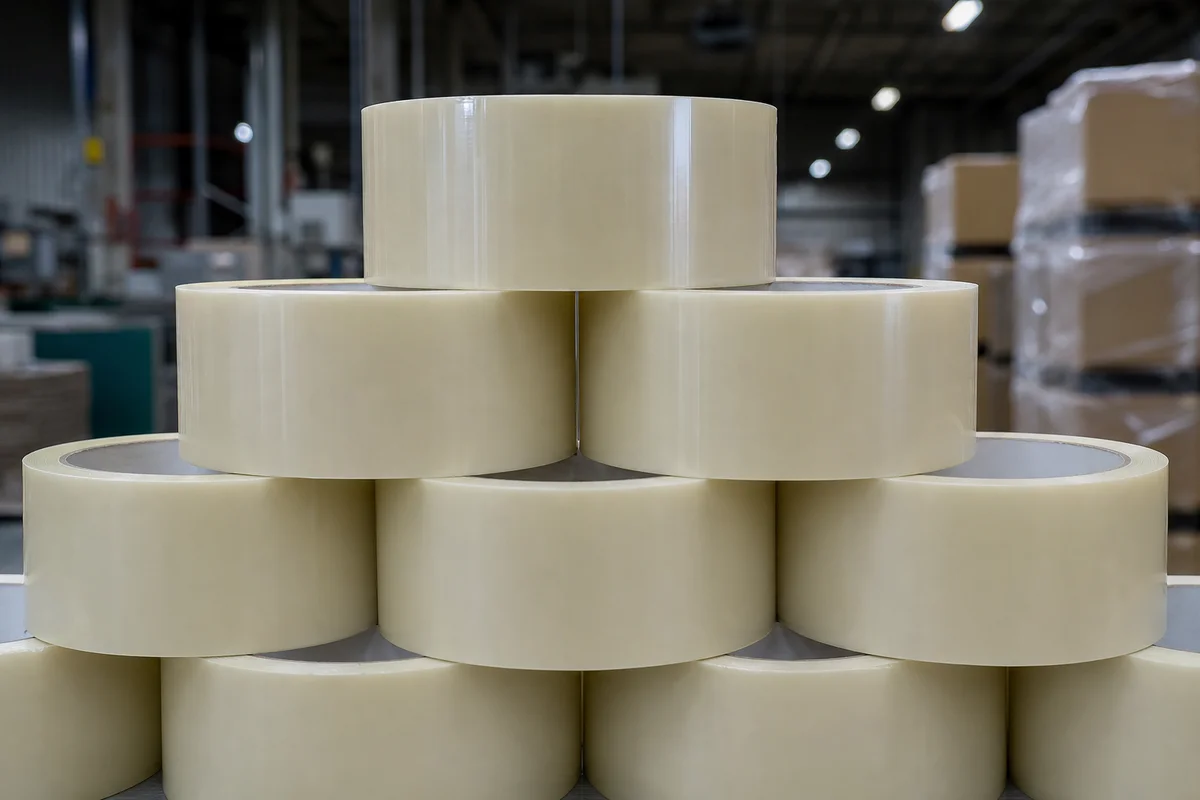
When edge ooze appears, do not only lower coat weight. Our specialty tape edge ooze case study fixed storage by rebalancing cohesion and edge-bleed control while keeping a 200 m/min+ coating window—stiffer adhesive that streaks on the coater is not a win.
Streaks, Chatter, or Edge Ooze on Tape Coating?
Review specialty tape PSA grades for high shear, zero stringing, and edge-bleed control on slot die and roll coaters.
See Specialty Tape AdhesivesCase: Edge Ooze and Roll Blocking Eliminated
A North American tape manufacturer saw edge migration and blocking after warm warehouse storage while still needing clean high-speed coating. A shear-optimized PSA route delivered zero edge ooze in qualification, stable roll storage, and maintained production-speed coatability. Details: specialty tape edge ooze storage stability case study.
When to Benchmark Peel and Shear
Run peel/shear/tack panels when defect mode shifts from cosmetic (streak) to functional (seal pop or edge ooze). Compare candidates at production coat weight on the actual backing—BOPP, foam, or crepe. Submit rolls to specialty tapes applications engineering for coating and shear benchmarking.
Startup Checklist
- Classify defect: streak, chatter, ooze, or GSM band.
- Inspect die lips and purge on grade change.
- Log bulk temperature and web tension at defect onset.
- Hot-storage test finished rolls at warehouse max temperature.
- Shear/peel panel if seal integrity is the customer complaint.
Final Takeaway
PSA coating troubleshooting starts with naming the defect, then matching the lever—die maintenance for streaks, viscosity window for chatter, cohesion balance for edge ooze, gap and tension for coat weight. Pair process fixes with the right tape construction chemistry; do not borrow logistics-label bleed-through answers for industrial tape rolls.
Frequently Asked Questions
How do you prevent edge ooze and roll blocking?
Balance cohesion and edge-bleed control for your storage temperature—shear-optimized routes aim to stop migration without sacrificing coatability. Hot-storage trials on finished rolls are mandatory.
Can you tune viscosity for slot die coaters?
Yes. Viscosity ranges are optimized for uniform, streak-free laydown on slot die and roll systems at high web speeds—validate on your backing and GSM target.
Do you have high-temperature masking grades?
Specialized acrylic and hot-melt masking routes are designed for baking cycles up to about 160°C with clean removal—qualify on your paint system.
What causes coating streaks?
Common drivers are die lip contamination, gels in hot melt, temperature drift, or web tension variation—not always “wrong adhesive” alone.
What is your MOQ for tape PSA?
Standard MOQ is about 1,000 kg. We offer free 1 kg lab samples and 20 kg trial pails for coating qualification.
Resolve coating defects on your line
Request complimentary 1 kg lab material (shipping prepaid by recipient) after screening on your substrate and line conditions.
References
Technical Disclaimer: All technical data is based on standard laboratory conditions. Users should perform their own verification testing to confirm suitability for specific substrates, processes, and regulatory requirements. Senda Glue makes no warranties, express or implied, and assumes no liability for improper use of the products or reliance on this information.