Is your glue slowing down your line? Learn how High-Speed Metallocene eliminates charring and provides instant green strength to maximize industrial throughput.
Table of Contents
In high-speed manufacturing, the most expensive adhesive is the one that stops your line. Whether you are bonding acoustic pads in automotive assembly or sealing carton flaps at 200 units per minute, start from the hot-melt adhesives pillar and EVA vs. metallocene guide when char or stringing appears.
Operations Managers often focus on the cost per pound of the hot melt, ignoring the Total Cost of Application (TCA). If a standard EVA adhesive forces you to run your conveyor 10% slower to prevent bond failure, or requires 30 minutes of nozzle cleaning every shift due to charring, that "cheap" glue is hemorrhaging profit.
"Green Strength is the metric that matters. It is not about when the glue cures; it is about when the bond is strong enough to withstand the mechanical stress of the next assembly step. In automotive trim, this must be instantaneous."
The Speed Hierarchy: EVA vs. Metallocene — To break production bottlenecks, match rheology to cycle time. For fulfillment case sealers, see box-sealing zero-char uptime and e-commerce box sealing.
To break production bottlenecks, you must match the adhesive's rheology to your machine's cycle time. We categorize hot melts by their chemical architecture and their ability to handle "Zero-Second" compression.
The legacy choice. Variable set times. Prone to thermal oxidation (charring) if left in the tank. Density ~0.98 g/cm³.
The Bottleneck Breaker. Engineered polymer structure. Instant set speed, consistent viscosity, and zero char. Density ~0.88 g/cm³ (High Yield).
Formulated for interior trim and headliners. Resists cabin temperatures up to 120°C. High initial tack prevents "creep" during assembly.
Remains permanently tacky. Ideal for positioning foam, insulation, or labels where immediate adhesion is required without a curing phase.
Automotive & Electronics: The "Instant Hold" Requirement
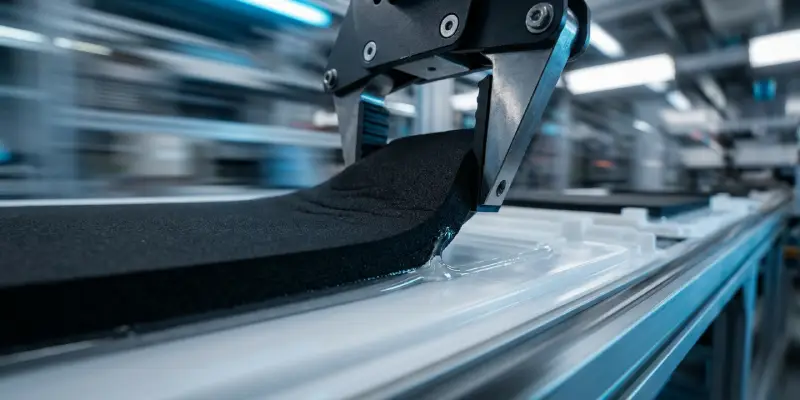
We see significant search interest from automotive engineers asking: "What adhesives speed up production?" The answer lies in Green Strength. In applications like attaching door panel insulation or wire harness clips, the component must be manipulated by a robotic arm immediately after application.
In our laboratory stress tests, we observed that traditional adhesives require a "holding phase" that bottlenecks the line. By switching to a high-green-strength Metallocene grade, manufacturers can eliminate clamping fixtures and reduce cycle times by seconds per part—accumulating to hours of gained production per week.
Eliminating the "Charring" Downtime
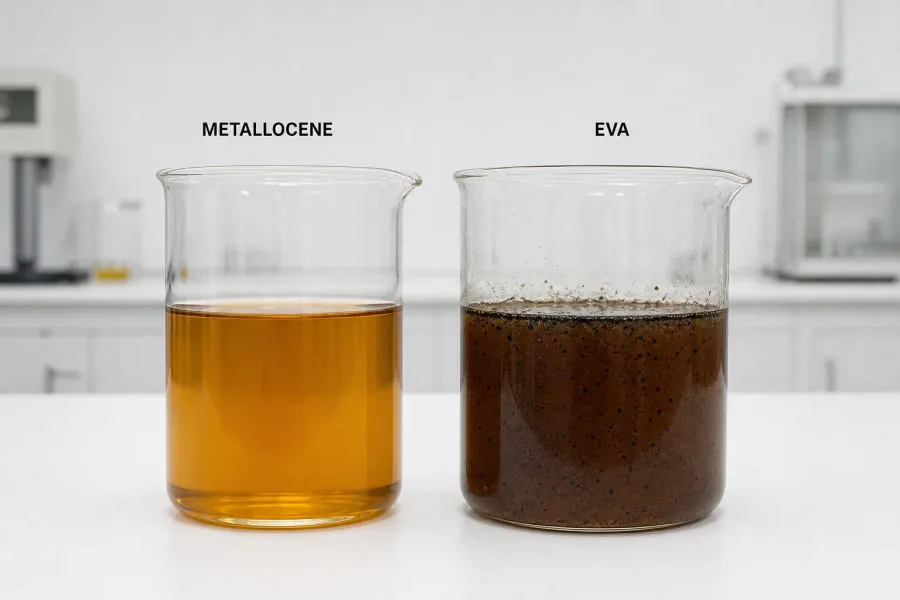
The second biggest thief of production time is maintenance. Traditional EVA hot melts degrade when held at temperature, forming carbonized "gel" or "char" that blocks fine-line nozzles and filters.
Problem: Nozzle Clogging & Char Buildup
Symptoms: Inconsistent bead patterns; "black specks" in the glue line; frequent line stoppages to purge or replace filters.
Solutions:
- Switch to Metallocene: These polymers are thermally stable and do not oxidize in the tank, extending maintenance intervals from weekly to monthly.
- Audit Tank Temperature: Ensure "Setback Mode" is active during breaks to lower temperature and prevent cooking the glue.
- Inline Filtration: Install finer mesh filters to catch contaminants before they reach the nozzle tip.
Audit Your Cycle Times?
Is your adhesive the slowest part of your line? Send us your substrate and cycle time targets. We will match a High-Speed Metallocene grade to your process.
Request Speed AuditSenda Technical Verdict
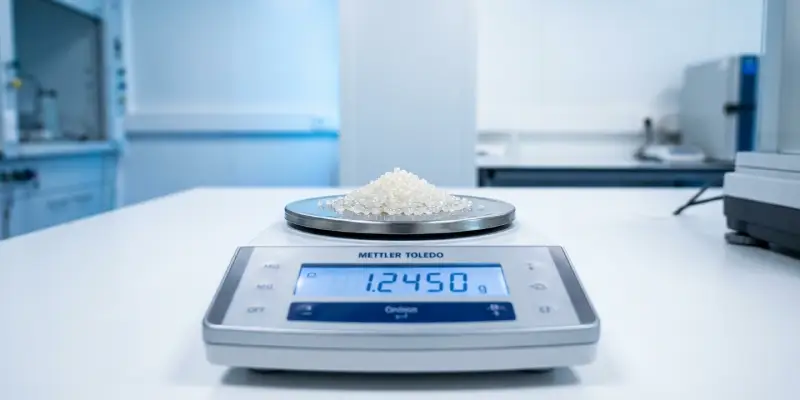
- Measure Density, Not Just Price: Metallocene allows you to seal more cases or bond more parts per pound due to lower density (~0.88 vs 0.98 g/cm³).
- Ban the Char: If you are cleaning nozzles more than once a month, your adhesive is chemically unstable. Switch to a zero-char formula to recover lost production hours.
- Match Open Time to Robot Speed: If the glue sets before the robot places the part, you have a "Cold Bond." If it's still wet, the part slides. You need a rheology curve that matches your exact automation speed.
Frequently Asked Questions
What is "Green Strength" and why does it matter for automation?
Green strength is the initial tack of an adhesive before it fully cures or cools. In high-speed robotic assembly, high green strength ensures parts stay in place immediately upon contact, eliminating the need for slow-moving cooling jigs or clamps.
How does Metallocene reduce maintenance downtime compared to EVA?
Metallocene is thermally stable and does not oxidize or char when held at application temperatures. This prevents carbonized buildup from clogging nozzles and filters, extending maintenance intervals from weekly to monthly.
Why is adhesive density important for total cost calculations?
Adhesives are purchased by weight but applied by volume. Metallocene has a lower density (~0.88 g/cm³) than traditional EVA (~0.98 g/cm³), meaning you can bond approximately 10-15% more parts per pound of glue.
What is the difference between "Open Time" and "Set Speed"?
Open time is the maximum window after application where the adhesive remains tacky enough to bond. Set speed is how quickly the adhesive develops a structural bond. High-speed lines require a precise balance to match machine cycle times.
Can Metallocene adhesives handle high-temperature environments like automotive interiors?
Yes. Specialized Metallocene and high-performance polyolefin grades are formulated to resist "creep" and maintain bond integrity even in cabin temperatures reaching 120°C.
Improve hot-melt throughput on your line
Request complimentary 1 kg lab material (shipping prepaid by recipient) after screening on your substrate and line conditions.
References
Technical Disclaimer: All technical data is based on standard laboratory conditions. Users should perform their own verification testing to confirm suitability for specific substrates, processes, and regulatory requirements. Senda Glue makes no warranties, express or implied, and assumes no liability for improper use of the products or reliance on this information.