At a Glance
- 40% Faster Wet-Out
- 0 Edge-Lift in 90-Day Hold
- 2 Construction Types
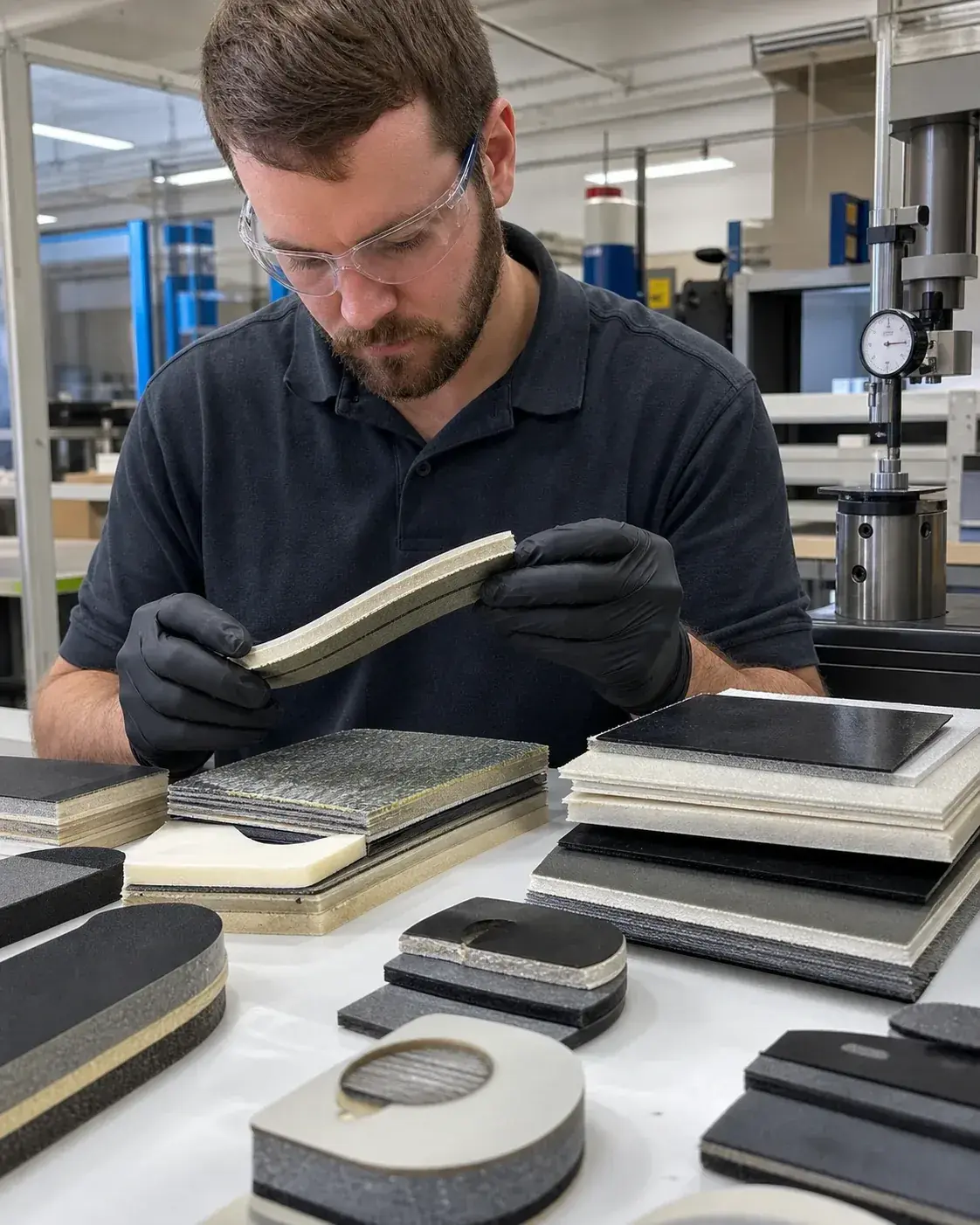
The useful comparison was construction-specific: the same PSA had to satisfy coated-film wet-out and foam-part hold on the real laminated build.
Coated films needed quicker wet-out, but softer tack alone was creating hold problems downstream
The converter was building laminated foam parts and coated-film constructions, but the existing PSA route could not keep early surface contact and long-term hold in balance.
- Some coated films resisted full contact at first touch, which slowed qualification and forced extra trial loops around coat weight and application settings.
- When the team pushed toward a softer, more aggressive tack profile, laminated foam parts became more vulnerable to creep and edge lift under load and storage stress.
- The result was a drifting validation window: one formula improved first grab, while another improved hold, but neither route held both outcomes together on the same converted build.
A PSA route tuned around coated-film wet-out, foam compression, and shear-hold stability
Senda treated the program as a construction-fit problem, narrowing formulation and qualification logic together so early contact, cohesive hold, and final assembly stability could be judged on the same laminate instead of in separate test loops.
Products Used:
- Balanced Wet-Out / Shear PSA Grade
Designed for faster surface contact on coated films and stronger in-use hold on laminated foam parts.
What made the approval credible was that the team stopped treating tack as the whole story. The accepted route still had to wet out coated films cleanly, hold laminated foam parts in position, and stay closer to the intended peel-shear balance after conversion and field use.
Qualification path
Carrier and substrate review
Film surface condition, foam compressibility, carrier choice, and the target load case were reviewed together before the team changed PSA direction.
Side-by-side wet-out and hold comparison
Candidate grades were compared on the same laminated constructions so early contact on coated films and longer-term hold on foam parts could be judged without trial drift.
Converted-part confirmation
Final approval stayed tied to how the bonded parts behaved after conversion, storage, and handling rather than stopping at a promising first-touch tack result.
The useful comparison was construction-specific: the same PSA had to satisfy coated-film wet-out and foam-part hold on the real laminated build.
What changed on the PSA program
- Faster usable wet-out: Coated films reached cleaner early contact without forcing the team to solve every problem through heavier tack alone.
- Steadier in-use hold: The approved route built a better shear-hold window on laminated foam parts, reducing creep and edge-lift pressure after conversion.
- Shorter validation loops: Qualification moved faster because the team stopped bouncing between formulas that solved one end of the tack-versus-hold tradeoff at a time.

Validated construction window
Validated construction window
Laminated foam parts and coated-film assemblies were qualified on one approved PSA route.
Coated films reached cleaner early contact without solving every issue through heavier tack alone.
The route reduced creep and edge-lift pressure after conversion and 90-day storage screening.
Related resources
- Qualifying an Industrial PSA: Surface Energy, Coat Weight, and Peel/Shear Balance
Wet-out, shear hold, and laminated foam qualification logic from this case study.
- Request an industrial PSA trial
Prepaid sample for coated-film wet-out and edge-lift screening on laminated foam constructions.

" Senda helped us qualify a PSA system that delivered faster wet-out on coated films and a much better shear hold window on laminated foam parts. It shortened our validation loop and reduced edge-lift complaints in the field. "
Ready to Write Your Own Success Story?
Our technical engineers are ready to help you solve your specific adhesion challenges. Get in touch for a free consultation and sample testing.
Replicate This Success