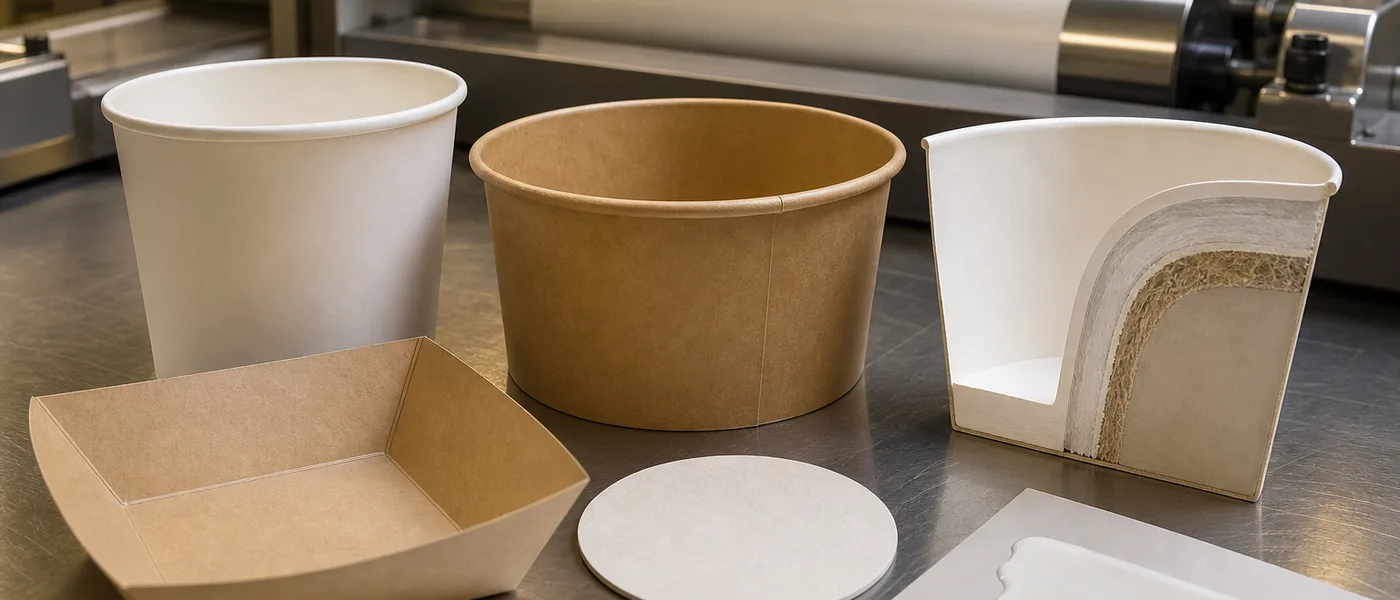
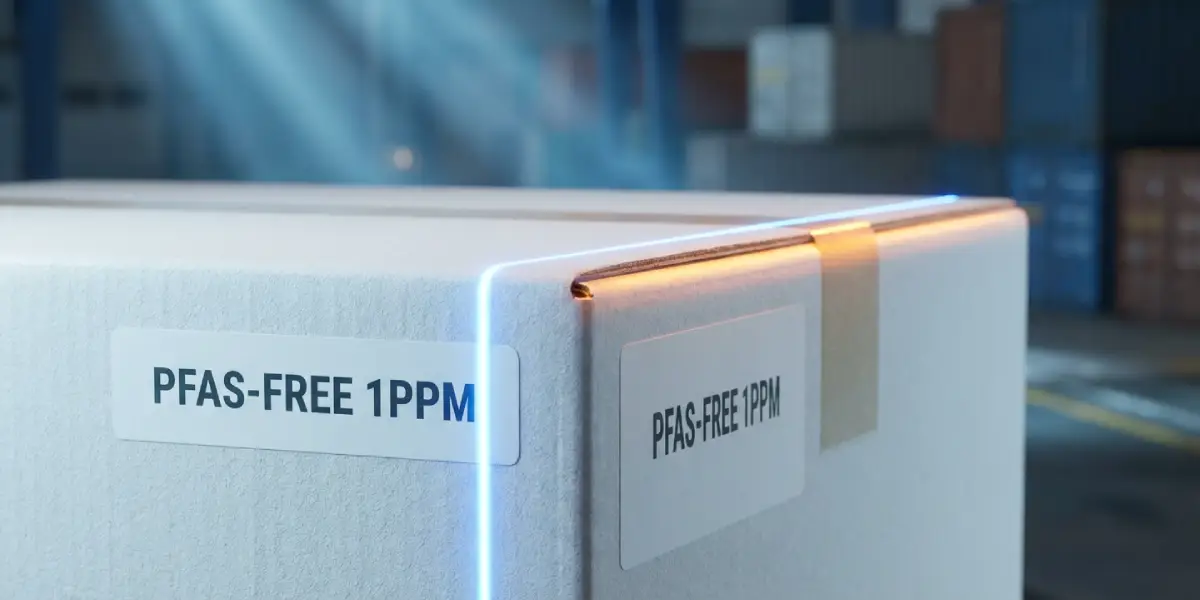
PFAS-free barriers often reject legacy hot melts. Compare metallocene vs EVA qualification and food-contact documentation before line approval.
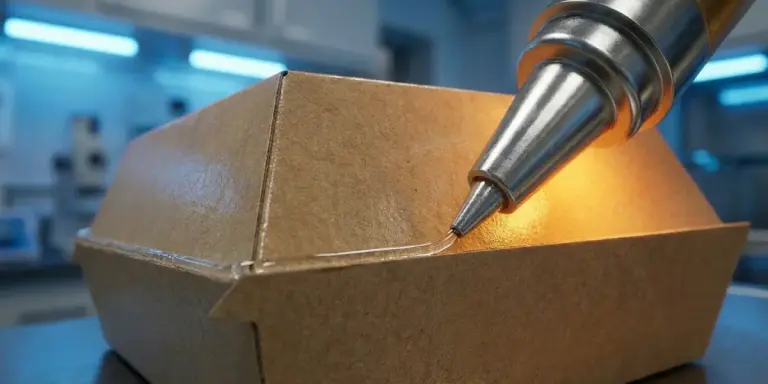
Table of Contents
If you are relying on a generic "Non-Toxic" label to pass your next contamination audit, you are risking a recall. In food packaging, safety is baseline; migration control lives in our food-contact adhesives cluster and FDA paper-packaging guide.
As a QA Manager or Packaging Engineer, your primary adversary is chemical migration—specifically MOSH (Mineral Oil Saturated Hydrocarbons) and MOAH (Mineral Oil Aromatic Hydrocarbons). However, the recent industry shift toward PFAS-free and bio-based barrier coatings has introduced a new failure mode: adhesive refusal. The chemical interaction between traditional glues and these new "green" coatings is often nonexistent.
"The shift to PFAS-free aqueous dispersions has drastically lowered the surface energy of food board. An adhesive that bonded perfectly to fluorochemically treated paper in 2020 will likely fail on today's bio-based barriers."
Defining the Compliance Tiers
Most adhesive failures in the food sector stem from specifying the wrong regulatory tier for the substrate type. It is critical to note that "Metallocene" describes the polymer technology, while FDA 175.105 and FDA 176.170 describe the legal use case. We offer Metallocene grades that cover both tiers.
Standard EVA and General Purpose Metallocene. Restricted to applications separated from food by a functional barrier. High bond strength for shipping cases.
Includes Select Metallocene Grades & Water-Based Acrylics. Mandatory for burger clamshells or wrappers where glue may contact fatty/aqueous food.
High-purity olefin technology. Low density (~0.88 g/cm³) offers higher yield. Available in both Indirect and Direct Contact formulations.
Formulated with a Glass Transition Temperature (Tg) below -30°C to prevent cold-crack in blast freezers. Essential for coated frozen food cartons.
The "PFAS-Free" Adhesion Challenge — Aqueous dispersions lower surface energy on board; pair chemistry with metallocene vs. EVA, 2026 PFAS enforcement, and folder-gluer UV bonding when pop-opens persist.
The industry is rapidly replacing fluorochemical treatments with aqueous dispersions to meet "PFAS-free" standards. These coatings are often non-porous and hydrophobic. In our rheology testing, we observed that standard EVA relies entirely on mechanical interlocking to form a bond. On a coated aqueous barrier, we see the EVA sit on top like a water droplet on oil, creating a "zipper bond" that fails under minimal stress.
To bond these substrates, you need an adhesive with higher specific adhesion (chemical affinity). This usually requires a transition to polyolefin-based (Metallocene) formulas that can wet out effectively on low-surface-energy coatings.
Problem: Bond Failure on Aqueous Coated Board
Symptoms: Adhesive peels cleanly off the substrate with 0% fiber tear. Pop-opens occur immediately after the compression section.
Solutions:
- Diagnostic Step (Temporary): Increase compression dwell time by 100-200ms. If this fixes the bond, your adhesive has an "Open Time" issue. Do not permanently slow the line.
- Production Fix: Switch to a "Fast-Set" Metallocene grade with lower viscosity to improve wetting speed without sacrificing line throughput.
- Thermal Adjustment: Increase tank temperature by 5-10°C (do not exceed 180°C) to lower viscosity and speed up penetration.
The Metallocene Economy: Density vs. Price
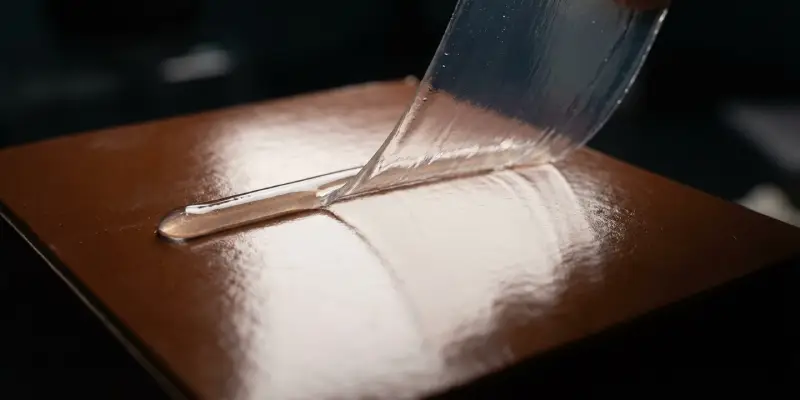
Engineers often balk at the price per pound of Metallocene compared to EVA. This is a false economy. Adhesives are bought by weight but applied by volume. Because Metallocene is significantly less dense (approx. 0.88 g/cm³) than EVA (approx. 0.98 g/cm³), you get roughly 12-15% more volume per pound.
Furthermore, Metallocene's thermal stability means it does not char in the tank. This eliminates nozzle clogs and filter changes associated with degraded EVA. When you factor in the density advantage and the reduction in maintenance downtime, the Total Cost of Ownership (TCO) for Metallocene is typically 15-20% lower than "cheaper" EVA.
Validate on PFAS-Free Board?
Don't guess with new barrier coatings. Send us your exact substrate. We will test adhesion strength and compliance in our lab.
Request Substrate TestingSenda Technical Verdict
- Match the Coating, Not Just the Paper: If you are running aqueous dispersion/PFAS-free board, standard EVA will likely fail. You need the chemical adhesion of Metallocene.
- Calculate TCO by Volume: Do not compare price per kg. Compare cost per carton sealed. The density delta of Metallocene usually offsets the raw material cost.
- Compliance Documentation: We provide Annual Third-Party Validation and batch-specific Composition Statements to ensure your audit trail is bulletproof without the wait for individual migration testing.
Frequently Asked Questions
What is the main difference between FDA 175.105 and FDA 176.170 adhesives?
FDA 175.105 covers indirect food contact where a functional barrier exists. FDA 176.170 is required for direct contact with aqueous or fatty foods (e.g., burger wrappers or clamshells).
Why do standard EVA hot melts fail on PFAS-free packaging?
PFAS-free aqueous coatings create a hydrophobic, non-porous surface. EVA relies on mechanical interlocking (absorption), which fails on these barriers. Metallocene is required for chemical specific adhesion.
How does adhesive density affect the total cost of packaging?
Metallocene is less dense (~0.88 g/cm³) than EVA (~0.98 g/cm³). Since you buy by weight but apply by volume, Metallocene yields 12-15% more seals per pound, often lowering TCO despite a higher price tag.
How can I fix "zipper bonds" on aqueous coated substrates?
Zipper bonds indicate poor wetting. Try increasing tank temperature by 5-10°C (max 180°C) to lower viscosity, or switch to a "Fast-Set" Metallocene grade designed for low-surface-energy barriers.
Qualify hot-melt on your coated board
Request complimentary 1 kg lab material (shipping prepaid by recipient) after coat-weight or bond screening on your substrate.
References
Technical Disclaimer: All technical data is based on standard laboratory conditions. Users should perform their own verification testing to confirm suitability for specific substrates, processes, and regulatory requirements. Senda Glue makes no warranties, express or implied, and assumes no liability for improper use of the products or reliance on this information.