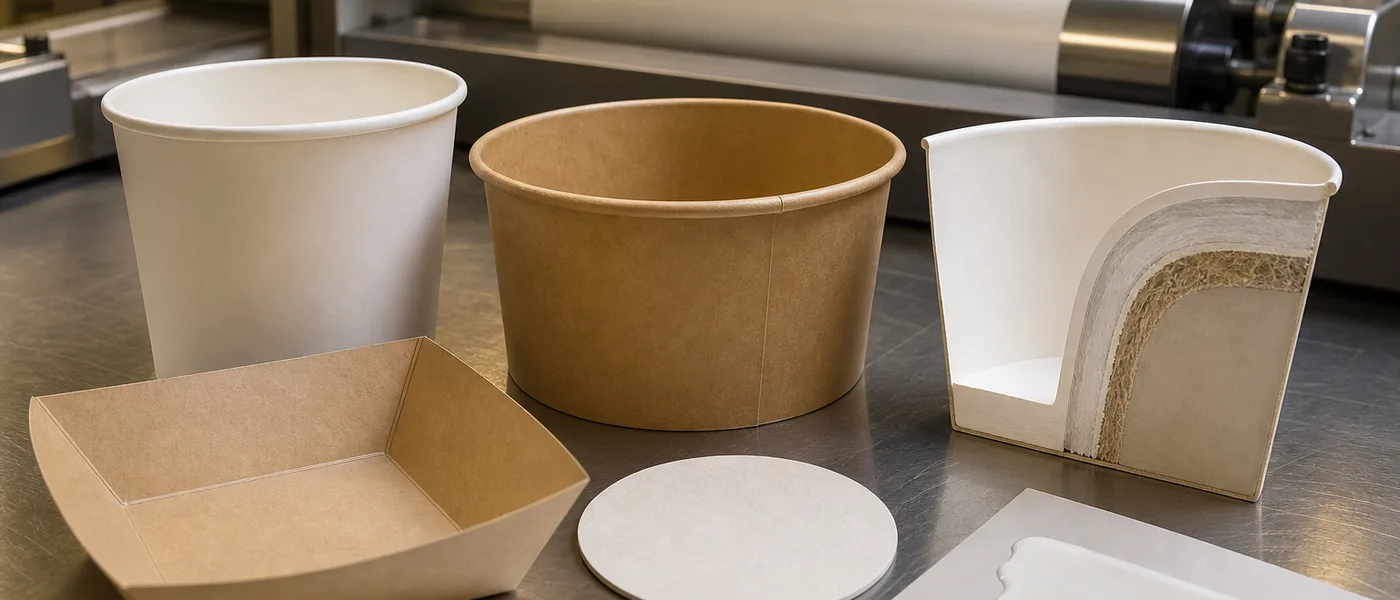
Areca and bagasse tableware absorb moisture and grease. See how PFAS-screened acrylic coatings target Kit 12 performance when qualified per grade and shipping lane.
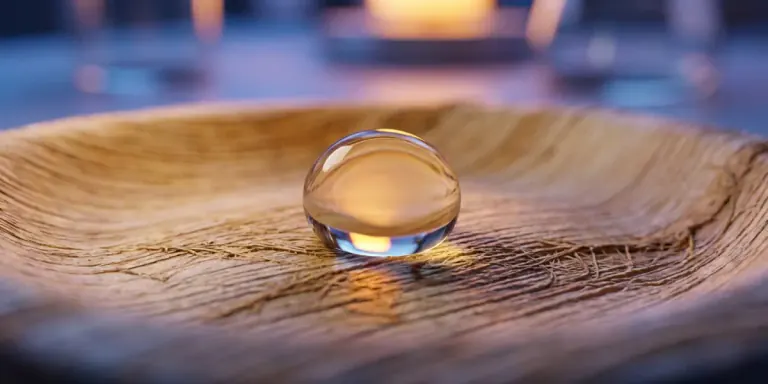
Table of Contents
The "natural" look of Areca palm and Bagasse tableware is its biggest selling point, but also its fatal engineering flaw. Raw biomass is hygroscopic—it breathes. For molded-fiber programs, start from recyclable barrier coatings and food-contact adhesives when grease and aqueous contact are in scope.
For industrial manufacturers, the challenge is shifting from simple pressing to sophisticated surface modification. Water-Based Acrylic Dispersions have emerged as the dominant, scalable solution for natural tableware. They offer the necessary grease resistance and moisture barrier to survive global shipping, providing a "Repulpable" (recycling-friendly) alternative to plastic linings.
"The biomaterial paradox: The properties that make Areca leaves sustainable (porosity) are the exact properties that cause bond failure and mold growth. A functional aqueous barrier is not just about eco-labels; it is about ensuring your cargo arrives at the port without being a total loss."
Defending Against the "Soggy Bottom" and Mold — In our forensic analysis of mold-contaminated cargo, the culprit is rarely the pressing technique; it is moisture management and coating continuity. Validate against bio-tableware mold control and 2026 PFAS enforcement before claiming PFAS-free.
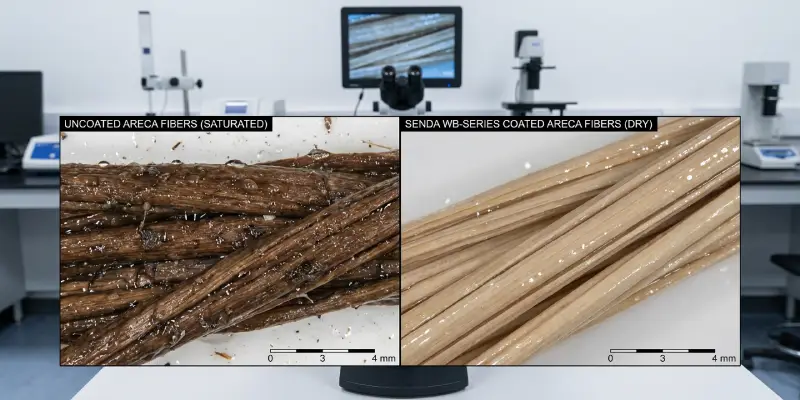
In our forensic analysis of mold-contaminated cargo, we found that the culprit is rarely the pressing technique; it is moisture migration. Without a hydrophobic coating, an Areca plate absorbs humidity, raising its water activity (aw) to levels that support spores. In our hot oil penetration tests (90°C), we observed that uncoated plates undergo rapid fiber saturation, losing structural rigidity in less than five minutes.
To survive modern food service, the substrate must meet FDA 176.170 standards for aqueous and fatty food contact while maintaining a high Kit Rating for grease resistance.
Problem: Mold Growth & Grease Stain-Through
Symptoms: Fungal spots upon arrival; dark grease stains appearing on the underside of the plate; loss of stiffness when serving hot meals.
Solutions:
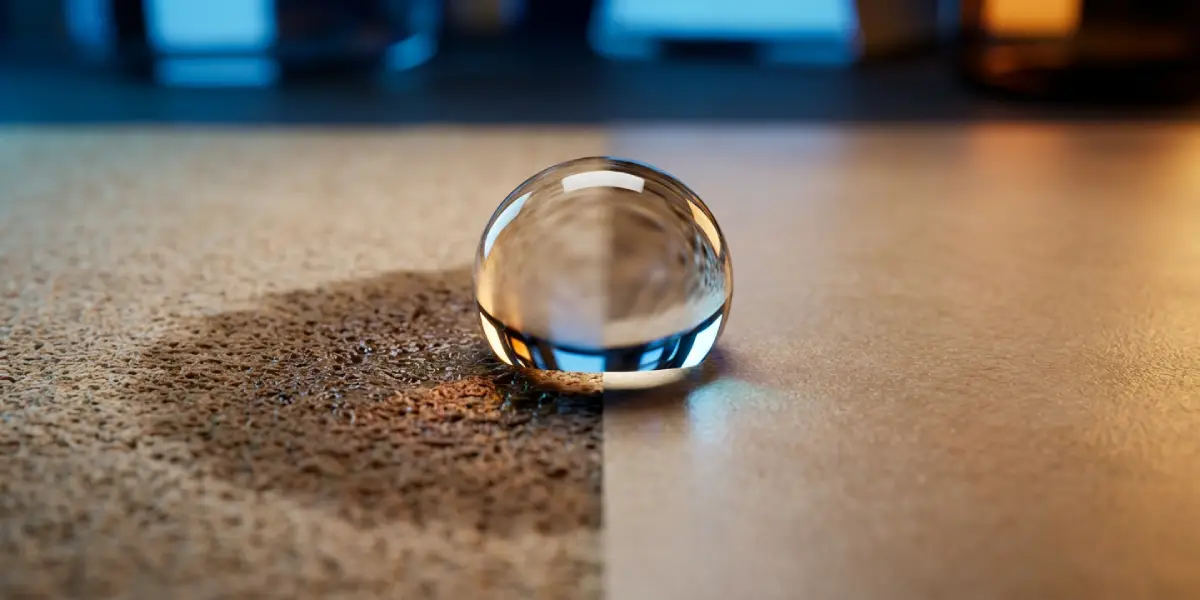
- Seal the Pores: Use a high-performance aqueous dispersion to create a physical barrier against moisture and oil.
- Verify PFAS-Free Status: Transition away from fluorinated oil-proofing agents to compliant water-based acrylics.
- Audit Moisture Levels: Ensure plates are dried to a stable 5-8% moisture content before the sealing coat is applied to prevent "internal" mold growth.
The Compliance & Performance Matrix
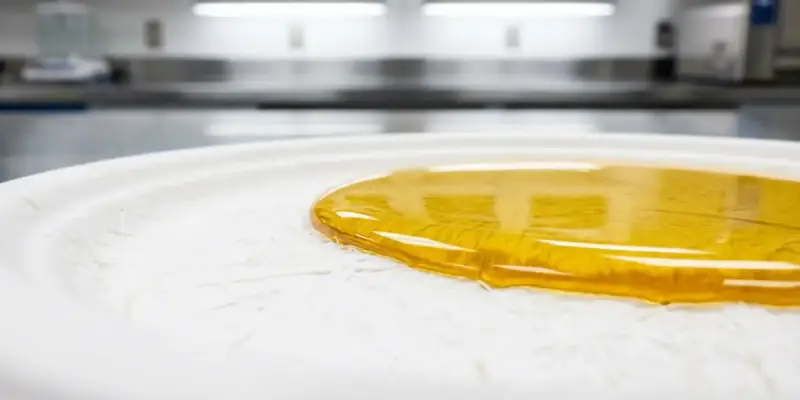
We classify tableware coatings based on their functional barrier strength and their ability to be repulped during paper recycling processes. While biopolymers are in R&D, acrylic dispersions are the current industry standard for reliability.
Zero barrier. High risk of mold. Only suitable for dry, room-temperature foods. High risk of "Container Rain" damage during transit.
Cheap moisture barrier, but poor heat resistance (melts into food). Difficult to recycle and often creates a waxy mouthfeel for the consumer.
PFAS-screened, water-based acrylic route. Targets Kit 12 grease resistance and mold risk reduction when coat weight and drying are qualified per grade.
Emerging fully compostable grades (PLA/PHB). Currently limited by high cost, shorter shelf-life, and lower heat resistance than acrylics.
Application Engineering: The Spray Advantage
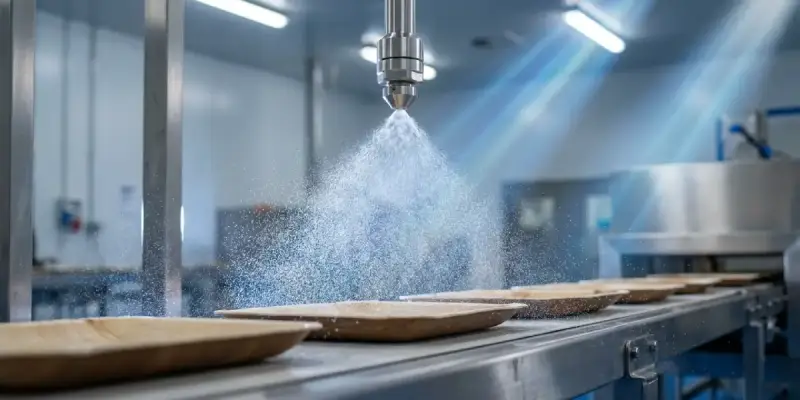
In our efficiency audits of artisanal lines, we frequently identify the "Dip and Dry" method as a critical failure point. Our moisture sensors indicate that dipping saturates the core fibers of the leaf, which then traps moisture beneath the coating. This creates an ideal environment for mold to grow from the inside out once the plate is shrink-wrapped.
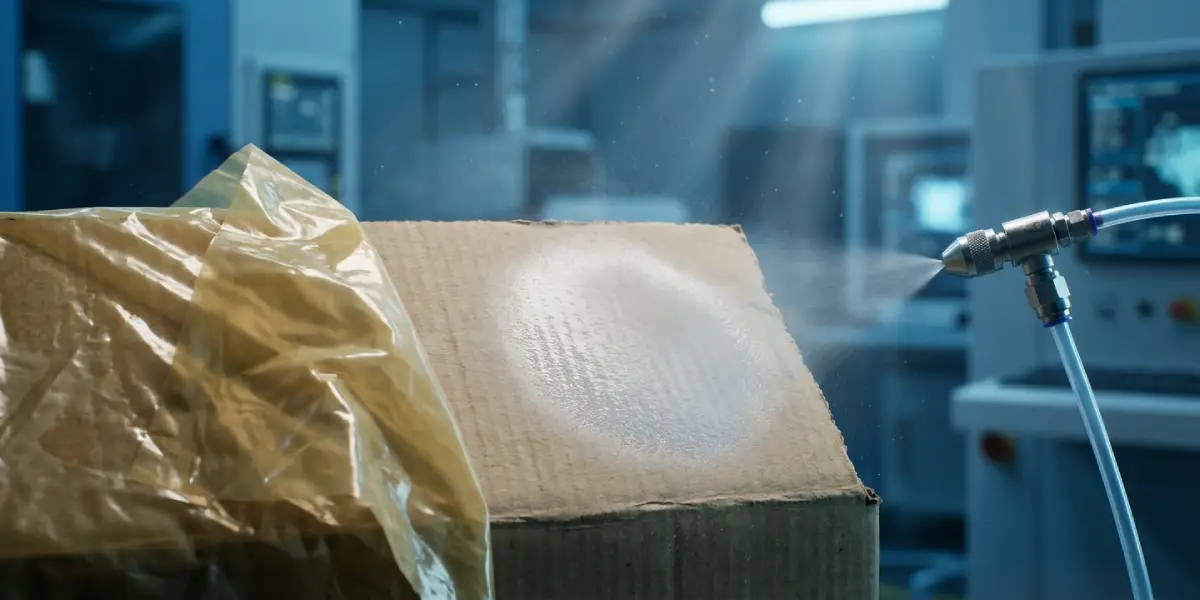
We recommend Precision Spraying as the industrial standard. By using an automated spray system, you apply a micron-thin layer of the WB-Series barrier only to the food-contact surface. This "seal coat" locks out grease and ambient moisture without re-wetting the structural fibers, significantly improving your yield rate and shelf-life stability.
Stop Mold & Grease Leaks Today
Don't let moisture destroy your container load. Validate our WB-Series PFAS-Free Coating on your specific leaf substrate.
Request Anti-Mold Coating KitSenda Technical Verdict
- Target Kit 12: For modern food service, Kit 12 grease resistance is the non-negotiable benchmark. Anything less risks oil-bleed and brand damage.
- Prioritize Repulpability: While bio-based coatings are coming, ensure your current acrylic coating is "Repulpable" to meet existing circular economy standards.
- Surface Seal is Key: Move away from saturating the leaf. Focus on a high-speed spray application that creates a functional shield while keeping the core fiber dry.
Frequently Asked Questions
Why is mold growth so common in shipped Areca and Bagasse tableware?
Areca and Bagasse are hygroscopic biomass materials that "breathe." Without a functional surface barrier, they absorb ambient humidity during transit, raising moisture levels until fungal spores can thrive.
How does a "Repulpable" coating differ from traditional plastic linings?
Traditional plastic linings (like PE) must be mechanically stripped from fibers, often ending up in landfills. Repulpable acrylic coatings break down during the standard paper recycling process, allowing the natural fibers to be recovered.
Why is spray application recommended over the "Dip and Dry" method?
Dipping saturates the core fibers of the leaf, trapping moisture deep inside the product. Precision spraying creates a functional surface shield while keeping the structural core dry, which is critical for preventing mold growth.
What does Kit 12 grease resistance signify for food service?
The Kit Test measures the ability of a coating to repel aggressive oils. A Kit 12 rating is the highest possible score, ensuring that hot, fatty foods will not soak through the plate and cause structural failure or staining.
Are these coatings compliant with global food safety standards?
Senda WB-Series grades support direct food-contact paper programs when your structure fits FDA 21 CFR 176.170 use conditions. Request grade-scoped TDS, SDS, and DoC—and PFAS/fluorine screening reports your buyer specifies (TOF or other protocol).
Trial tableware coating on your line
Request complimentary 1 kg lab material (shipping prepaid by recipient) after coat-weight or bond screening on your substrate.
References
Technical Disclaimer: All technical data is based on standard laboratory conditions. Users should perform their own verification testing to confirm suitability for specific substrates, processes, and regulatory requirements. Senda Glue makes no warranties, express or implied, and assumes no liability for improper use of the products or reliance on this information.