Hot-melt adhesive viscosity is one of the most critical properties that determines application success in manufacturing. Understanding how viscosity affects performance, application methods, and end-product quality is essential for selecting the right adhesive for your specific needs.

Table of Contents
In this comprehensive guide, we'll explore the fundamentals of hot-melt adhesives viscosity, measurement methods, factors that influence viscosity, and practical considerations for line setup. For packaging-specific chemistry, see EVA vs. metallocene and hot-melt vs. water-based.
What is Viscosity and Why Does It Matter?
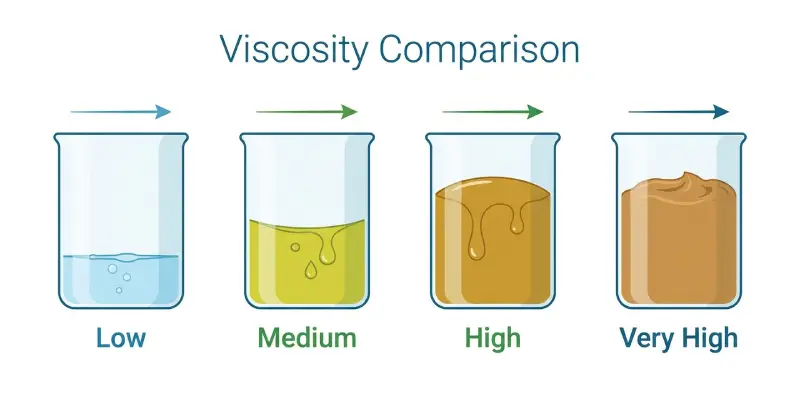
Viscosity, in simple terms, is a measure of a fluid's resistance to flow. For hot-melt adhesives, viscosity determines how easily the adhesive flows when melted and applied. This property directly impacts:
- Application method: Low-viscosity adhesives work well with spray or fine-line applicators, while high-viscosity adhesives require different equipment.
- Bond strength: Viscosity affects how well the adhesive penetrates substrates and forms strong bonds.
- Open time: The time available for positioning parts before the adhesive sets.
- Production speed: Higher viscosity may require slower application rates or different equipment configurations.
Measuring Hot-Melt Adhesive Viscosity
Viscosity is typically measured in centipoise (cP) or Pascal-seconds (Pa·s). The most common method for hot-melt adhesives is using a Brookfield viscometer at the application temperature. Standard test temperatures range from 150°C to 200°C, depending on the adhesive type.
"Understanding viscosity at your application temperature is crucial. An adhesive that flows perfectly at 180°C might be too thick or too thin at your actual operating temperature of 160°C."
Viscosity Ranges by Application
Different applications require different viscosity ranges:
Ideal for spray applications, fine-line dispensing, and porous substrates. These adhesives flow easily and penetrate well.
Versatile range suitable for most general-purpose applications, including packaging, woodworking, and assembly.
Best for gap-filling applications, bonding irregular surfaces, and situations requiring high initial tack.
Used for structural bonding, heavy-duty applications, and when minimal flow is desired.
Factors Affecting Viscosity
Several factors influence the viscosity of hot-melt adhesives:
Temperature
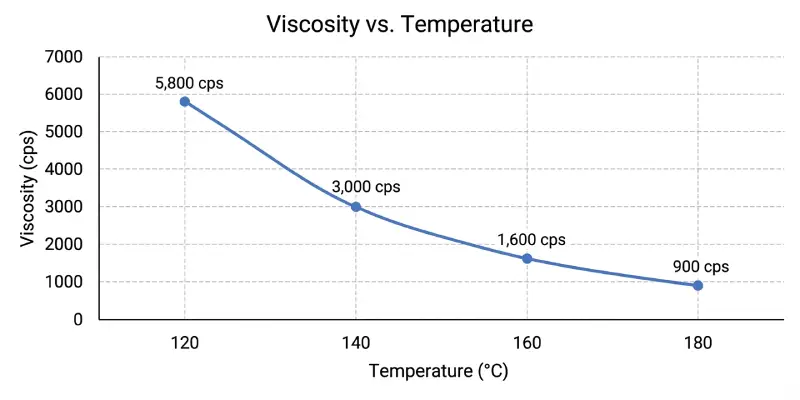
Temperature has the most significant impact on viscosity. As temperature increases, viscosity decreases exponentially. This relationship is why precise temperature control is essential in hot-melt application systems. A temperature variation of just 10°C can change viscosity by 30-50%.
Polymer Type and Molecular Weight
The base polymer in the adhesive formulation determines its fundamental viscosity characteristics. Higher molecular weight polymers generally result in higher viscosity. Common polymers include:
- Ethylene-vinyl acetate (EVA) copolymers
- Polyolefins (polyethylene, polypropylene)
- Polyamides
- Polyurethanes
- Styrene block copolymers
Selecting the Right Viscosity
Choosing the appropriate viscosity requires considering multiple factors:
Substrate Characteristics
Porous substrates (paper, cardboard, wood) benefit from lower viscosity adhesives that can penetrate and create mechanical bonds. Non-porous substrates (plastic, metal) may require higher viscosity adhesives with better surface wetting properties.
Application Equipment
Your equipment capabilities and limitations will influence viscosity selection. Check your equipment manufacturer's specifications for recommended viscosity ranges. Some applicators work best within specific viscosity windows.
Production Speed
High-speed production lines may require lower viscosity adhesives that flow quickly and set rapidly. Slower processes can accommodate higher viscosity adhesives that may offer better bond strength or gap-filling capabilities.
Common Viscosity-Related Issues and Solutions

Problem: Adhesive Too Thick
Symptoms: Poor flow, stringing, equipment clogging, incomplete coverage.
Solutions:
- Increase application temperature (within safe limits)
- Switch to a lower viscosity adhesive grade
- Check equipment for blockages
- Verify temperature calibration
Problem: Adhesive Too Thin
Symptoms: Excessive flow, dripping, poor gap-filling, weak bonds.
Solutions:
- Reduce application temperature
- Switch to a higher viscosity adhesive grade
- Adjust application rate or pattern
- Consider equipment modifications
Need a sample to test?
Unsure which viscosity fits your machinery? Get a free 1kg sample to run a live test.
Get Free SampleBest Practices for Viscosity Management
To ensure consistent performance and quality:
- Maintain consistent temperature: Use calibrated temperature controllers and monitor regularly.
- Follow manufacturer specifications: Adhere to recommended application temperatures and viscosity ranges.
- Test at operating conditions: Measure viscosity at your actual application temperature, not just standard test conditions.
- Monitor equipment performance: Changes in flow rate or application quality may indicate viscosity issues.
- Keep records: Document temperature settings, application rates, and performance results for troubleshooting.
Conclusion
Understanding hot-melt adhesive viscosity is fundamental to achieving optimal bonding performance. By considering your substrates, equipment, production requirements, and application conditions, you can select the right viscosity grade for your specific needs.
If you're unsure about the best viscosity for your application, consult with adhesive specialists who can provide technical guidance and recommend products based on your specific requirements. Proper selection and application of hot-melt adhesives can significantly improve your manufacturing efficiency and product quality.
Frequently Asked Questions
Can I increase the tank temperature to lower hot melt viscosity?
You should be careful. While raising the temperature does improve flow, exceeding the recommended range (e.g., >180°C) causes hot melt charring and nozzle clogs. Always check the Technical Data Sheet (TDS) limit first to avoid degrading the adhesive.
Why is my hot melt adhesive "stringing" (angel hair)?
Stringing usually happens when the hot melt viscosity is too high to break clean at the nozzle, or the air cools it too quickly. Try increasing the temperature by 5-10°C. If that fails, switch to a lower viscosity grade meant for high-speed lines.
Does higher viscosity hot melt provide a stronger bond?
Not necessarily. High viscosity can prevent the adhesive from "wetting out" (penetrating) the surface. For difficult substrates like glossy paper, a lower viscosity hot melt often bonds better because it flows into microscopic pores before setting.
Why does hot melt viscosity fluctuate during a production shift?
This is often due to "thermal shock." If operators add a large amount of cold pellets to the tank at once, it drastically cools the system and spikes the viscosity. We recommend the "feed little and often" method to maintain stability.
How do I choose the right hot melt viscosity for case sealing?
It depends on line speed. High-speed auto-feeding systems (>50 packs/min) need low viscosity (1,000 cP) for clean cutoff. Slower lines or manual guns benefit from higher viscosity (3,000 cP) to prevent dripping and ensure good gap-filling.
Send facestock for rheology screening
Request complimentary 1 kg lab material (shipping prepaid by recipient) after screening on your substrate and line conditions.
Technical Disclaimer: All technical data is based on standard laboratory conditions. Users should perform their own verification testing to confirm suitability for specific substrates, processes, and regulatory requirements. Senda Glue makes no warranties, express or implied, and assumes no liability for improper use of the products or reliance on this information.