At a Glance
- Kit 12 Grease Benchmark
- 5-8% Pre-Coat Moisture Target
- Less Core Rewet Pressure
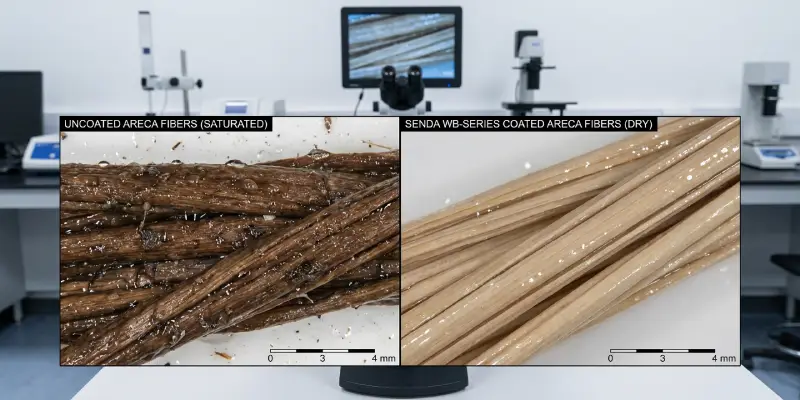
The failure started inside the fiber network: once moisture moved into the core, mold pressure and grease stain-through became much harder to control later.
Natural-fiber plates were absorbing moisture into the core before they ever reached food service
The producer was scaling areca and bagasse formats for export and foodservice use, but the existing coating logic treated the substrate like a simple surface instead of a hygroscopic structure.
- Uncoated or weakly protected plates absorbed humidity and oil quickly enough to raise mold concern and reduce stiffness during use.
- The dip-and-dry approach re-wet the core fibers, which trapped moisture underneath the coating and created a hidden failure mode even when the surface looked acceptable.
- The team also needed a route that could stay aligned with PFAS-free and food-contact review instead of solving grease holdout with older fluorinated shortcuts.
A PFAS-free barrier route tuned around substrate dryness, grease holdout, and spray application
Senda treated the issue as a structure-fit problem, balancing pre-coat moisture control, Kit 12 screening, and application method so the barrier layer protected the food-contact surface without driving new moisture deeper into the natural-fiber core.
Products Used:
- PFAS-Free Tableware Barrier Grade
Designed for moisture and grease holdout on areca, bagasse, and other fiber formats where the structure still needs to stay dry and stable.
- Repulpable Coating Platform
Supports broader foodservice qualification where holdout, regulatory review, and converting method all remain in scope.
What made the route workable was that it sealed the surface without pretending the substrate was non-porous. The approved process kept the core drier before coating, used the barrier only where it added value, and treated application method as part of product performance rather than an afterthought.
Qualification path
Moisture and failure-mode audit
The team separated moisture-driven mold risk from grease stain-through and measured whether incoming plates were dry enough to receive a barrier layer without trapping water in the core.
Barrier screening against foodservice stress
Candidate grades were reviewed against the repo-backed Kit 12 benchmark and the hot-oil penetration logic already used to expose early saturation failures on natural-fiber formats.
Application-method comparison
Dip-and-dry and precision-spray routes were compared directly so the approved process reflected both barrier performance and whether the substrate stayed dimensionally cleaner after coating and wrapping.
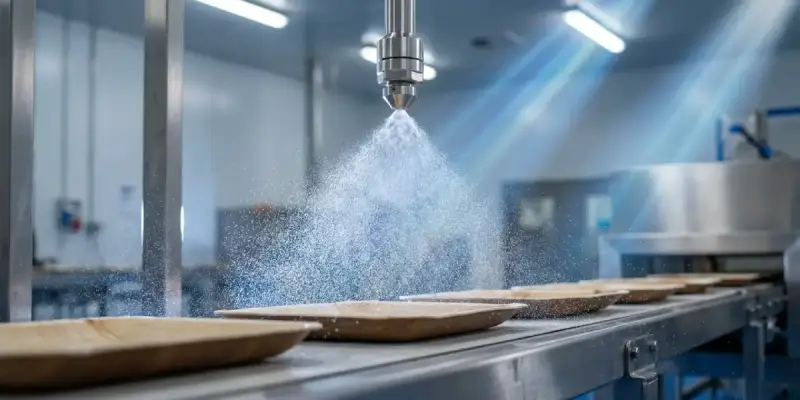
Spray application mattered because it created a functional surface shield while keeping the structural fiber core drier than soak-style coating methods.
What changed on the tableware program
- Drier structural core: Pre-coat moisture control and spray application reduced the chance that hidden internal moisture would stay trapped beneath the barrier layer.
- Stronger grease holdout discipline: Qualification stayed tied to the Kit 12 benchmark instead of accepting a weaker surface treatment that looked acceptable only under lighter foodservice conditions.
- Cleaner scale-up logic: The team approved one route that balanced PFAS-free review, food-contact context, and real substrate behavior instead of swapping between cosmetic fixes and process workarounds.
Validated operating window
Validated operating window
The approved process kept plate moisture inside the repo-stated target band before coating so the barrier layer did not lock excess water into the fiber core.
Final release remained tied to the repo-backed grease-resistance benchmark already treated as the non-negotiable target for demanding foodservice use.
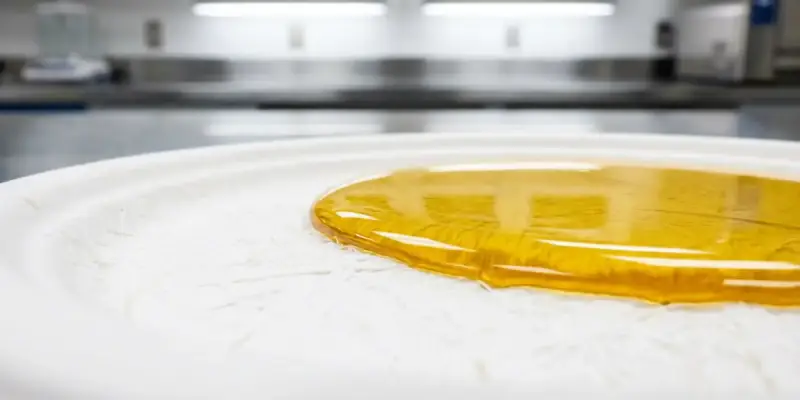
Qualification stayed grounded in the same hot-oil penetration logic used in the evidence pack to expose rapid saturation on under-protected natural-fiber plates.
Related resources
- Bio-Tableware Protection: Preventing Mold and Grease on Areca & Bagasse
PFAS-screened barrier logic, Kit 12 screening, and spray vs dip application on natural-fiber tableware.
- Request a barrier coating trial
Line-side pilot for moisture control and grease holdout on areca or bagasse formats—scoped per grade.

" We had several barrier options on the table, but the decision kept stalling once grease holdout, core moisture, and spray application were considered together. Senda helped us qualify a better-matched coating route that stayed aligned with our areca and bagasse formats, our converting process, and the approval work our team actually had to complete. "
Ready to Write Your Own Success Story?
Our technical engineers are ready to help you solve your specific adhesion challenges. Get in touch for a free consultation and sample testing.
Replicate This Success