At a Glance
- 35% Less Rework Pressure
- 3 Corrosion Levels Mapped
- 2 Prep Methods Qualified
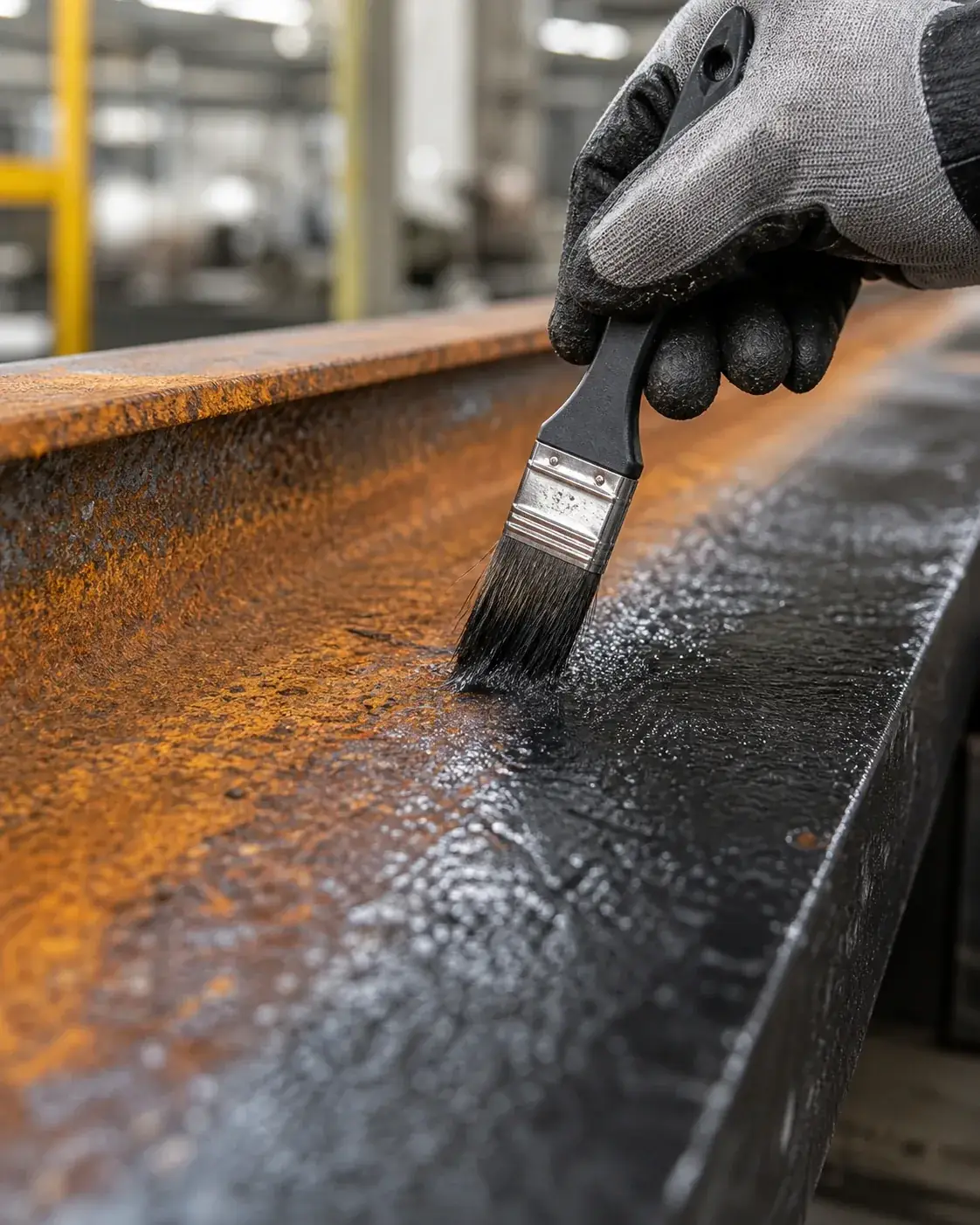
Mixed corrosion and uneven access mattered because qualification had to stay usable on real steel, not only on uniform lab coupons.
Manual rust treatment was creating too much variation before primer ever hit the steel
The supplier was preparing corroded components for repainting and downstream coating, but the existing rust-prep step was too dependent on operator feel and local surface condition.
- Different corrosion depths and prep quality created uneven treatment response from part to part.
- Some surfaces looked acceptable after treatment but still handed off inconsistently into primer or topcoat.
- Extra passes and repeat cleaning raised rework pressure whenever the workflow moved from localized repair into broader fabrication or maintenance batches.
A rust-conversion route tuned around corrosion level, prep method, and coating sequence
Senda treated the project as a workflow-fit problem, aligning rust stabilization and paint readiness around the real maintenance sequence so the team could judge surface condition, application behavior, and downstream coating response together.
Products Used:
- Paint-Ready Rust Converter Grade
Designed for more even conversion, steadier surface readiness, and a more usable application window on mixed-corrosion steel.
What made the program workable was that approval stayed tied to the whole prep-to-coating handoff. The team did not chase a cosmetic surface change and call it done. The approved route still had to stabilize active rust more evenly, behave predictably under the chosen prep method, and give primer a cleaner, more repeatable base.
Qualification path
Surface-condition audit
Corrosion level, residual contamination, and the difference between localized repair zones and broader fabricated surfaces were reviewed before changing chemistry.
Method and handoff review
Application step, dwell behavior, and downstream primer expectations were mapped together so the treatment route matched the real coating sequence instead of a simplified bench panel.
Field-side confirmation
Final approval stayed tied to repeatability across mixed-corrosion parts, with the team checking whether the converted surface created a cleaner handoff into primer with less rework and fewer extra prep loops.

The useful release point was not a darker surface alone. The treated steel still had to hand off into primer with fewer repeat passes and less uncertainty.
What changed in the rust-prep workflow
- More even rust stabilization: The approved route reduced the chance that active corrosion would stay inconsistent from one repair area to the next before coating.
- Cleaner primer handoff: Surface readiness became easier to judge because the treatment step was qualified around the actual downstream coating sequence instead of isolated lab appearance.
- Lower rework pressure: The maintenance team spent less time repeating prep steps or compensating for variable treatment results across mixed-corrosion parts.
Validated workflow scope
Validated workflow scope
Qualification stayed tied to uneven corrosion levels and real surface variation on mixed steel parts.
Application step and dwell behavior were aligned with the real coating sequence before release.
The process reduced repeat passes when moving from rust treatment into primer preparation.
Related resources
- Rust-Prep Qualification: Corrosion Level, Surface Prep, and Primer Handoff
Mixed-corrosion prep and primer handoff—the guide used in this steel components qualification.
- Request a rust-prep qualification kit
Line-side pilot for rust conversion, surface prep, and primer adhesion on your corrosion mix.

" We were seeing too much variation in how rusted parts were being prepared before coating. Senda helped us standardize a more controlled rust-prep step that improved the handoff into primer, reduced rework, and gave our team a more repeatable result across mixed corrosion levels. "
Ready to Write Your Own Success Story?
Our technical engineers are ready to help you solve your specific adhesion challenges. Get in touch for a free consultation and sample testing.
Replicate This Success