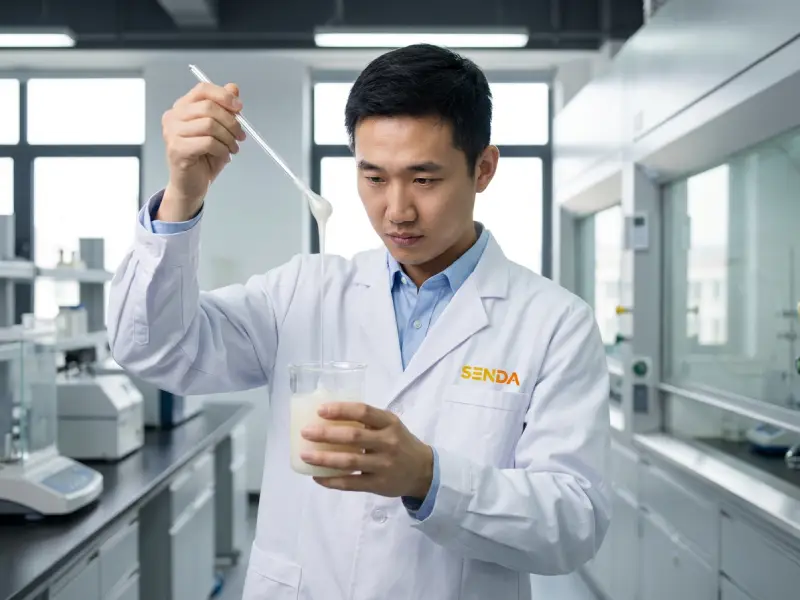
Paper Tube Adhesive Powder for On-Site Mixing & Paper Converting

Dry powder adhesive route for converters who prefer lower freight weight, longer warehouse flexibility, and on-site viscosity control. Screen powder-to-water ratio, cook or dispersion conditions, pot life, and finished tube performance before replacing ready-to-use liquid glue.
*Share mixer type, water quality, cook temperature if used, target viscosity, paper grade, and line speed. Powder samples should be qualified as prepared glue, not as dry chemistry alone.*
Dry powder route • On-site viscosity control • Tube, core, edge board, and honeycomb screening
Optimized For:
Dry supply
Lower shipped water and flexible warehouse handling
Mix controlled
Viscosity set by powder ratio, water, and process
Line qualified
Crush, cutoff, curl, and pot life checked after preparation
Where Powder Adhesive Fits
Powder is a supply and preparation route, not a shortcut around line qualification. Match the prepared glue to your paper stack, drying capacity, and bond station.
Paper Tubes & Textile Cores
Prepared starch or dextrin routes for spiral winding where operators can control mix viscosity, add-on, and drying window.
Edge Board & Corner Protectors
Ply bonding where plant teams want powder inventory stability but still need beam strength and strap-tension screening.
Honeycomb & Structural Board
Cell and liner bonding programs where moisture input, gel strength, and lay-flat behavior must be validated together.
From Freight Savings to a Controlled Prepared Glue
Powder adhesive only works commercially when preparation is disciplined. The buyer is not just buying dry solids; they are buying a repeatable glue-making process.
Common Failures
Unstable Viscosity After Mixing
Water temperature, shear, cook time, and powder addition order can shift viscosity enough to change add-on and cutoff quality.
Clumping, Fish Eyes, or Poor Hydration
Fast dumping or weak agitation can leave dry pockets that plug applicators or create inconsistent bond lines.
False Economy vs Liquid Glue
Lower freight cost can disappear if preparation labor, waste, cleaning, or tube rejects are not included in the trial calculation.
Our Solution
Preparation Window
Define powder-to-water ratio, addition order, mixing speed, cook temperature if used, and hold time before line approval.
Prepared-Glue QC
Check viscosity, solids, pH where relevant, pot life, and screen residue before judging crush or beam strength.
Line Trial Economics
Compare powder against ready-to-use liquid glue with freight, labor, cleaning, waste, line speed, and finished-part rejects in the same view.
Qualify the Powder Route as a Process
A dry powder sample is only half the story. The release decision should be based on prepared adhesive behavior and finished tube or board performance.

Mixing and Cook Conditions
Record powder ratio, water temperature, addition order, shear, cook or hydration time, and target viscosity before the line trial.
-
Cold-dispersible and cook-up systems need different preparation controls.
-
Water hardness and plant temperature can change viscosity build.
-
Hold-time and re-stir rules prevent drift during a long shift.
Applicator Behavior
Prepared adhesive must run cleanly through your tray, wheel, nozzle, or roll system without lumps, tailing, or excessive cleanup.
-
Screen residue and clumps before feeding the applicator.
-
Watch glue film uniformity, add-on, splash, and knife cutoff.
-
Confirm cleaning burden versus your current liquid grade.
Finished-Part Release
Approve powder-prepared glue on the same output measures used for liquid glue: crush, beam, curl, drying, and storage conditioning.
-
Paper tubes: fresh-cut stability plus conditioned radial crush.
-
Edge board: beam stiffness and strap-tension behavior.
-
Honeycomb: lay-flat, compression, and liner-core bond integrity.
Send your preparation equipment details with the paper grade and target bond test. We will narrow the powder route before asking your operators to change the production process.
Lab Support for Powder Adhesive Buyers
We help define the preparation and trial window so purchasing, production, and QA are comparing a real process, not a powder sample in isolation.
Mix Ratio and Viscosity Screen
Prepare candidate ratios and viscosity targets before line operators spend time on production trials.
Storage and Clumping Review
Check packaging, warehouse conditions, and powder handling risks that can change preparation behavior.
Finished Bond Testing
Tie prepared glue back to tube crush, board stiffness, curl, drying, or customer-specific release criteria.
Powder Route Decision Matrix
The right route depends on preparation equipment and the bond station. Do not choose powder only because it ships dry.
| Decision point | What to define | Technology | Why it matters |
|---|---|---|---|
| Preparation method | Mixer, temperature, shear, hydration time | Cold mix / cooked starch / dextrin route | Controls viscosity build, clumps, pot life, and operator repeatability. |
| Target bond station | Add-on, open time, drying capacity | Tube, core, edge board, or honeycomb | Prevents a powder formula from being approved on the wrong application test. |
| Economics | Freight, labor, waste, cleanup, rejects | Powder vs ready-to-use liquid glue | Shows whether dry supply creates real savings after line operation is included. |
What to define: Mixer, temperature, shear, hydration time
Technology: Cold mix / cooked starch / dextrin route
Why it matters: Controls viscosity build, clumps, pot life, and operator repeatability.
What to define: Add-on, open time, drying capacity
Technology: Tube, core, edge board, or honeycomb
Why it matters: Prevents a powder formula from being approved on the wrong application test.
What to define: Freight, labor, waste, cleanup, rejects
Technology: Powder vs ready-to-use liquid glue
Why it matters: Shows whether dry supply creates real savings after line operation is included.
Why Buyers Add a Powder Route
A dry adhesive route is useful when the plant can control preparation and wants freight, inventory, or viscosity flexibility without sacrificing finished-part performance.
Lower Shipped Water
Plant-Controlled Viscosity
Qualification Discipline
Documentation and Claim Boundaries
Powder adhesive can support efficient logistics and bio-based positioning, but regulatory and biodegradability claims still depend on the full formulation and end use.
Confirm Before Claiming
Ask for documents tied to the nominated powder grade and application. Do not treat starch or dextrin content as automatic food-contact, compostability, or biodegradability approval.
- SDS / TDS ( Grade-specific handling and preparation guidance )
- Food-contact scope ( Only where the nominated grade and structure qualify )
- Bio-based claims ( Feedstock language should be separated from biodegradability claims )
TDS, SDS, preparation notes, and claim scope for the nominated powder adhesive grade and application.
Related Paper Converting Routes
Powder adhesive is a supply form. Compare it with ready-to-use liquid glue and adjacent paper converting bond stations before changing the plant workflow.
Industrial Tubes & Cores
Ready-to-use liquid and emulsion routes for tube winding where crush, wet tack, cutoff, and drying are already the main buying frame.
View liquid tube glue route
Edge Protector Adhesives
V-board and U-profile ply bonding where powder or liquid routes must still pass beam and strap-tension checks.
View edge protector grades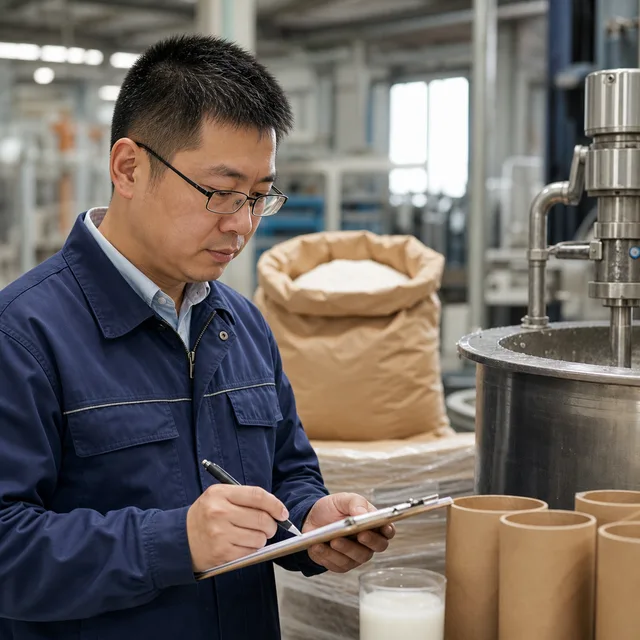
The powder route only made sense after we locked the mix procedure. Once viscosity and hold time were controlled, purchasing could compare freight savings with real tube crush and cutoff results.
Technical Proof (Optional Reading)
Use these guides to decide whether powder, starch/dextrin liquid routes, or PVA systems fit the real line problem.
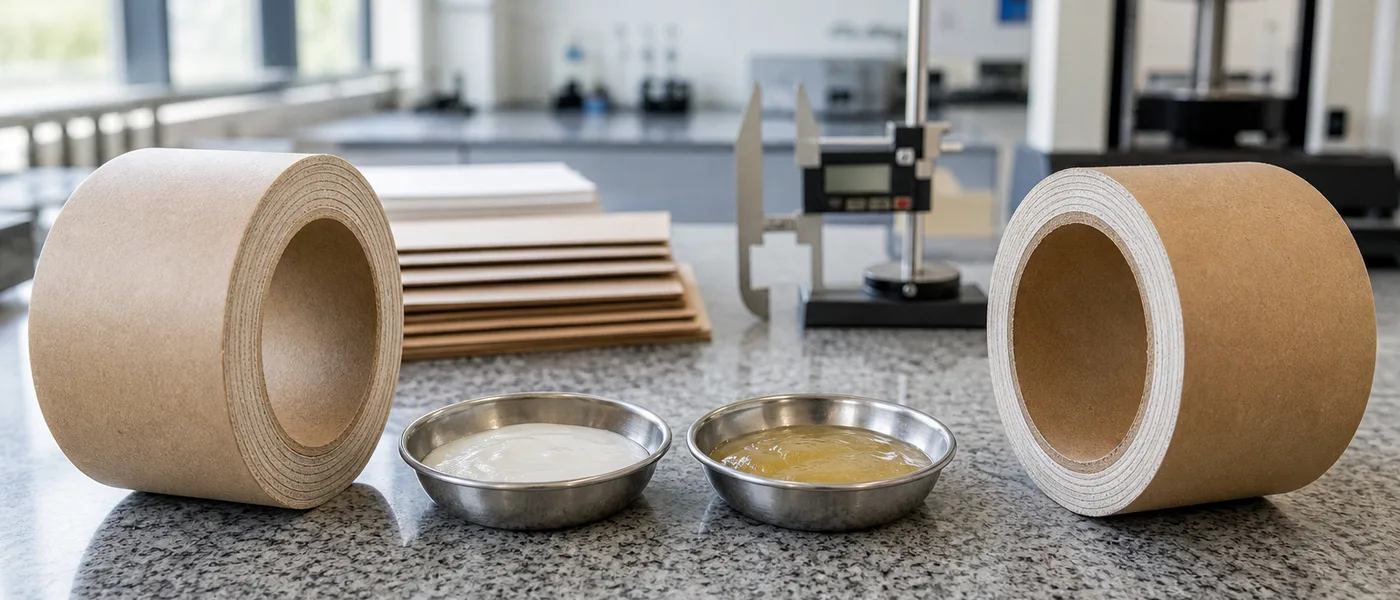 CHEMISTRY GUIDE
 Guide: Starch vs. PVA for Tube Adhesives
Compare starch/dextrin and PVA routes before deciding whether powder supply is the right buying path.
Read the Guide → CLAIM CHECK
 Are Starch-Based Paper Tube Adhesives Biodegradable?
Separate starch or dextrin feedstock language from claims that require full formulation and end-use evidence.
Read Claim Guidance →Frequently Asked Questions
Find answers to common questions about our adhesive solutions and services.
Is adhesive powder the same product as ready-to-use paper tube glue?
No. Powder adhesive is supplied dry and prepared on site. Ready-to-use liquid glue is supplied at the target solids and viscosity range. They can serve similar paper converting applications, but the qualification workflow is different.
Do we need cooking equipment for every powder adhesive?
Not always. Some routes are cold-dispersible, while others need controlled cooking or hydration. Tell us your mixer, water temperature, shear, and whether your plant already cooks starch or dextrin adhesives.
What should we send before requesting a powder sample?
Share the application, paper grade, ply count, current prepared-glue viscosity, mix ratio if known, water quality concerns, line speed, drying capacity, and the failure you are trying to solve.
What are MOQ, lead time, packaging, and sample options?
Sample and packaging depend on the nominated powder grade, but qualification usually starts with lab-scale dry powder for preparation screening before a plant trial. Commercial packaging is typically quoted by bag or pallet program; confirm MOQ, lead time, and moisture-protected packaging with the grade offer.
What shelf life and storage conditions should we plan for powder adhesive?
Dry powder normally needs sealed, dry, cool storage away from moisture pickup and bag damage. Confirm shelf life on the TDS for the nominated grade, and avoid approving stock that has caked, absorbed moisture, or changed flow behavior before mixing.
How long can prepared glue stay usable after mixing?
Pot life is process-specific. Prepared viscosity, microbial control, temperature, and agitation can drift during a shift, so define hold time, re-stir rules, and discard limits during qualification rather than assuming one mixed batch can run all day.
Can powder adhesive support food-contact paper tubes or composite cans?
Only if the nominated grade, prepared adhesive, paper structure, and end use match the required route. Do not assume powder form or starch/dextrin chemistry equals food-contact clearance; request grade-specific documentation before making FDA or EU claims.
Do you provide SDS, TDS, REACH/RoHS, or batch documents?
Yes, request documents for the nominated powder grade. SDS/TDS should cover powder handling and preparation guidance; REACH/RoHS or food-contact statements depend on the exact grade and application scope.
Is starch or dextrin powder automatically biodegradable?
No. Starch and dextrin can be bio-based feedstocks, but biodegradability depends on the full formulation, additives, end use, and test method. Keep the claim tied to evidence.
When should we stay with liquid paper tube glue instead?
Stay with liquid glue if your plant cannot control preparation, needs minimal operator steps, has no mixing/cooking capacity, or values batch-to-batch supplied viscosity more than freight and inventory flexibility.