PE coatings are high-tax and non-recyclable. Learn how water-based heat seal coatings solve blocking and lower HSIT for high-speed, repulpable packaging.

Table of Contents
Packaging engineers know that "freshness" is just a marketing term for barrier properties and seal integrity on heat-seal coating lines. If your heat-seal coating fails to achieve a hermetic bond at the specified dwell time, oxygen ingress—not adhesive marketing—defines shelf life.
The industry is currently migrating from PE (Polyethylene) extrusion to water-based heat seal coatings to meet repulpability targets. However, this shift introduces blocking risk and lower HSIT windows—quantify with our aqueous HSIT/COF/Cobb guide and VFFS low-HSIT case study before you retire the extrusion line.
"The engineering paradox: You want a coating that activates at low thermal energy (fast sealing) but remains completely inert in the roll (no blocking). Generic coatings often fail this balance, leading to 'brick' rolls that cannot be unwound."
Technology Comparison: PE vs. Water-Based Dispersion
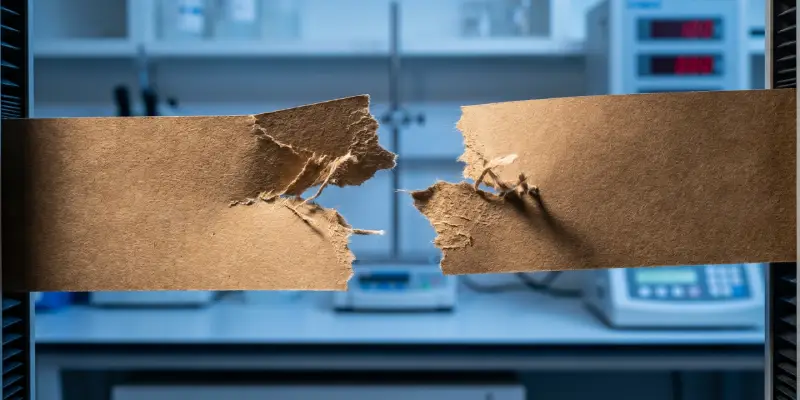
Replacing a standard 15-micron PE layer with a 2-micron aqueous coating requires a fundamental change in how you define seal parameters. We categorize our solutions based on their recycling profile and sealing mechanics.
The legacy standard. Excellent seal strength (>10N/15mm) but requires high HSIT. Difficult to separate during recycling; often attracts plastic taxes.
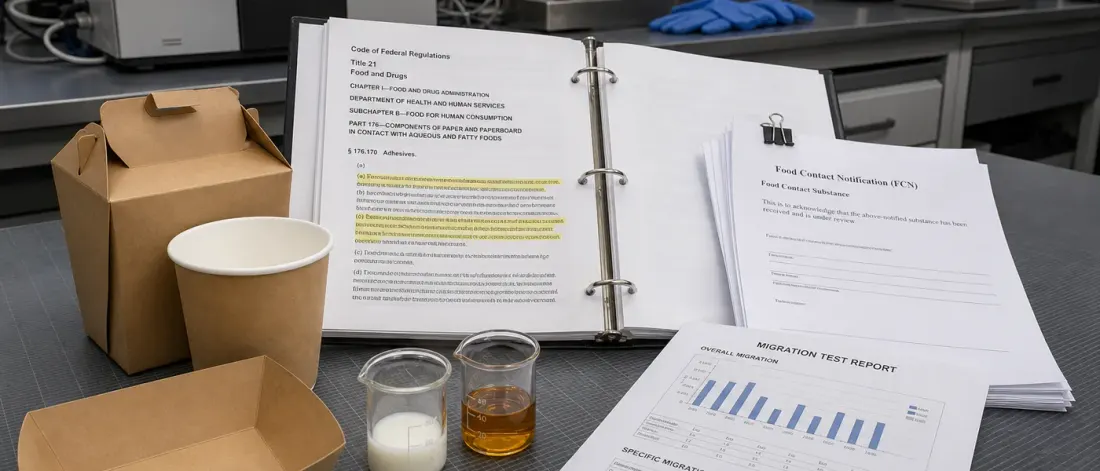
Water-based route for PE replacement at qualified coat weights. Low HSIT targets (from ~70°C); food-contact documentation paths under 21 CFR 176.170 when applicable to your structure.
High performance but high VOC emissions. Becoming obsolete due to environmental and safety regulations in food packaging.
Lock-Seal: Fiber-tear bond (>5N/15mm) for heavy pouches. Peel-Seal: Controlled release (2-4N/15mm) for consumer convenience.
The "Blocking" Nightmare
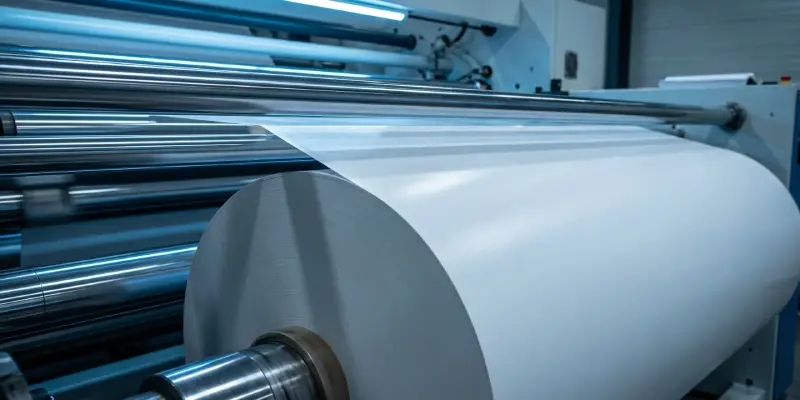
The most frequent failure mode with water-based coatings is "Blocking"—where the coating on the front of the web sticks to the back of the paper when wound onto a roll. This creates a solid block that causes web breaks during the printing or converting process.
Problem: Blocking in the Master Roll
Symptoms: Loud "crackling" sound during unwinding; coating picks off onto the reverse side; web snaps under tension.
Solutions:
- Cooling Audit: Ensure the web temperature is below 35°C before rewinding. Residual heat reactivates the polymer.
- Anti-Blocking Additives: Verify your coating formulation contains sufficient large-particle silica or wax to create a physical gap between layers.
- Humidity Control: Hygroscopic paper can swell and increase pressure in the roll, forcing layers together. Store rolls in climate-controlled environments.
Machinability: Optimizing Coefficient of Friction (COF)
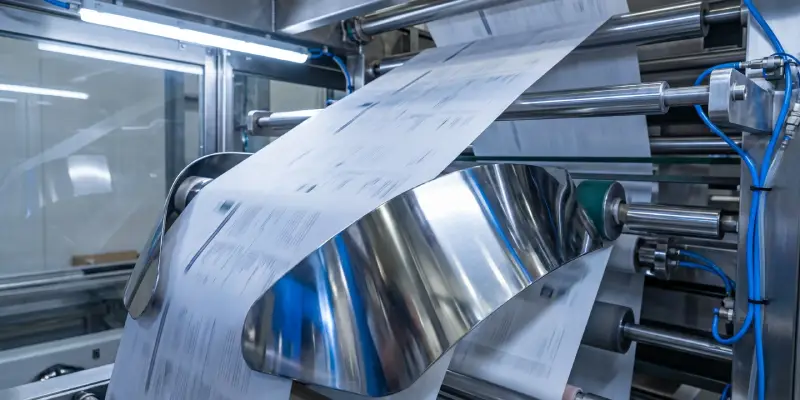
On high-speed Vertical Form Fill Seal (VFFS) lines, the friction of the coating against the forming collar determines the run speed. If the COF is too high (>0.4), the film drags and snaps. If it is too low (0.2), the package slips and seals misalign.
At Senda, we customize the Kinetic COF of our heat-seal coatings to match your specific machinery steel grade, ensuring smooth runnability without "slip-stick" chatter.
Test Your COF & Seal Strength?
Don't guess with machine settings. Send us your substrate, and we will formulate a coating with the exact COF and HSIT for your HFFS/VFFS line.
Request Technical TrialSenda Technical Verdict
- Define the Seal Type: Specify if you need a "Fiber Tear" (Destructive) seal or a "Peelable" seal. The chemistry is totally different.
- Low HSIT Saves Energy: Switching to a coating that seals at 80°C instead of 120°C allows for faster line speeds and lower energy consumption.
- Validate Repulpability: Ensure the coating passes standard repulping tests (e.g., PTS Method) to verify it separates cleanly from the fiber, avoiding "stickies" in the recycling stream.
Frequently Asked Questions
What is Heat Seal Initiation Temperature (HSIT) and why does it matter?
HSIT is the minimum temperature at which a coating achieves a functional seal. Lowering HSIT (e.g., from 120°C to 80°C) allows for faster line speeds and reduced energy consumption without damaging heat-sensitive substrates.
How can I prevent "blocking" in master rolls of heat-seal coated paper?
Blocking is prevented by ensuring the web temperature is below 35°C before rewinding and using formulations with anti-blocking additives (like silica) that provide physical separation between layers in the roll.
Why is the Coefficient of Friction (COF) critical for VFFS packaging?
COF determines how smoothly the film moves over forming collars. If COF is too high, the film drags and snaps; if too low, the film slips, leading to misaligned seals. Most high-speed lines require a Kinetic COF between 0.2 and 0.4.
Are water-based heat seal coatings really recyclable?
Yes, unlike PE-laminates, Senda’s WB-Series is designed to be "Repulpable." The coating separates cleanly from the paper fibers in a standard hydropulper, allowing for high-quality fiber recovery without clogging recycling screens.
What is the difference between a Lock-Seal and a Peel-Seal?
A Lock-Seal creates a permanent, destructive bond (fiber tear) for heavy-duty protection. A Peel-Seal is engineered for a controlled, easy-open consumer experience with a typical seal strength of 2-4N/15mm.
Run a blocking and seal screen
Request complimentary 1 kg lab material—courier prepaid by recipient for qualified liquid grades.
References
Technical Disclaimer: All technical data is based on standard laboratory conditions. Users should perform their own verification testing to confirm suitability for specific substrates, processes, and regulatory requirements. Senda Glue makes no warranties, express or implied, and assumes no liability for improper use of the products or reliance on this information.