At a Glance
- 500+ /min Validated Envelope Speed
- 2 Qualified Formats
- Steam Re-open Review Passed
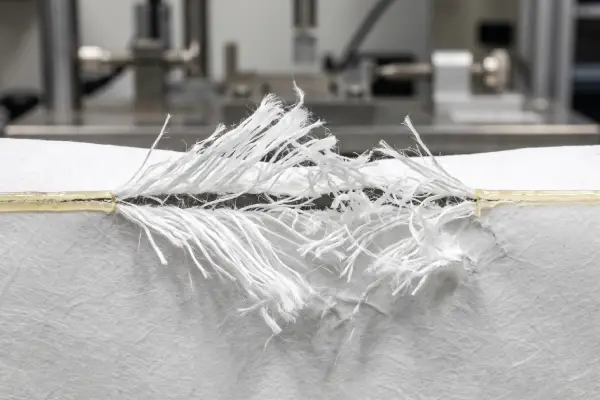
Tyvek required a different wet-out strategy than porous paper envelopes, even within the same secure-mail program.
Paper security seals and Tyvek formats were failing for different reasons
The converter handled confidential document envelopes across both porous kraft constructions and low-surface-energy Tyvek formats, but the legacy adhesive approach could not create a credible security bond on both.
- Paper mailers still peeled too cleanly in some opening attempts, which weakened visible tamper evidence on sensitive documents.
- Tyvek and other synthetic stocks did not absorb conventional paper glue, so the flap released before a destructive security mode could develop.
- Production teams also needed the adhesive to stay clean at line speed, because splash, buildup, or flap lift at the sealer created downtime and downstream reject risk.
A dual-substrate qualification route built around paper penetration, Tyvek wet-out, and steam resistance
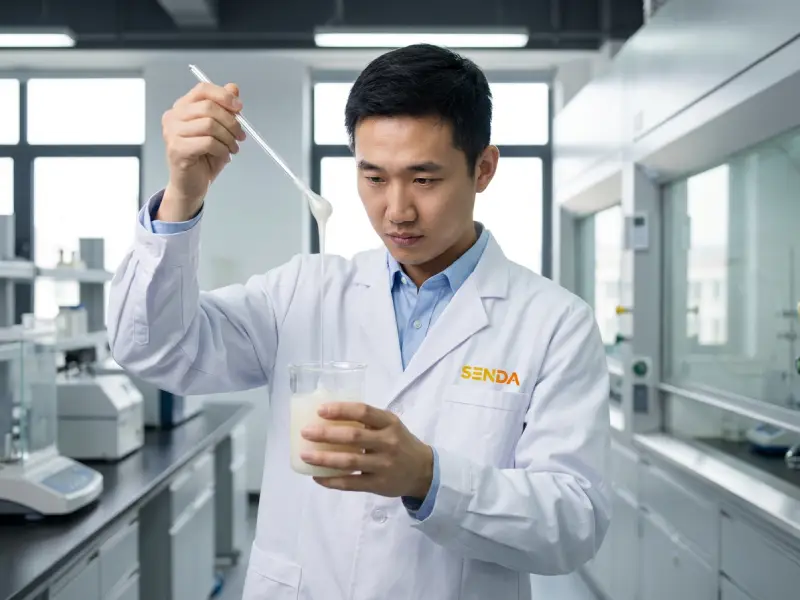
Senda treated the program as a secure-mail validation problem rather than a simple tack upgrade, screening opening mode, substrate fit, humidity hold, and machine cleanliness together before release.
Products Used:
- Security Envelope Adhesive System
Built for paper fiber tear, stronger bond build on Tyvek, and stable application on high-speed envelope equipment.
The most important shift was how approval was judged. Instead of comparing only peel feel or first-pass tack, the team reviewed how each structure actually failed when opened, how it behaved after humidity exposure, and whether the flap could be lifted again after a steam-style challenge.
Validation sequence
Substrate-specific failure mapping
Kraft paper, Tyvek, and peel-and-seal constructions were reviewed separately so paper penetration problems were not confused with low-surface-energy wet-out failure.
Steam and humidity challenge review
Candidate grades were exposed to steam-style reopening attempts and high-humidity holding conditions to see whether the cured flap stayed closed or could be lifted and re-sealed.
High-speed envelope line qualification
Glue transfer, compression, and flap lay-flat behavior were checked on the production line to confirm clean running and stable seal formation at the real operating speed.
What the secure-mail program gained
- More visible tamper evidence on paper: Paper formats shifted away from peel-back behavior toward clearer substrate damage on opening.
- Stronger Tyvek wet-out: Synthetic envelope stocks built a more reliable bond instead of releasing cleanly at the flap interface.
- Cleaner line behavior: The approved grade held a more stable application window with less splash and less cleanup pressure on the envelope line.

Qualification scope that mattered
Qualification scope that mattered
Approval stayed tied to the real line rate and the machine cleanliness needed to sustain it.
The program covered both porous kraft envelopes and low-surface-energy Tyvek constructions.
Security evaluation included covert-lift risk, not only first-pass closure strength.
Related resources
- High-Speed Envelope Sealing: Glue Wheel, Compression Belt, and Cleaning Discipline
Glue wheel setup and fiber-tear screening for secure-mail envelope formats.
- Request an envelope sealing trial
Prepaid sample for Tyvek and paper envelope fiber-tear screening on your glue-wheel line.

" After switching to Senda's envelope adhesive, we achieved 100% visible fiber tear on our secure-mail formats while improving line cleanliness on high-speed runs for sensitive financial documents. "
Ready to Write Your Own Success Story?
Our technical engineers are ready to help you solve your specific adhesion challenges. Get in touch for a free consultation and sample testing.
Replicate This Success