At a Glance
- 30% Less Post-Brush Fiber Loss
- 25% More Uniform Density
- 3 Insert Formats Screened
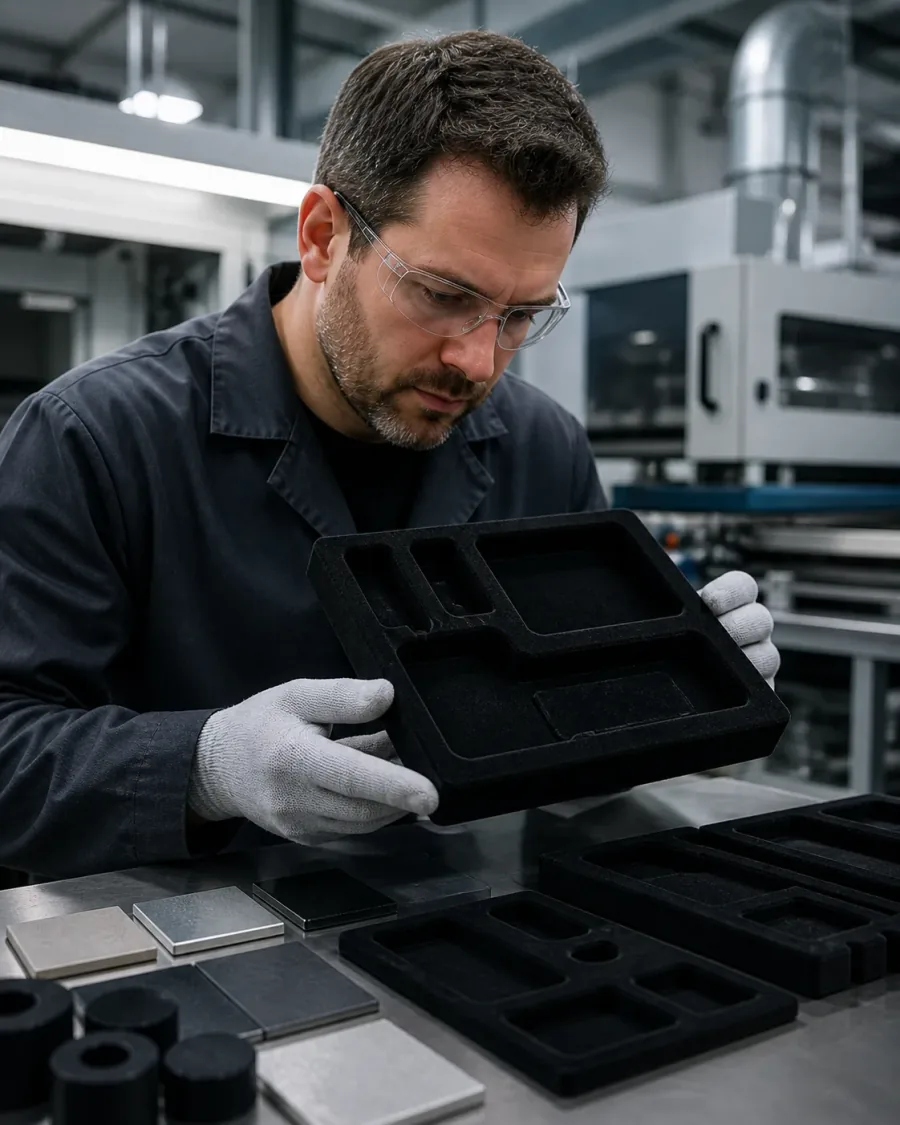
The winning route had to hold appearance and retention together on the same insert because a premium surface can fail visually before it fails structurally.
Visible density variation and post-brush fiber loss were breaking the finish window
The producer was qualifying premium flocked inserts and decorative surface components, but the existing adhesive route was too inconsistent across coated-board and formed-part surfaces.
- Patchy laydown created light and dark zones, making the flock field look uneven on appearance-sensitive inserts.
- Some parts looked acceptable out of cure but lost too much fiber during brushing, trimming, or later handling.
- Trial results drifted because the team could improve one outcome at a time, but finish uniformity and retention did not stay stable together across the real substrate set.
A flocking adhesive route tuned around laydown stability, electrostatic pickup, and post-cure anchorage
Senda treated the program as a substrate-and-finish problem, reviewing coated-board response, application method, and fiber retention together so the approved route could support both uniform appearance and stronger in-use hold.
Products Used:
- Uniform-Density / Low-Shedding Flocking Grade
Designed for steadier laydown, cleaner fiber stand-up, and lower post-brush fiber loss on premium flocked parts.
What made the route workable was that visual finish and fiber retention stayed tied together. The accepted system did not improve appearance by leaving the fiber field weak, and it did not improve hold by creating an overbuilt or inconsistent surface.
Qualification path
Substrate and finish audit
The team reviewed coated board, formed inserts, fiber type, and finish target together before changing adhesive direction.
Laydown and retention comparison
Candidate grades were checked on the same flocking constructions so density uniformity, electrostatic pickup, and post-brush retention could be compared without changing the application story mid-trial.
Post-cure release review
Final approval stayed tied to how the flocked parts looked and held up after cure, brushing, trimming, and handling rather than stopping at a good-looking first panel.
The winning route had to hold appearance and retention together on the same insert because a premium surface can fail visually before it fails structurally.
What changed on the flocking program
- More even flock fields: Laydown stability improved, helping the surface read more uniformly across the insert instead of breaking into visibly patchy zones.
- Lower post-brush shedding: The approved route strengthened fiber anchorage through brushing, trimming, and handling without pushing the finish into a harsher feel.
- Cleaner qualification logic: The team could judge finish uniformity and durability on one construction-specific route instead of trading one defect for another between trial rounds.

Validated finish window
Validated finish window
Coated board and formed insert builds stayed in scope because substrate behavior drove finish variation.
Approval stayed tied to a cleaner visual read across the flock field on appearance-sensitive inserts.
The accepted route reduced shedding after cure, brushing, and trimming during downstream handling.
Related resources
- Qualifying a Flocking Adhesive: Fiber, Substrate, and Cure Window
Fiber retention and density uniformity—the guide for this flocking qualification.
- Request a flocking adhesive trial
Prepaid sample for fiber retention and brush-loss screening on your substrate and flock type.

" Senda helped us stabilize a flocking process that had been producing visible density variation and post-brush fiber loss. The new formulation gave us a cleaner finish and a much more predictable qualification window. "
Ready to Write Your Own Success Story?
Our technical engineers are ready to help you solve your specific adhesion challenges. Get in touch for a free consultation and sample testing.
Replicate This Success