At a Glance
- Dry-Clear Closure Film
- Pre-Coated Blank Workflow
- Stable Warm-Use Hold

The program was judged on the finished pack geometry first: dry-clear film appearance, rim contact, and whether the closure zone looked acceptable before warm-use peel testing began.
Permanent closure logic was damaging coated lids and rims on packs that needed to reopen cleanly
The converter was building bagasse and wood-fiber trays for takeaway use, but the existing closure approach assumed the strongest possible bond was always the best answer.
- Fixed white glue held too aggressively on some closure zones, which raised fiber pick, lid-edge tearing, and a rougher opening feel for the end user.
- The production flow also wanted a **coat-dry-stack-close-later** sequence, while more immediate-use systems narrowed the usable workflow around lid preparation and final packing.
- Warm food, incidental moisture, steam, and PLA-coated sealing surfaces made the opening force less predictable unless the peel window was tuned around the real rim geometry.
A dry-clear PSA route tuned around peel window, post-dry activity, and warm-use closure hold
Senda treated the program as a closure-design problem rather than a simple strength upgrade, reviewing substrate, coating, rim geometry, and service conditions together so the chosen adhesive could stay active after drying and reopen more cleanly in use.
Products Used:
- Bio-Based Tray Rim PSA Grade
Designed for dry-clear appearance, delayed sealing workflows, and controlled opening on coated bagasse and molded-fiber tray formats.
- Food-Packaging Documentation Path
Used to align closure placement, structure review, and document requirements before sample approval moved to plant trials.
What made the switch credible was that the project stopped treating closure strength as the only success metric. The approved route had to support the lid-preparation workflow, hold during warm takeaway use, and still reopen with a cleaner, more intentional feel on the finished pack.
Qualification path
Closure-zone and substrate review
The team mapped rim width, lid fit, coating type, and whether the adhesive sat on the lid flange or tray rim before comparing candidate grades.
Pre-coat and storage-window checks
Sample lids and tray-contact surfaces were reviewed around the intended coat-dry-stack-close-later workflow so post-dry activity, stacking behavior, and later bond build could be judged on the real process sequence.
Warm-use and opening confirmation
Final approval stayed tied to warm-use handling, incidental moisture, steam, and the lid-lift opening feel so the closure behaved like a reopenable pack instead of a permanent lock-up.
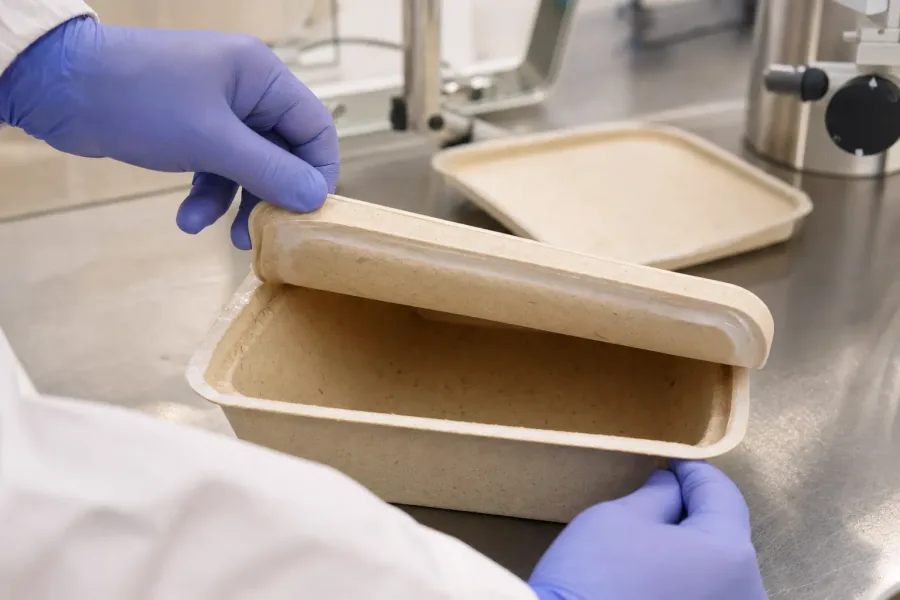
Warm-use approval stayed tied to the actual lid-lift peel on bagasse rims, not a generic migration bench alone, so opening force and fiber pick could be judged on the real tray format.
What changed on the tray program
- Cleaner lid lift: The approved route reduced pressure to over-bond the closure, which improved the opening feel and lowered the chance of fiber pick at the lid or rim.
- Pre-applied workflow kept intact: The converter could stay with a coat-dry-store-close-later sequence instead of redesigning production around an immediate-bond closure method.
- More stable warm-use behavior: Approval included warm-food, steam, and incidental-moisture context so the closure could stay aligned with real takeaway handling rather than dry lab conditions alone.
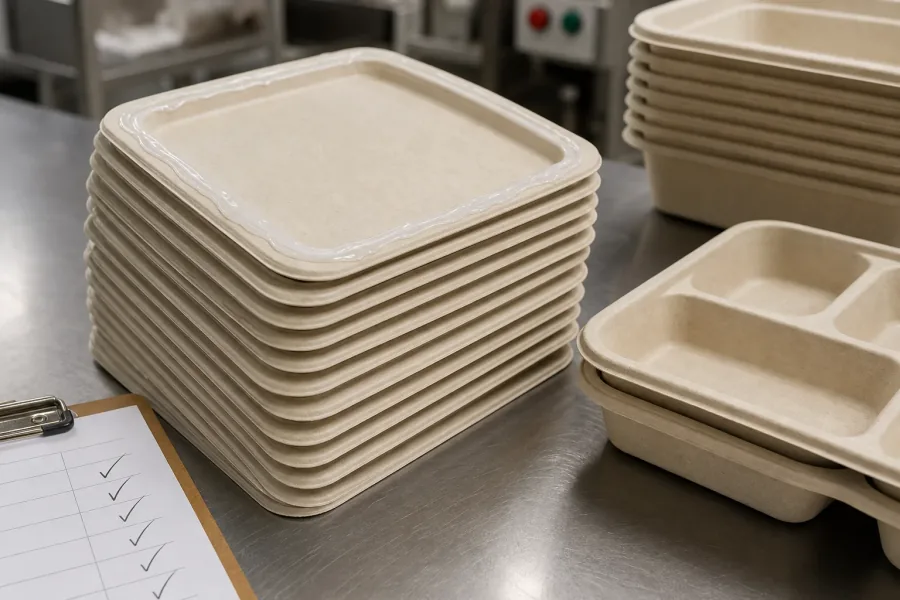
Validated operating fit
Validated operating fit
The adhesive stayed tied to the intended coat-dry-stack-close-later production sequence instead of forcing immediate closure.
Qualification included warm-food handling, steam, and incidental moisture rather than stopping at ambient opening checks.
Release stayed tied to the rim geometry and target peel experience on the real tray/lid format.
Related resources
- Aqueous Heat-Seal Coatings: A Technical Guide for High-Performance Applications
Reopenable seal window, HSIT, and tray machinability—the guide paired with this qualification.
- Request a reopenable heat-seal trial
Prepaid sample for peel-reseal and storage hold screening on bagasse or pulp tray formats.

" We were not looking for a stronger permanent bond. We needed a seal that could be dried in advance, survive storage, and still reopen cleanly on the finished bagasse tray. This route fit that workflow much better than our fixed white glue. "
Ready to Write Your Own Success Story?
Our technical engineers are ready to help you solve your specific adhesion challenges. Get in touch for a free consultation and sample testing.
Replicate This Success