At a Glance
- -40°C Cold-Chain Validation
- 0 Freezer Pop-Opens
- 30% Lower Adhesive Consumption

Cold-chain protection still had to run on a real case-sealing window, so qualification stayed tied to bead control, set speed, and line uptime—not freezer hold alone.
Cases that left the plant sealed were opening after freezer exposure
The distributor was sealing frozen-food corrugated cases that looked acceptable at pack-out, but standard adhesive behavior changed once the cases moved through blast-freezer storage and cold logistics.
- Some bonds became too brittle at deep-freeze temperature, allowing the flap to spring back and create the classic freezer pop-open failure.
- The plant still needed fast set on an automated case-sealing line, so it could not simply slow down the packer or over-apply adhesive to survive the cold room.
- Usage efficiency mattered as well, because cold-chain insurance could not come at the cost of permanently higher adhesive consumption on every shipped case.
A deep-freeze metallocene route tuned for low-temperature flexibility, fast set, and corrugated fiber lock
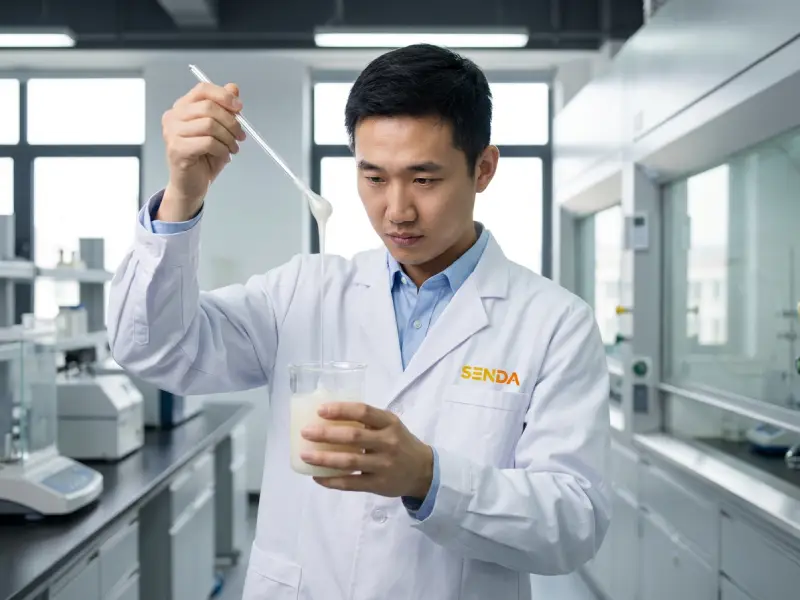
Senda qualified the program around the full cold-chain path, balancing low-Tg flexibility, bond build on corrugated, and application efficiency so the approved grade could survive freezer storage without giving away live-line productivity.
Products Used:
- Blast-Freezer End-of-Line Grade
Designed for -40°C resilience, stable fiber tear on corrugated, and efficient metallocene application in automated case sealing.
What changed the project was how approval was judged. A room-temperature pull test was not enough. The accepted route had to hold after deep-freeze exposure, stay closed through handling, and still deliver a practical application window on the running packaging line.
Qualification path
Case structure and temperature mapping
The team reviewed board grade, flap geometry, compression length, and the real cold-chain profile so low-temperature bond failure could be separated from line-setting issues.
Deep-freeze exposure checks
Candidate grades were screened through freezer and cold-storage conditions to confirm that the sealed cases stayed closed after low-temperature hold and handling.
Production-line validation
Final approval stayed tied to whether the adhesive still ran efficiently on the automated case-sealing line without sacrificing set speed or application consistency.

Final approval stayed tied to deep-freeze exposure and handling: the flap had to stay closed after blast-freezer hold, not just look acceptable at pack-out temperature.
What changed in the frozen-food program
- Freezer hold stayed intact: The approved route prevented the pop-open failure mode that had been showing up after deep-freeze storage and cold handling.
- Lower adhesive use per case: Low-density metallocene improved usage efficiency instead of forcing the plant to buy cold-chain security through heavier application weight.
- Less maintenance pressure: Thermally stable application behavior reduced nozzle-maintenance burden while the project stayed anchored on cold-chain seal integrity.
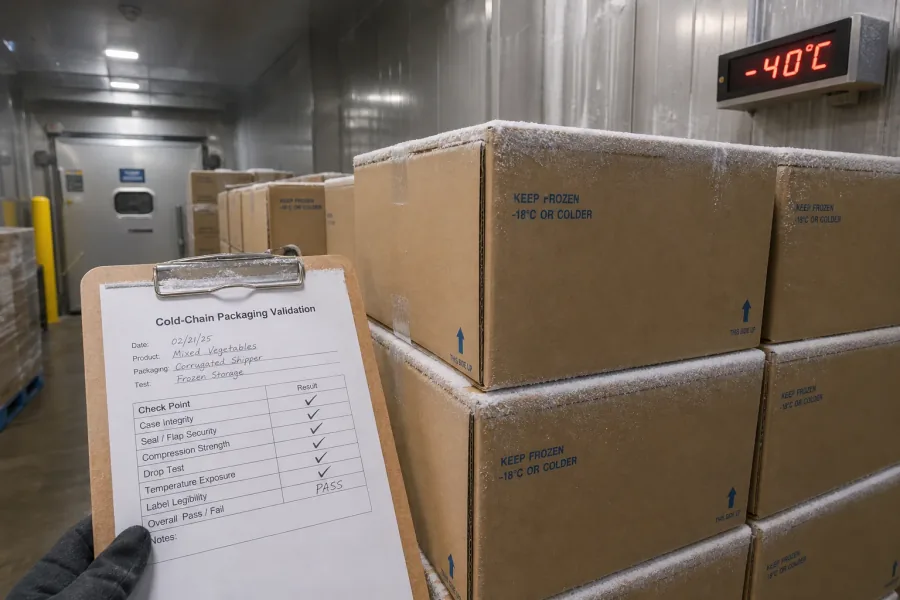
Validated cold-chain window
Validated cold-chain window
Approval stayed tied to the freezer-grade service range already defined on the end-of-line packaging solution page.
The adhesive still had to support the automated packaging-speed window already framed on the live solution page.
The testimonial-backed cold-chain result stayed centered on the actual failure mode the customer needed to eliminate.
Related resources
- EVA vs. Metallocene: Optimizing Food Packaging Adhesives
Cold-chain bond build, thermal stability, and mileage—the guide paired with this end-of-line qualification.
- Request a 1 kg case-sealing trial
Prepaid hot-melt sample for -40°C hold and case-sealer bead-control screening on your corrugated grade.
" On the approved grade, Senda's mPO hot melt cut adhesive consumption about 30% in our usage tracking and reduced nozzle-cleaning stops materially during the qualification window. Freezer pop-opens were not observed in the -40°C screening lots we released. "
Ready to Write Your Own Success Story?
Our technical engineers are ready to help you solve your specific adhesion challenges. Get in touch for a free consultation and sample testing.
Replicate This Success