Reopenable Food Packaging Adhesive for Peelable Tray Closures

Dry-clear peelable PSA for bagasse and wood-fiber meal trays—coat the lid or rim, dry, store, then seal later. Built for easy reopening, not destructive fiber tear; not the same as hot-melt lock-up or permanent carton glue.
*Share substrate, coating type, tray/lid geometry, and target peel feel for a faster screen. MOQ typically 1,000 kg after qualification.*
✅ Peelable PSA • Pre-coat workflow • FDA route by pack structure
Optimized For:
Pre-coat
Coat-dry-store-bond-later on qualified constructions
Dry-clear
White emulsion dries transparent on the seal zone
Peelable
Controlled reopening vs permanent fiber tear
Where This Peelable PSA Fits
For packs that must close in distribution and reopen cleanly—not for permanent security seals or immediate hot-melt closing on the same line.
Bagasse & Molded-Fiber Trays
Sugarcane bagasse, molded-fiber lunch packs, and takeaway trays that need hold through handling but peelable lid lift for the consumer.
Aqueous & Coated Rim Surfaces
Rims and flanges with aqueous barrier coatings (Senda program) or converter-supplied coated surfaces—we qualify PSA wet-out on your seal zone; tray water-based barrier is a separate program.
Pre-Coated Lids & Delayed Sealing
Coat, dry, stack, store, bond later—for lid prep and second-stage packing without forcing immediate closure on the forming line.
Why White Glue or Hot Melt Misses This Job
A reopenable molded-fiber closure must survive warm food, steam, and delivery—then release without shredding the rim. That is a different spec than a permanent carton seam.
Common Failures
Permanent Bonds Tear the Rim
Fixed white glue can fuzz or split bagasse or wood-fiber when the consumer lifts the lid—no controlled peel window.
Hot Melt Forces Immediate Closure
Hot melt favors bond-now workflows; peelable hold and pre-coat storage are harder to align on the same tray program.
Low-Energy Coated Rims
Aqueous-coated or other low-surface-energy seal zones can bead or release early when the PSA was not screened on your actual tray/lid pair.
Our Solution
Peel-Tuned Reopenable Hold
Peel force tuned to your rim geometry and opening feel—closed in handling, cleaner lift than a destructive lock-up.
Dry-Clear Active Film
Dried transparent film stays active for qualified coat-dry-store windows—confirm on your substrate and storage conditions.
Substrate-Matched Screening
Lab screen on your bagasse, wood-fiber, and coated rim—not a generic “bio tray” label.
Qualify on Your Tray, Lid & Coating
Share rim geometry, coating family, drying method, and peel target. Path: structure review → 1 kg lab sample → plant trial → bulk MOQ (~1,000 kg).
Dry-Clear on Light Fiber
White emulsion dries transparent on light bagasse and wood-fiber—cleaner visible seal zones on foodservice trays.
Staged Manufacturing
Supports pre-applied closure paths when immediate on-line sealing is not the workflow you want.
Peel Without Fiber Shred
Targets controlled reopening; light reclose may be possible on qualified structures—confirm in trial.
Typical Qualification Focus (By Structure)
We narrow grade by substrate coating, peel feel, rim geometry, drying, and post-dry activity—send the real closure area, not a generic category.
| APPLICATION | ENGINEERING PRIORITY | PACKAGING CONDITION | WHY IT MATTERS |
|---|---|---|---|
| Bagasse & Wood-Fiber Rims | Controlled peel window | Tray-to-lid sealing zones | Hold in distribution; reduce rim damage on consumer opening. |
| Aqueous & Coated Bio Rims | Surface wet-out | Aqueous barrier rims and converter-coated seal faces | More consistent bond than generic white glue on low-energy coatings. |
| Pre-Coated Lids | Post-dry activity | Stored lids and delayed final bonding | Coat-dry-store-bond-later instead of one-step immediate seal. |
| Warm Foodservice Use | Heat & moisture stability | Warm takeaway and steam exposure | Closure stays usable where simpler peel systems soften or haze. |
ENGINEERING PRIORITY: Controlled peel window
PACKAGING CONDITION: Tray-to-lid sealing zones
WHY IT MATTERS: Hold in distribution; reduce rim damage on consumer opening.
ENGINEERING PRIORITY: Surface wet-out
PACKAGING CONDITION: Aqueous barrier rims and converter-coated seal faces
WHY IT MATTERS: More consistent bond than generic white glue on low-energy coatings.
ENGINEERING PRIORITY: Post-dry activity
PACKAGING CONDITION: Stored lids and delayed final bonding
WHY IT MATTERS: Coat-dry-store-bond-later instead of one-step immediate seal.
ENGINEERING PRIORITY: Heat & moisture stability
PACKAGING CONDITION: Warm takeaway and steam exposure
WHY IT MATTERS: Closure stays usable where simpler peel systems soften or haze.

Why Converters Shortlist This PSA Route
Reopenable peel behavior, coated eco-tray fit, and pre-coat logic—not a repackaged carton white glue or fulfillment hot melt.
Reopening Is the Product
Coated Rim Qualification
Audit-Ready Paperwork
Documentation for QA and Retail Audits
Regulatory path depends on where the dried film sits and direct vs indirect contact—confirm on your pack before approval.
Compliance Scope (Confirm for Your Pack)
Share final tray/lid structure and seal location for the right documentation package.
- FDA 175.105 ( Common indirect-contact closure routes )
- Structure review ( When adhesive is nearer food-contact zones )
- TDS / SDS / storage ( Post-dry activity and plant handling )
Batch-level TDS, SDS, storage guidance, and compliance notes scoped to your nominated grade.
Related Packaging Lines
Reopenable PSA is one closure type—route food-contact review, aqueous barrier coatings, or heat-seal when the pack needs a different layer.

Food Contact Adhesives
175.105 vs 176.170, migration logic, and audit paperwork when closure is only one station on the food-pack map.
View food-contact programs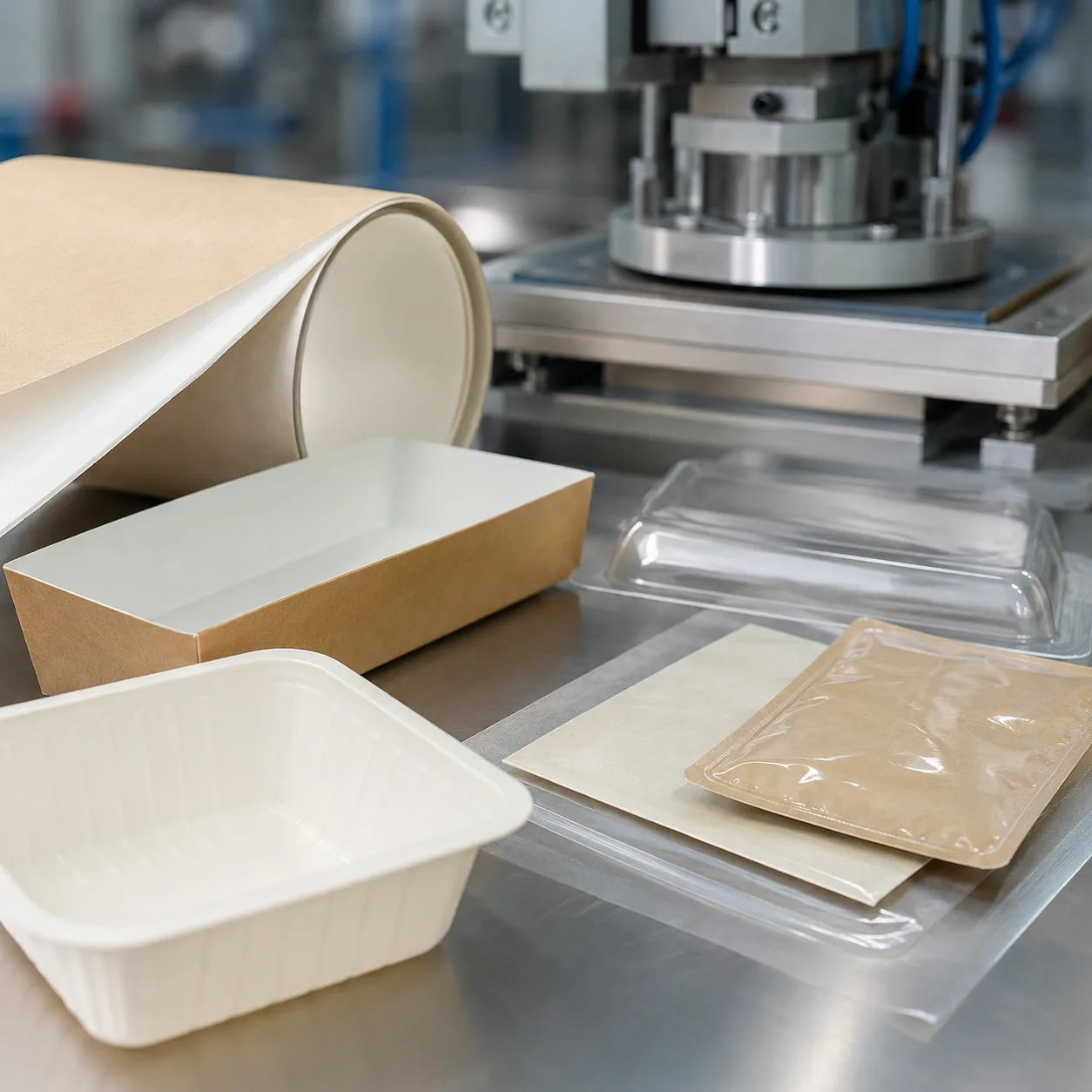
Heat Seal Coatings
When the pack should close by seal-layer activation (lidding, peelable heat-seal)—not a pre-applied dry-film PSA on the tray rim.
View heat-seal coatings
We needed a seal we could dry in advance, store, and still reopen cleanly on bagasse trays—not a stronger permanent white glue. Senda's peelable route matched our coat-dry-close-later workflow.
Technical Proof (Optional Reading)
Share after you request samples. Primary path: structure screen + lab sample via the buttons above.
 CASE STUDY
 Case Study: Reopenable Bio-Based Tray Closure
How a converter qualified a dry-clear peelable closure on bagasse and wood-fiber trays instead of a permanent bond.
Read the Full Story → TECHNICAL GUIDE
 Guide: When Heat-Seal Coatings Are the Better Route
Decide whether the pack needs dry-film reopenable PSA or a heat-seal qualification path.
Read Full Article →Frequently Asked Questions
Find answers to common questions about our adhesive solutions and services.
What are MOQ, lead time, and sample options?
MOQ is typically ~1,000 kg after qualification. Lead time is often 7–10 business days for approved grades. Start with a structure review and complimentary 1 kg lab material (recipient prepaid shipping) on your tray/lid pair.
Is this for permanent sealing or peelable tray closure?
Peelable reopening—not maximum lock-up. Peel window is tuned to substrate, coating, rim geometry, and your target opening feel.
Can we coat first and bond later, or should the full PSA structure be qualified together?
Yes—coat-dry-store-bond-later is a core use case on qualified constructions. Confirm post-dry activity on your substrate and storage conditions.
Does it work on bagasse or aqueous-coated trays?
Yes—target use cases include bagasse, wood-fiber, and aqueous-coated rims. We screen your actual tray/lid pair; not every bio format behaves the same.
Do you supply PE or PLA tray linings?
No. Senda’s aqueous barrier programs live under recyclable barrier coatings. We can qualify this PSA on trays that use converter-supplied coated or lined surfaces.
Does the adhesive stay white after drying?
The wet emulsion is white; the dried film is intended to be transparent on visible seal zones.
How does this PSA system differ from hot melt in application method, testing, and use case?
Hot melt suits many bond-now lines. This PSA targets pre-applied dry film and easier reopening on molded-fiber tray closures.
How long does the dried film stay active?
Some qualified constructions target extended post-dry windows (often discussed up to ~12 months under controlled storage)—confirm on your pack in trial, not from a generic datasheet claim.
What do you need for a first sample recommendation?
Substrate sample, coating description, tray/lid geometry, drying method, peel target (easy vs firm), and whether the adhesive sits on lid flange, tray rim, or inner zone.