At a Glance
- 24-Month Shelf-Life Target
- 3 Review Paths Mapped
- 40% Less Dry-Out Pressure
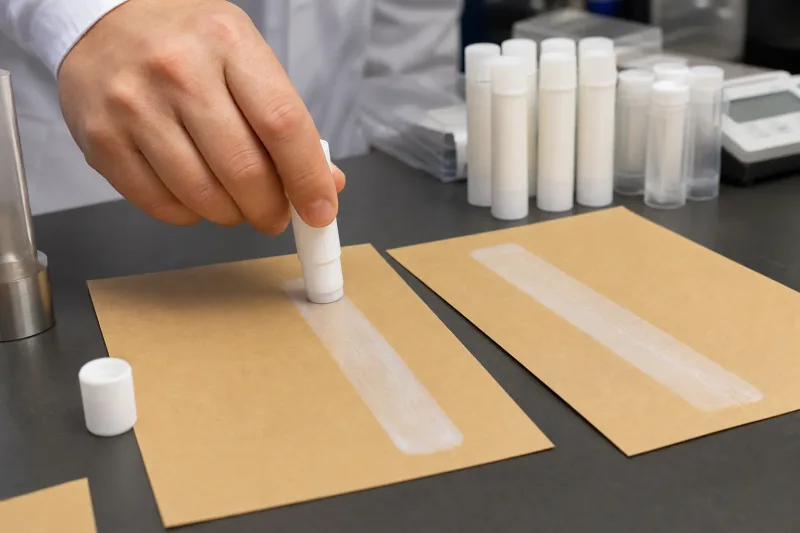
Glide and initial tack had to stay acceptable on ordinary paper, not only in a fresh lab swipe, before the stick could defend a 24-month shelf-life claim.
A solvent-free glue stick launch was getting stuck between retail shelf-life risk and channel-review demands
The customer was preparing a glue-stick program for school, office, and private-label channels, but the existing route could not keep application feel, packaged stability, and documentation review aligned.
- The stick still needed smooth laydown and usable initial paper hold, because draggy application or uneven deposit would create end-user complaints even if the chemistry sounded cleaner on paper.
- Tube fit, cap seal, and moisture balance were not stable enough to defend a 24-month retail shelf-life target with confidence, which increased shrink-back, dry-out, and dead-stock pressure.
- Commercial approval also depended on a clearer review path around EN 71-3, ASTM D-4236, REACH status, and other channel documents rather than a solvent-free claim alone.
A glue-stick qualification route tuned around tube stability, glide, and documentation readiness
Senda treated the launch as a packaged-product qualification problem, balancing stick hardness, laydown feel, closure integrity, washability fit, and document support so the same route could survive storage review and market approval together.
Products Used:
- High-Solid Solvent-Free Glue Stick Grade
Built for smoother glide, tighter barrel stability, and a more defensible shelf-life window across school and office glue-stick formats.
What made the project more defensible was that release stayed tied to the finished stick after packaging. The winning route was not simply the cleanest-sounding formula. It had to stay smooth on paper, stable in the barrel, and credible inside the documentation package behind the launch.
Qualification path
Claim-set and market review
The target sales channels, product positioning, and document expectations were aligned first so the team could define the right review path around EN 71-3, ASTM D-4236, REACH status, SDS coverage, and customer onboarding requirements.
Tube and closure stability checks
Barrel fit, cap retention, sealing consistency, and stick hardness were reviewed together because shrink-back and dry-out are often driven as much by packaging fit as by the base formula.
Glide, washability, and paper-use review
Qualification included smooth laydown, initial tack on common paper structures, and warm-water cleanup fit so the accepted route matched school and office use instead of only looking good in a fresh sample.
Shelf-life release review
Final approval stayed tied to the 24-month retail stability target already declared on the solution page, rather than to fresh-mix feel or short-term bench performance alone.
Related resources
- Solvent-Free Glue Sticks: How OEM Teams Qualify Shelf Life, Glide, and Tube Stability
Glide, tube stability, washability, and documentation paths for OEM glue-stick launches.
- Glue Stick Compliance Pack (technical resources)
Document planning, shelf-life review, and school/office format compliance references.
- Request a glue-stick formulation trial
Prepaid 1 kg lab material for glide, barrel stability, and shelf-life screening on your stick format.
What changed on the glue-stick program
- Cleaner approval path: The customer could move school, office, and private-label review conversations forward with a more coherent claim and documentation package tied to the actual glue-stick launch.
- Better tube-stability confidence: Barrel fit, cap sealing, and stick-hardness review reduced the amount of shelf-life uncertainty and dead-stock pressure tied to shrink-back or early dry-out.
- More usable end-use fit: Smooth laydown and washability remained part of qualification, so cleaner positioning did not come at the cost of ordinary paper-use experience.
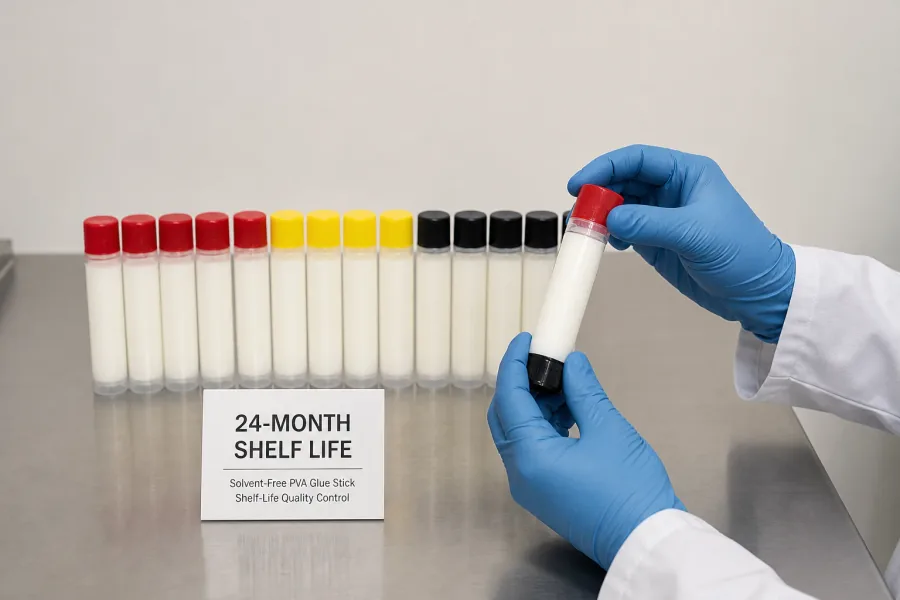
Validated release criteria
Validated release criteria
Acceptance stayed tied to the retail stability window on the stationery solution page instead of short-term sample feel alone.
EN 71-3, ASTM D-4236, and REACH review checkpoints were mapped to the same samples under approval.
Tube sealing, cap fit, and stick-hardness checks reduced shrink-back anxiety versus the prior route.

" Senda's solvent-free glue stick gave us the glide feel and tube stability we needed for a private-label launch. Retail shelf-life review moved forward because EN 71-3 and ASTM documentation sat in the same package as the samples we were actually approving. "
Ready to Write Your Own Success Story?
Our technical engineers are ready to help you solve your specific adhesion challenges. Get in touch for a free consultation and sample testing.
Replicate This Success