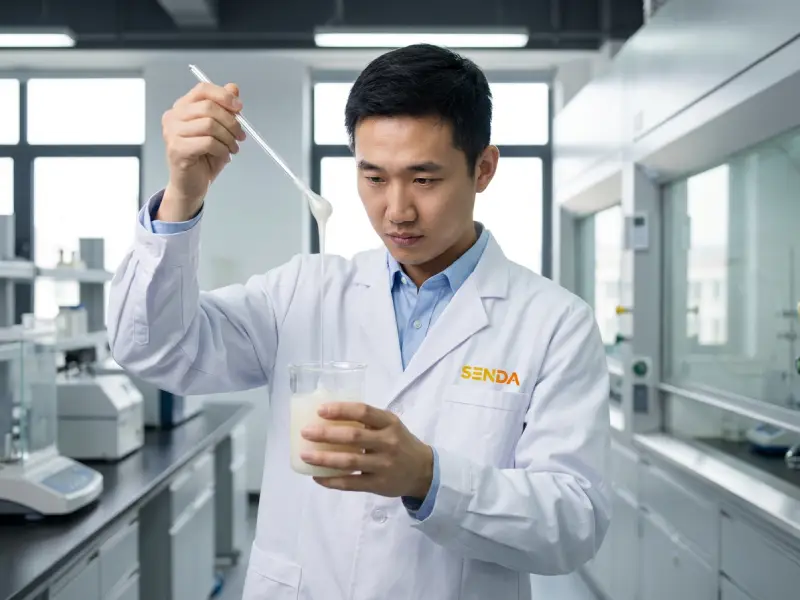
PUR vs EVA bookbinding hot melt decisions should start with the failure mode, paper stock, spine preparation, machine discipline, validation targets, and total production cost. This guide helps bindery teams compare EVA and PUR for perfect binding without assuming that one platform is automatically better for every book program.
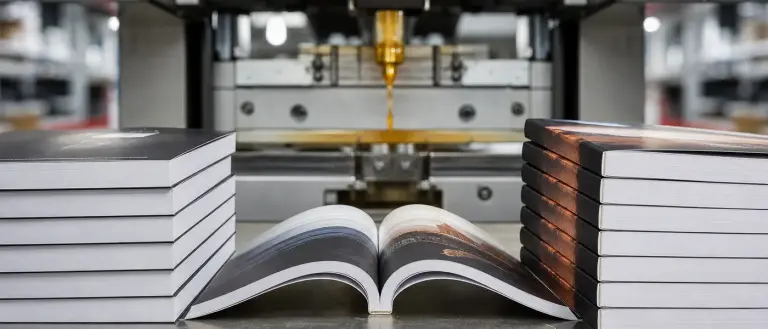
Table of Contents
- ·Why the PUR vs EVA Decision Should Start With the Failure Mode
- ·What EVA Hot Melt Still Does Well in Bookbinding
- ·Where EVA Can Become the Wrong Platform
- ·What PUR Changes: Reactive Chemistry, Flexibility, and Process Discipline
- ·Spine Preparation: Milling, Notching, Dust Removal, and Grain Direction
- ·Glue Pot, Nozzle, Moisture, Temperature, and Start-Up Control
- ·Paper, Ink, Coating, Cover Stock, and Book Geometry
- ·Validation: Pull Strength, Lay-Flat, Page Flex, Cold-Crack, and Aging
- ·Cost and Procurement: Material Price, Downtime, Waste, MOQ, and Requalification
- ·Troubleshooting: When the Platform Is Not the Root Cause
- ·Switching Checklist: When PUR Is Worth a Production Trial
- ·Field Evidence
- ·Final Takeaway
- ·Frequently Asked Questions
Why the PUR vs EVA Decision Should Start With the Failure Mode
A bindery should not switch from EVA to PUR only because one book failed a pull test or because a buyer heard that PUR is “stronger.” The better starting point is the failure mode. What exactly is going wrong on the spine line?
Some programs fail because pages pull out. Others fail because the spine cracks after bending, the book does not lay flat, the cover pulls away, the glue line becomes brittle in cold storage, or the bound block shows uneven adhesive penetration. In other cases, the real issue is not the adhesive platform at all. It may be poor spine milling, paper grain direction, dust in the spine, coating on the paper edge, weak notching, wrong open time, incorrect set time, glue pot contamination, or unstable nozzle application.
EVA and PUR are both widely used bookbinding hot melt platforms, but they support different process windows. EVA is familiar, fast to learn, and often economical for standard perfect binding programs. PUR can be worth reviewing when the book requires higher flexibility, improved page pull performance on difficult paper, better cold-crack resistance, or stronger performance on coated and heavy stocks. However, PUR also brings more process discipline. It needs careful moisture control, glue pot or nozzle management, cleaning discipline, and validation time before final approval.
A useful PUR vs EVA comparison should answer these questions:
| Buyer Question | Why It Matters |
|---|---|
| What is the actual failure mode? | Spine crack, page pull, lay-flat miss, cold-crack, cover lift, or pot issue lead to different fixes |
| What paper stock is used? | Coated, uncoated, heavy, ink-heavy, and low-porosity papers bond differently |
| Is the spine prepared correctly? | Spine milling, notching, dust removal, and grain direction can decide the result |
| Does the line support the platform? | Glue pot, nozzle, open time, set time, and cleanup routines must match the adhesive |
| What validation target matters? | Pull strength alone does not prove lay-flat, flex durability, or cold performance |
| What is the true cost? | Material price must be weighed against waste, downtime, returns, and rework |
The goal is not to declare one chemistry the winner. The goal is to approve the platform that fits the book program, machine window, validation requirement, and purchasing reality.
What EVA Hot Melt Still Does Well in Bookbinding
EVA hot melt remains a practical choice for many perfect binding operations. It is familiar to bindery teams, widely used, and often easier to integrate into existing glue pot systems. Many operators understand how EVA behaves during start-up, running, shutdown, cleanup, and grade changes. That process familiarity has real value.
For standard trade editions, lighter book blocks, routine paper stocks, short production runs, and cost-sensitive programs, EVA may be the right platform. It can support efficient production when the spine preparation, glue temperature, open time, set time, and pot discipline are already stable. A bindery with mature EVA controls may produce consistent books without needing a reactive PUR system.
EVA can also be easier for teams that need fast changeovers, simpler cleaning, or lower process complexity. When the book does not face severe spine flex, cold storage, heavy coated paper, or demanding page pull requirements, switching to PUR may add unnecessary cost and handling discipline.
EVA may fit well when:
| Program Condition | Why EVA May Still Be Suitable |
|---|---|
| Standard trade book | Requirements may be met with familiar EVA processing |
| Lighter paper stock | Spine stress and page pull demand may be moderate |
| Established EVA line | Operators already understand pot temperature and application settings |
| Cost-sensitive production | Material and process cost may be central to the buying decision |
| Short or repeatable runs | The existing process may be stable enough |
| Low cold-crack risk | Distribution conditions may not stress the spine heavily |
| No serious return pattern | Failure data may not justify platform change |
EVA should not be dismissed as the “weaker” option by default. In many programs, the right EVA grade, correct spine milling, proper notching, clean glue pot, controlled application, and suitable paper grain direction can produce reliable results. The platform should be judged against the actual book requirement, not against a general assumption.
Where EVA Can Become the Wrong Platform
EVA can become the wrong platform when the book program pushes beyond its practical performance window. This may happen with heavy coated stocks, dense ink coverage, low-porosity papers, thick book blocks, high page-turn demand, cold distribution, or strict lay-flat expectations.
One common warning sign is spine cracking. If the spine becomes brittle after cooling, storage, or repeated flexing, the book may fail even when the initial bond looked acceptable. Another warning sign is page pull failure, especially when coated paper or heavy paper limits adhesive penetration. Lay-flat misses can also appear when the spine is too stiff or the adhesive layer does not flex with the book block.
Cold-crack performance is another decision point. Books stored or shipped through cold warehouses may expose brittleness that does not appear in the bindery. If the program includes winter distribution, school textbook handling, or long logistics routes, cold-crack testing should be part of the platform decision.
EVA may need review when:
| Warning Sign | What to Check Before Switching |
|---|---|
| Spine crack | Glue film flexibility, cold storage, paper grain direction, book thickness |
| Page pull failure | Spine milling, notching, glue amount, paper coating, dwell before testing |
| Lay-flat miss | Spine flexibility, paper stiffness, cover design, adhesive thickness |
| Cold-crack complaint | Storage condition, distribution route, validation temperature |
| Cover pull-away | Cover stock, side glue, application width, set time |
| Brittle spine on heavy stock | EVA grade, pot temperature, paper coating, spine prep |
| High return rate | Failure photos, customer use, batch, run conditions |
Before moving to PUR, the bindery should confirm that EVA was tested fairly. If the spine was dusty, milling was weak, glue pot temperature drifted, or the paper grain direction was wrong, PUR may also fail or produce inconsistent results. A platform switch should solve the real limitation, not hide a process problem.
What PUR Changes: Reactive Chemistry, Flexibility, and Process Discipline
PUR hot melt changes the binding system because it is a reactive platform. It behaves like a hot melt during application, but its final performance develops through moisture reaction after binding. This can support stronger final properties in certain book programs, especially where flexibility, coated paper bonding, page pull, or spine durability is the target.
PUR is often reviewed for textbooks, art books, coated paper programs, thick book blocks, heavy use books, and premium programs where spine flexibility and pull strength matter. It may help when EVA struggles with spine cracking, cold-crack risk, or difficult paper stocks. However, PUR is not automatically the best answer for every book.
The reactive nature of PUR also means the bindery must control the process carefully. Pot life, moisture exposure, open time, set time, nozzle condition, pre-melter discipline, shutdown routines, and cleaning procedures matter. If PUR is overheated, exposed to moisture incorrectly, left too long in the system, or applied through a poorly maintained nozzle, the trial can fail even when the adhesive grade is suitable.
PUR changes the approval conversation in four ways:
| PUR Qualification Area | Practical Meaning |
|---|---|
| Reactive cure | Final properties may develop over time, so validation timing matters |
| Moisture control | Storage, handling, glue pot exposure, and shutdown discipline matter |
| Equipment discipline | Nozzle, hose, pre-melter, and glue pot maintenance become more important |
| Validation depth | Pull strength, spine flex, lay-flat, cold-crack, and aging should be reviewed together |
PUR should be treated as a platform change, not just a glue change. The bindery must decide whether the book program justifies the extra process controls. When the program requires higher spine durability, better flexibility, or improved performance on difficult stocks, a PUR trial may be worth the effort. When the existing EVA process already meets quality, cost, and delivery targets, staying with EVA may be the better decision.
Spine Preparation: Milling, Notching, Dust Removal, and Grain Direction
Spine preparation can decide the result before the adhesive reaches the book. A poor spine will not be saved by a premium adhesive platform. Whether the bindery uses EVA or PUR, the adhesive needs access to the paper fibers and a stable spine geometry.
Spine milling opens the book block so adhesive can engage the paper. If milling is too light, the adhesive may sit on a polished edge. If it is too aggressive, it can weaken the sheet structure or create dust. Notching can improve mechanical anchorage when used correctly, but inconsistent notching can create weak zones or uneven glue penetration.
Dust removal is critical. Paper dust, coating debris, and fiber fines can form a weak boundary layer. The adhesive may bond to the dust instead of the paper. This can produce misleading pull results, especially when the book looks acceptable after binding but fails during handling or customer use.
Grain direction also matters. Paper grain affects how the book flexes, how pages turn, and how the spine behaves under repeated opening. A book with the wrong grain direction may resist lay-flat and put more stress on the adhesive, regardless of whether the platform is EVA or PUR.
Spine preparation should be documented during a PUR vs EVA comparison:
| Spine Prep Variable | What to Record |
|---|---|
| Milling depth | Whether the spine is opened enough for adhesive engagement |
| Notching pattern | Depth, spacing, consistency, and compatibility with paper stock |
| Dust removal | Brush, vacuum, air, or machine-integrated cleaning method |
| Paper grain direction | Grain relative to spine and expected page-turn behavior |
| Spine roughness | Smooth, opened, over-milled, or dusty |
| Book block thickness | Thick blocks increase flex and spine stress |
| Paper coating | Coated stock may need closer pull and flex review |
| Operator settings | Machine setup used during trial and production |
A fair PUR vs EVA trial should use the same spine preparation method unless the platform requires a documented change. If PUR is tested on better spine prep than EVA, the comparison may not be valid. If EVA is tested on poor milling and PUR is tested on optimized milling, the result may overstate the chemistry difference.
Glue Pot, Nozzle, Moisture, Temperature, and Start-Up Control
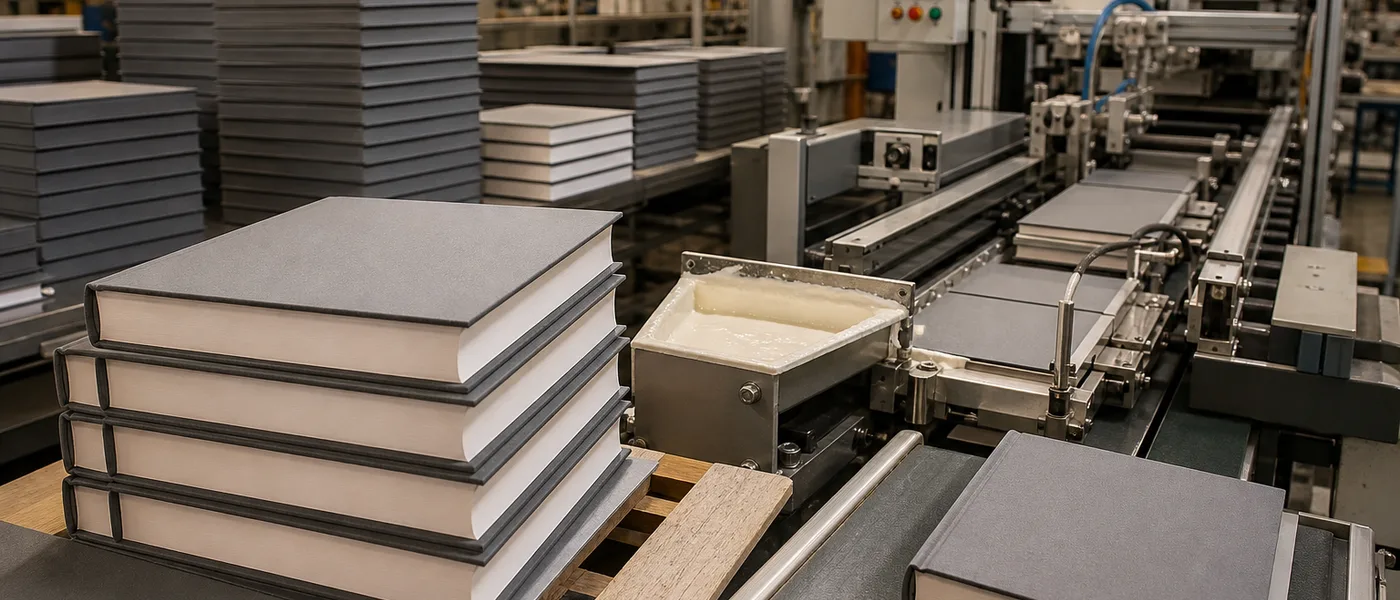
Machine readiness is one of the largest differences between EVA and PUR trials. EVA systems are often familiar to operators and may tolerate routine pot practices more easily. PUR systems demand tighter discipline because moisture exposure, dwell time in the glue system, temperature, and start-up control can affect performance.
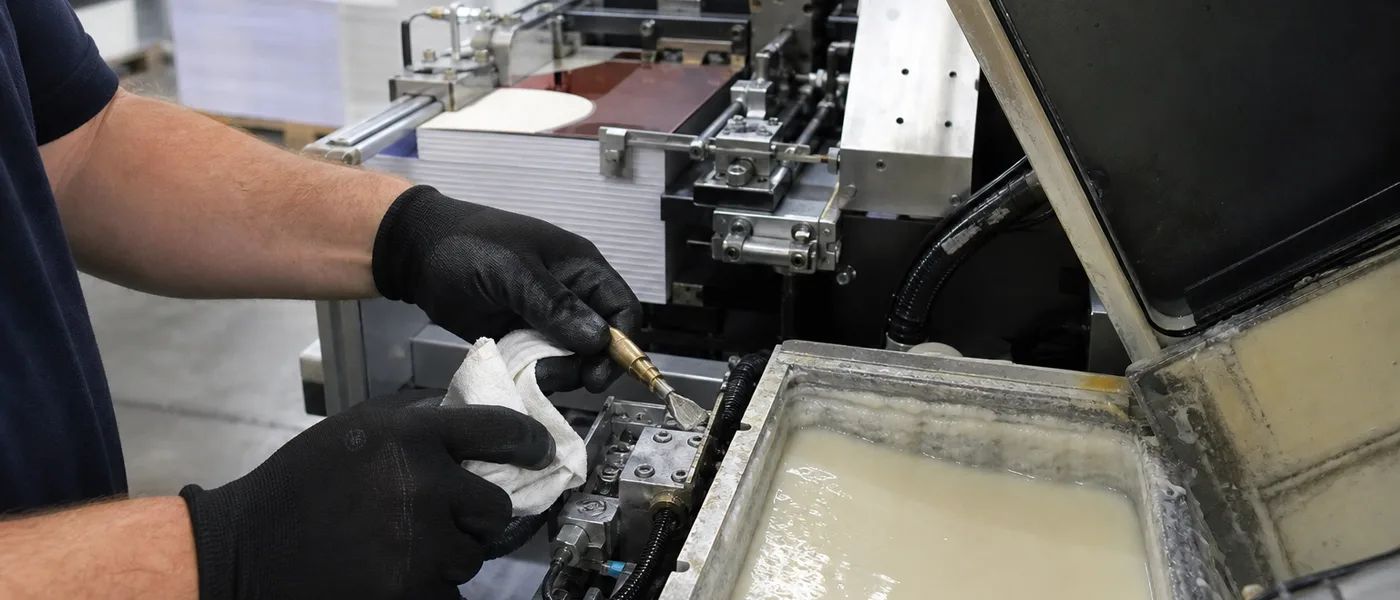
The glue pot or pre-melter should be clean and matched to the adhesive platform. EVA residue, char, contamination, or incompatible cleaning materials can interfere with a PUR trial. Nozzle systems also need inspection. A partially blocked or poorly heated nozzle can create uneven application, stringing, skips, or inconsistent spine coverage.
Temperature should follow the TDS and machine recommendations. Overheating can damage adhesive performance or create maintenance issues. Too low a temperature can reduce flow, wet-out, and application consistency. Open time and set time should be checked at real line speed, not only during a slow trial.
PUR also requires moisture management. Containers should be handled according to supplier guidance. Open containers, humid conditions, extended pot exposure, or poor shutdown practices can shorten usable life or create inconsistent results. Pot life should be recorded during qualification, not assumed.
Machine controls to document include:
| Machine Variable | Why It Matters |
|---|---|
| Glue pot condition | Residue or contamination can distort trial results |
| Nozzle condition | Skips, stringing, or uneven application can look like weak adhesive |
| Temperature setting | Affects viscosity, flow, wet-out, and adhesive stability |
| Open time | Determines whether adhesive can wet the spine before compression |
| Set time | Affects handling, trimming, stacking, and line speed |
| Pot life | Especially important for PUR handling and production planning |
| Start-up behavior | Reveals plugged nozzles, uneven flow, or delayed application |
| Shutdown routine | Protects equipment and reduces restart defects |
A PUR trial should not be run as a casual substitute through an unprepared EVA process. The team should confirm the equipment setup, cleaning plan, adhesive handling, and operator training before comparing results.
Paper, Ink, Coating, Cover Stock, and Book Geometry
Paper and book design can make one platform more suitable than another. Coated paper, heavy ink coverage, dense stock, and low-porosity sheets can reduce adhesive penetration. Heavy book blocks put more stress on the spine. Stiff cover stock can pull against the glued edge. Wide books, thick books, and lay-flat programs can increase flex demand.
Uncoated paper may allow better fiber interaction, while coated paper can create a more difficult surface at the spine. Art books may use coated or heavy papers that require better flexibility and higher pull performance. Textbooks may face repeated opening, rough handling, and cold distribution. Cookbooks, manuals, and reference books may need lay-flat review based on the use case.
Cover stock should not be ignored. A cover that is too stiff, poorly scored, or mismatched to the book block can create stress at the hinge and spine. Side glue, cover wrap, and hinge scoring may also affect final performance.
Book geometry should be part of the trial:
| Book Factor | Why It Affects Platform Decision |
|---|---|
| Paper coating | Can reduce adhesive penetration and change pull strength |
| Paper weight | Heavier paper increases spine load |
| Ink coverage | Heavy ink near the spine may affect wet-out and fiber access |
| Grain direction | Influences page turning, lay-flat, and spine stress |
| Book thickness | Thick blocks increase bending and pull demand |
| Cover stiffness | Can stress the hinge and spine |
| Trim size | Large formats may create more leverage on the spine |
| End-use | Textbook, art book, catalog, manual, or trade book use differs |
A proper PUR vs EVA trial should use the real paper, cover stock, trim size, and book thickness. A successful result on a small uncoated sample book may not predict a thick coated art book.
Validation: Pull Strength, Lay-Flat, Page Flex, Cold-Crack, and Aging
Pull strength is important, but it should not be the only metric. A book may pass a pull test and still fail lay-flat, spine flex, cold-crack, or customer handling. A platform comparison should include the tests that match the book’s real use.
Page pull helps evaluate how well individual pages are held. Spine flex helps show whether the glued spine can survive repeated opening. Lay-flat review helps confirm whether the book opens to the required angle without excessive resistance or damage. Cold-crack testing is important for programs exposed to cold warehouses, winter shipping, or cold retail storage. Aging or storage review can show whether the bond changes after cure, handling, or environmental exposure.
For PUR, validation timing matters because reactive cure can continue after binding. Testing too early may not show final properties. Testing only after full cure may miss early handling risks. The bindery should record both early handling performance and final validation results.
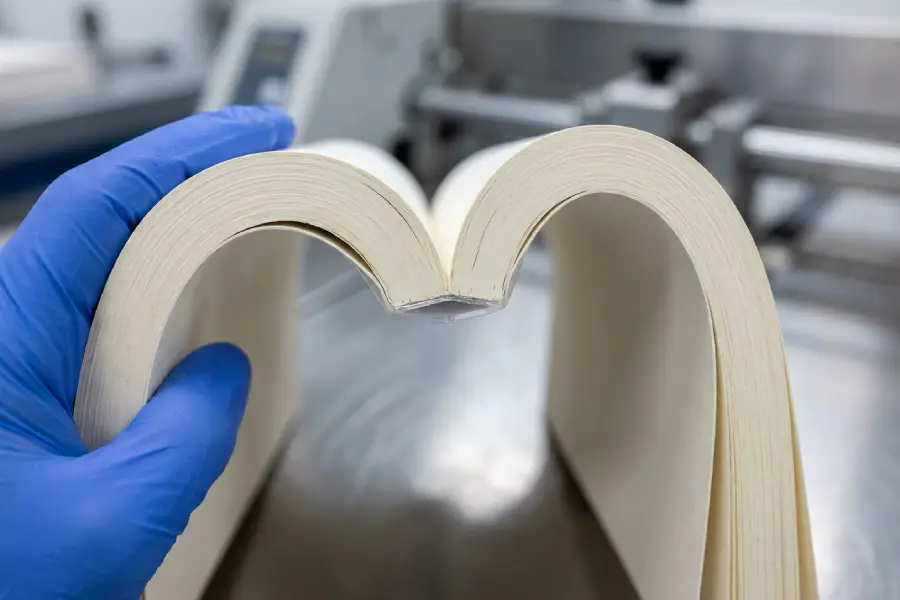
A useful validation plan may include:
| Validation Metric | What It Shows | Notes |
|---|---|---|
| Page pull | Resistance to page removal | Use buyer or internal method consistently |
| Spine flex | Durability under repeated opening | Review cracks, stiffness, and adhesive split |
| Lay-flat | Opening behavior and usability | Compare against customer expectation |
| Cold-crack | Low-temperature spine flexibility | Relevant for winter or cold storage programs |
| Aging review | Performance after storage or cure time | Useful for PUR and long distribution routes |
| Destructive spine review | Failure location and adhesive penetration | Helps separate process and chemistry issues |
| Return/rework rate | Production impact | Compare against historical EVA or PUR data |
| Visual inspection | Glue line, cover hinge, spine shape | Supports QA and customer approval |
Avoid universal pull strength promises unless the test method, paper stock, machine, cure time, and acceptance criteria are defined. A more useful statement is that the platform was tested against the buyer’s pull, lay-flat, flex, and cold-crack targets on the actual book program.
Cost and Procurement: Material Price, Downtime, Waste, MOQ, and Requalification
The PUR vs EVA decision should not be made from adhesive price alone. Material cost matters, but total cost includes downtime, waste, cleaning, operator training, equipment readiness, shelf-life, pot life, rework, returns, and customer claims.
EVA may have an advantage when the existing line is stable, staff are trained, and book requirements are moderate. PUR may justify its cost when it reduces failure risk on high-value programs, difficult paper stocks, or books that face demanding distribution and use. The right answer depends on the program.
Procurement teams should compare these cost factors:
| Cost Factor | EVA Review | PUR Review |
|---|---|---|
| Material price | Often a key advantage | May be higher depending on grade and supply |
| Equipment readiness | Existing glue pot may already fit | May need PUR-capable setup and cleaning discipline |
| Operator training | Often familiar | Requires handling, moisture, and shutdown training |
| Waste | Stable lines may waste less | Poor handling can increase waste during learning |
| Rework and returns | May rise on difficult programs | May reduce failures when properly qualified |
| Pot life | Usually simpler to manage | Must be documented and controlled |
| MOQ | Confirm for each grade and package | Confirm trial and production MOQ early |
| Lead time | Check stock and repeat availability | Check package size, shelf-life, and supply plan |
| Requalification | Needed when paper, cover, or process changes | Also needed when machine or handling changes |
A bindery should also consider whether the platform will be used for one project or across many programs. Switching one high-value textbook program to PUR may make sense, while converting every standard trade line may not. Purchasing approval should be tied to the program group, not a blanket statement.
Troubleshooting: When the Platform Is Not the Root Cause
Sometimes the adhesive platform is not the root cause. A bindery may switch from EVA to PUR and still see failures if the underlying problem remains. Before changing chemistry, check the spine, paper, line, and handling process.
Common non-platform causes include:
| Symptom | Possible Root Cause | First Check |
|---|---|---|
| Page pull failure | Poor milling, dust, coated paper, low glue coverage | Spine prep and glue application |
| Spine cracking | Cold storage, stiff paper, wrong grain, brittle film | Paper direction and cold-crack test |
| Lay-flat miss | Book geometry, cover stiffness, grain direction | Book design and hinge scoring |
| Nozzle skips | Blockage, temperature drift, char, contamination | Nozzle and glue system condition |
| Weak PUR result | Early testing, moisture exposure, poor pot discipline | Cure timing and handling record |
| EVA brittleness | Overheating, wrong grade, heavy coated stock | Pot temperature and paper type |
| Cover lift | Side glue, cover stock, scoring, set time | Cover system and hinge design |
| Uneven bond | Glue amount variation, line speed, spine dust | Application consistency |
Troubleshooting should name the failure location. Did the adhesive release from the page? Did paper fibers tear? Did the adhesive split? Did the cover separate? Did the spine crack through the glue layer? These observations help decide whether to adjust spine preparation, machine settings, paper choice, or adhesive platform.
Need a PUR vs EVA trial plan?
Screen spine stock, cover stock, machine window, failure mode, and validation targets before switching platform.
Review Perfect Binding SolutionsSwitching Checklist: When PUR Is Worth a Production Trial
PUR is worth a production trial when the failure mode, paper stock, and book program justify the process change. It should not be selected only because it sounds stronger. It should be tested because the current EVA window does not meet the buyer’s requirement or because the book program clearly needs the properties PUR can support.
A practical decision checklist:
| Trial Trigger | Why PUR May Be Worth Reviewing |
|---|---|
| Repeated spine cracking | Flexibility and cold-crack performance need review |
| Page pull failures on coated stock | Adhesive engagement with difficult paper may need improvement |
| Thick textbook or manual program | Higher spine stress and repeated use may justify trial |
| Art book or premium program | Lay-flat, visual quality, and durability may be more demanding |
| Winter distribution | Cold-crack risk may justify validation |
| High return or rework cost | Platform change may reduce total cost if properly qualified |
| Customer requires higher durability | Validation target may exceed current EVA window |
| Current EVA is already optimized | If process fixes are complete, platform trial becomes more meaningful |
Before running the trial, prepare the full comparison:
| Trial Requirement | What to Confirm |
|---|---|
| Real book program | Actual paper, cover stock, trim size, and thickness |
| Spine preparation | Same or documented milling, notching, and dust removal |
| Machine readiness | Glue pot, nozzle, temperature, cleaning, startup, shutdown |
| PUR handling | Moisture control, pot life, container handling, cure timing |
| Validation timing | Early handling plus final pull, flex, lay-flat, and cold review |
| Cost review | Material, waste, downtime, MOQ, training, and requalification |
| Approval limit | Which books are approved and which need separate testing |
A production trial should end with a defined platform decision. The result may be “stay with EVA,” “use PUR for this program,” or “test another process variable before switching.” All three outcomes are useful if the trial is well documented.
Field Evidence
Useful internal links to preserve or add where relevant:
Field evidence should match the buyer’s book program. A case study on a thin uncoated trade book may not predict a heavy coated textbook. A pull result from one machine may not translate directly to another line if spine prep, glue pot condition, nozzle setup, open time, set time, or cure timing changes.
Useful evidence may include:
| Evidence Type | Why It Helps |
|---|---|
| Spine photos | Shows milling, notching, dust level, and glue coverage |
| Pull data | Compares page retention under the buyer’s method |
| Flex review | Shows spine durability after repeated opening |
| Lay-flat photos | Connects adhesive choice to user experience |
| Cold-crack review | Supports winter storage or distribution decisions |
| Machine notes | Documents glue pot, nozzle, temperature, and line speed |
| Cure timing | Shows when PUR validation was performed |
| Return reduction data | Helps purchasing compare total cost, where available |
Senda can help review the book program before sample screening, but the bindery should validate results on its own spine line before bulk approval.
Final Takeaway
PUR vs EVA bookbinding hot melt decisions should be made from evidence, not platform slogans. EVA remains a practical and economical choice for many standard perfect binding programs when spine preparation and machine discipline are stable. PUR deserves review when the book program demands stronger spine flexibility, better performance on difficult paper, improved cold-crack behavior, or higher durability than the current EVA window can support.
The right decision starts with the failure mode. Then the team should check paper stock, spine milling, notching, dust removal, grain direction, glue pot condition, nozzle control, open time, set time, pot life, validation timing, and total cost.
Switching to PUR is not just changing adhesive. It is changing the binding platform and process discipline. Approve it only after testing the actual book program, actual line setup, and actual validation targets.
Frequently Asked Questions
Is PUR always better than EVA for bookbinding?
No. PUR is not always better for every book program. It may be a better fit when the book requires improved flexibility, page pull performance, cold-crack resistance, or durability on difficult paper stocks. EVA may still be the better choice for standard programs where cost, familiar processing, and proven line stability matter more.
When should a bindery stay with EVA?
A bindery should consider staying with EVA when the current process meets pull strength, spine flex, lay-flat, cold-crack, cost, and delivery targets. EVA may also be suitable when the book uses standard paper, the line already has strong pot discipline, and there is no serious return pattern linked to spine performance.
When does PUR deserve a production trial?
PUR deserves a production trial when EVA has been optimized but the program still shows spine cracking, page pull failure, cold-crack issues, lay-flat problems, or durability concerns. PUR is also worth reviewing for coated stocks, thick textbooks, art books, manuals, and premium programs with higher performance requirements.
What spine preparation details matter most in a PUR vs EVA comparison?
Spine milling, notching, dust removal, glue coverage, grain direction, paper coating, and book block thickness matter most. A poor spine can make either platform fail. A fair comparison should use controlled spine preparation and record all machine settings.
Why can PUR fail even when the adhesive grade is correct?
PUR can fail if the spine is poorly prepared, the nozzle is blocked, the glue pot is contaminated, the adhesive is exposed to moisture incorrectly, pot life is exceeded, cure timing is ignored, or testing is done before the required validation window. PUR needs both the right grade and the right process discipline.
How should pot life and moisture exposure be controlled during a PUR trial?
Follow the TDS and supplier handling guidance. Record container opening time, glue pot or pre-melter condition, line temperature, nozzle condition, shutdown routine, and time in the system. Keep moisture exposure controlled and avoid using old or poorly stored material for a serious production trial.
Which validation tests should be run before switching platform?
Run tests that match the book program. Common checks include page pull, spine flex, lay-flat, cold-crack, destructive spine review, aging or storage review, cover hinge inspection, and production handling. For PUR, include both early handling review and final validation after the required cure period.
How should purchasing compare PUR and EVA cost?
Purchasing should compare total cost, not adhesive price alone. Include material price, MOQ, lead time, downtime, cleaning, waste, operator training, shelf-life, pot life, rework, returns, and customer complaints. A higher material cost may be justified for a difficult program if it reduces failure risk, but it should be proven by trial data.
When should the binding system be requalified?
Requalification is recommended when the paper stock, cover stock, trim size, book thickness, grain direction, spine milling, notching, glue amount, machine settings, glue pot, nozzle system, open time, set time, validation target, supplier, or customer requirement changes.
Can Senda provide lab material for a PUR or EVA comparison trial?
Yes. Senda can review your spine stock, cover stock, line setup, failure mode, validation target, glue pot or nozzle system, and purchasing requirements before sample screening. A complimentary 1 kg lab material request can support early comparison, but final approval should be based on your actual spine line and book program.
Compare PUR and EVA on your spine line
Request complimentary 1 kg lab material, with shipping prepaid by the recipient, after screening your spine stock, cover stock, line setup, failure mode, and validation target.
References
Technical Disclaimer: All technical data is based on standard laboratory conditions. Users should perform their own verification testing to confirm suitability for specific substrates, processes, and regulatory requirements. Senda Glue makes no warranties, express or implied, and assumes no liability for improper use of the products or reliance on this information.