Composite Can Adhesive for Spiral Winding & Foil Liners

Factory-direct composite can glue for paper-to-PET/Aluminum foil lamination on spiral canisters. Low-odor water-based grades for MAP and sensitive tea/cocoa programs—1 kg lab screen, then 20 kg winder trial.
*Complimentary 1 kg lab material · shipping prepaid by recipient. 20 kg pails for mandrel trials after screening. MOQ typically ~1,000 kg.*
✅ Seam & sensory screening on your liner • 175.105 indirect routes (foil barrier) • REACH statements on request
Optimized For:
Seam-Qualified
Airtight spiral seam targets on your can build
Low-odor
Organoleptic screening for tea & snack programs
Foil/PET
Wet-out tuned for liner-to-paper bonds
Canister Programs We Qualify
Food canisters, tea tins, and cosmetic tubes stress liners and sensory rules differently—one can glue rarely covers every foil and speed.
Food Canisters (MAP)
Spiral seams for modified-atmosphere snacks—qualify leak paths on your foil + paper pair, not a generic MAP claim.
Premium Tea & Cocoa
Low-odor routes for aroma-sensitive fills—batch organoleptic checks when your brand audit requires them.
Cosmetic & Beauty Tubes
High tack on Alu/PET/Met-PET liners with clean cosmetic cylinder forming—validate delamination under mandrel tension.
Decorative Gift Cans
Lay-flat outer wraps with controlled add-on—reduce glue bleed and wrinkle on premium litho paper.
From Leak Paths & Odor to Qualified Canisters
Composite can failures combine seam integrity, sensory neutrality, and liner wet-out—qualify all three on your winding line.
Common Failures
Gas & Moisture Leak Paths
Micro-gaps in the spiral seam shorten shelf life for MAP and oxygen-sensitive fills—often a winding + adhesive match issue.
Odor Migration
Residual VOCs from some adhesives can taint tea, cocoa, or delicate snacks—failed sensory panels block export programs.
Liner Delamination
Weak bond between foil/PET and paper lets liners lift during winding or crimping—loss of barrier function.
Our Solution
Seam & Pressure Screening
Vacuum/pressure differential tests on your can construction—targets agreed in trial, not “zero leak” marketing.
Organoleptic Protocol
Low-VOC, plasticizer-aware formulations with sensory screening where your customer questionnaire requires it.
LSE Liner Wet-Out
Acrylic/PVA routes tuned for Alu, PET, Met-PET—fiber-tear or foil tear targets validated on your stock.
Lab Support for Composite Can Lines
Seam, sensory, and liner bonding screened on your components—not universal “GC-MS included” claims.
Seam Integrity Screening
Pressure/vacuum checks aligned to your MAP or powder program—approve from trial data.
Sensory & Odor Review
Organoleptic workflows when tea/cocoa brands require evidence beyond a generic “low odor” label.
Foil & PET Bonding
Adhesion tests on Met-PET, Alu, and PET liners you actually run—not a single surrogate substrate.
Tune to Liner, Zone & Winding Speed
Inner barrier, body plies, and crimp zones use different viscosities and polymers—confirm on your mandrel.
| Zone | Technology | Viscosity (typical) | Engineering benefit |
|---|---|---|---|
| High-barrier liner (inner) | 500–1,200 cps | High-tack acrylic | Spiral seam wet-out on kraft + Alu/PET—MAP programs qualified on your build. |
| Structural body plies | 1,000–2,000 cps | VAE / hybrid blend | Rigidity and low-odor routes for food-adjacent canisters. |
| Top/bottom crimp zones | 1,200–2,500 cps | High-flex copolymer | Flex through crimp and end-cap forming without seam crack—line validation required. |
Technology: 500–1,200 cps
Viscosity (typical): High-tack acrylic
Engineering benefit: Spiral seam wet-out on kraft + Alu/PET—MAP programs qualified on your build.
Technology: 1,000–2,000 cps
Viscosity (typical): VAE / hybrid blend
Engineering benefit: Rigidity and low-odor routes for food-adjacent canisters.
Technology: 1,200–2,500 cps
Viscosity (typical): High-flex copolymer
Engineering benefit: Flex through crimp and end-cap forming without seam crack—line validation required.
Why Canister Converters Shortlist Senda
Low-odor composite can adhesive, foil wet-out, and 175.105 paperwork—without guaranteed shelf-life months or “100% airtight” brochure claims.
Sensory + Seam Together
Foil-Ready Chemistry
Audit-Ready Documentation
Documentation for Food-Adjacent Canister Programs
Many composite cans use a foil functional barrier—indirect 175.105 is the common U.S. route; confirm your structure with regulatory review.
Compliance Scope (Confirm for Your Program)
Direct liquid contact (e.g. unlined straw) is not this page—route straws and cups to the right program.
- FDA 175.105 ( Indirect food-packaging (foil/barrier-dependent) )
- REACH & RoHS ( SVHC statements on request )
- Repulpable routes ( Water-based options—facing and mill dependent )
Batch-level TDS, SDS, DoC, and CoA for the nominated grade—scoped to your canister construction.
Related Paper Converting Lines
Canister programs share auditors and winding engineers with food-contact and spiral tube lines—route each station correctly.
Food Contact Adhesives
175.105 vs 176.170 clarity for indirect vs direct routes—start here when auditors question your canister stack.
View food-contact hub
Industrial Tubes & Cores
Spiral tube and core winding with crush/cutoff targets—industrial carriers, not MAP canister seams.
View tube & core grades
Our premium tea canister needed to pass a strict sensory panel—not just a peel number. Senda’s low-odor grade and seam documentation matched our audit checklist, and foil wet-out held through crimping.
Technical Proof (Optional Reading)
Share with QA and winding engineering after you request samples. Primary path: lab screen + audit package via the buttons above.
 CASE STUDY
 Case Study: Composite Can Odor & Liner Bond
How a canister program reduced odor migration risk and stabilized foil-to-paper wet-out for sensitive tea packaging.
Read the Full Story →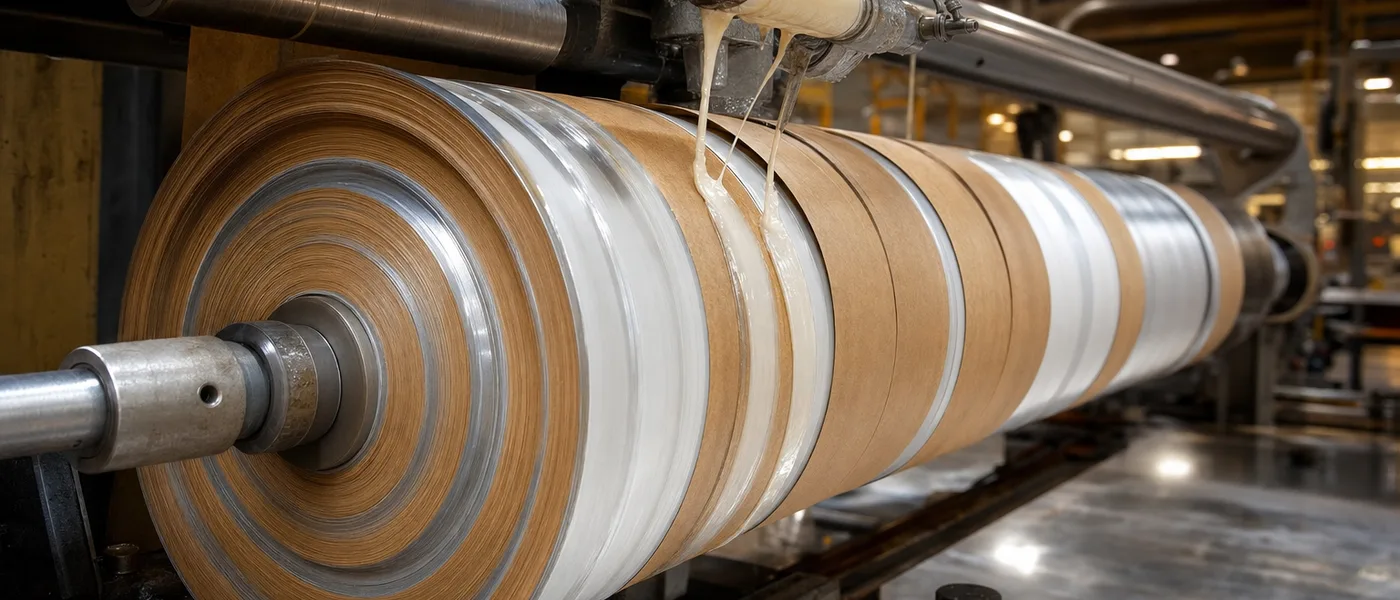 TECHNICAL GUIDE
 Guide: Composite Can Spiral Winding
Glue temperature, mandrel speed, and paper tension for airtight seams on foil-lined canisters.
Read Full Article →Frequently Asked Questions
Find answers to common questions about our adhesive solutions and services.
What adhesive is used for composite can spiral winding?
Programs typically use water-based acrylic or VAE/PVA systems for liner wet-out and body plies—viscosity and odor profile depend on foil type and MAP requirements. Request a 1 kg sample on your construction.
What are MOQ, lead time, and sample options?
MOQ is typically ~1,000 kg. Lead time is often 7–10 business days for qualified grades. Complimentary 1 kg lab material (recipient prepaid shipping), plus 20 kg pails for mandrel validation.
Can you bond aluminum foil or PET liners?
Yes—we qualify Alu, PET, and Met-PET wet-out on your liner and paper—approve with lap shear / mandrel trials, not datasheet tack claims alone.
Will the adhesive odor affect tea or food?
We supply low-VOC, organoleptic-screened routes where required—sensory acceptance is program-specific; run your panel on the nominated batch.
How do we review this adhesive for our food-contact structure and compliance route?
Many canisters qualify under FDA 175.105 indirect when a foil functional barrier separates adhesive from food—confirm your laminate structure; this is not a universal “food safe” label.
Do you provide batch CoA and DoC?
Yes—include GFSI or retailer questionnaire items in your audit package request via technical resources.
How do temperature, speed, and tension affect seams?
All three interact with chemistry—see the spiral winding guide (Resources) before changing only adhesive grade.
What shelf life and storage conditions should we plan for the approved grade?
Typically 6 months sealed at about 5–35°C—protect from freezing; confirm on the TDS.