Folding Carton Adhesive for UV & Coated Cartons

Factory-direct folding carton adhesive for folder-gluers: side seam, crash-lock / auto-bottom, and window patch on UV varnish, BOPP-laminated, and aqueous-coated board. Water-based and hot-melt grades qualified from 400–600 m/min on your stock—start with a 1 kg lab screen, then a 20 kg line trial.
*Complimentary 1 kg lab material · shipping prepaid by recipient. 20 kg pails for folder-gluer validation after screening. MOQ typically ~1,000 kg.*
✅ FDA 175.105 (indirect) • Folder-gluer supplier • Audit package on request
Optimized For:
400–600 m/min
Qualified speed window (board & coating dependent)
Fiber-Tear
Peel QA on your UV, film, or coated stock
175.105
Indirect food-carton documentation available
Bond Points on a Folding Carton Line
Match adhesive rheology to each station—side seam, auto-bottom, and window patch use different open times, viscosities, and cleanliness requirements.
Side Seam (Longitudinal)
High initial tack for folder-gluer speeds above 400 m/min. Grades tuned for clean cut-off on jet systems to limit tailing and nozzle fouling.
Auto-Bottom / Crash Lock
Fast green-strength development to resist board spring-back on multi-point folds. Target handling strength in under 1 s on qualified auto-lock formats.
Window Patching
Clear, low-misting grades for PET, PLA, or acetate windows on carton board. Flat, wrinkle-free bonds depend on film grade and patch station setup.
Common Folder-Gluer Failure Modes
Carton lines fail quietly first—pop-opens, coating-skid bonds, or stringing—then show up as rework, QA holds, or brand-owner complaints.
Common Failures
Pop-Opens on Auto-Bottoms
Flaps spring open when shear strength is lower than the board memory or compression window is too short.
Weak Bond on UV or BOPP
Adhesive sits on the coating instead of anchoring in the fiber, so tack looks fine but fiber tear fails in QA.
Tailing & Satellites
Stringy cut-off at high jet speeds (>400 m/min) fouls nozzles and raises daily cleaning stops.
Our Solution
Shear-Tuned Side Seam & Bottom Grades
Higher shear packages to lock folds faster on heavy caliper and high-memory board—validated on your stock, not by datasheet alone.
Coating Penetration Chemistry
Wetting and penetration packages for UV, aqueous varnish, and OPP/BOPP lamination—aimed at fiber-tear failure modes, not surface tack only.
Jet-Optimized Rheology
Viscosity and elasticity matched to non-contact nozzles or wheel pots to improve cut-off and reduce tailing on high-speed lines.
Engineering Support for Difficult Carton Stock
Send coated board, line speed, and applicator photos—we run peel/fiber-tear screens before samples ship. Typical path: 1 kg lab screen → 20 kg folder-gluer trial → bulk MOQ (~1,000 kg).
Difficult Substrates
UV varnish, aqueous coating, PE/OPP lamination, metallized polyester, and high-fill virgin board—each needs a different penetration and open-time window.
Applicator Matching
Separate tuning for high-pressure nozzle jetting vs glue wheel pots—viscosity, solids, and break profile differ by station.
Supply-Chain Temperature
Grades for cold-chain cartons (down to about -40°C on qualified runs) or elevated storage (70°C+) when your pack sees freezer or hot-fill exposure—confirm with migration and bond tests for food packs.
Typical Grade Windows (Validate on Your Line)
We match line speed, coating type (UV / aqueous / film), and board spring-back—ranges below are starting points for qualification, not universal specs.
| Parameter | Customization Range | Benefit |
|---|---|---|
| Technology | Water-based emulsion / hot melt (EVA & metallocene) | WB for cost-sensitive wheel lines; metallocene HMA often wins instant tack on UV-heavy or film-laminated board. |
| Viscosity | 400–2,500 cps (WB) | 1,000–5,000 cps (HMA) | Tuned for wheel flow or nozzle jetting without clogging or slinging. |
| Setting Speed | ~0.5 s (HMA) – ~2.0 s (WB) | Faster green strength on rebound-prone auto-bottoms; WB options for standard lock-bottom lines. |
| Adhesion Target | Fiber-tear on qualified board | Peel/fiber-tear QA on your UV, OPP, PET film, or virgin board—not a single universal grade. |
| Food Packaging | FDA 21 CFR 175.105 (indirect) | For cartons and outer food packaging where adhesive is not in direct contact with food. Direct-contact formats use 176.170 grades on our food-contact page. |
Customization Range: Water-based emulsion / hot melt (EVA & metallocene)
Benefit: WB for cost-sensitive wheel lines; metallocene HMA often wins instant tack on UV-heavy or film-laminated board.
Customization Range: 400–2,500 cps (WB) | 1,000–5,000 cps (HMA)
Benefit: Tuned for wheel flow or nozzle jetting without clogging or slinging.
Customization Range: ~0.5 s (HMA) – ~2.0 s (WB)
Benefit: Faster green strength on rebound-prone auto-bottoms; WB options for standard lock-bottom lines.
Customization Range: Fiber-tear on qualified board
Benefit: Peel/fiber-tear QA on your UV, OPP, PET film, or virgin board—not a single universal grade.
Customization Range: FDA 21 CFR 175.105 (indirect)
Benefit: For cartons and outer food packaging where adhesive is not in direct contact with food. Direct-contact formats use 176.170 grades on our food-contact page.

Why Converters Shortlist Senda
Fewer pop-open rejects, cleaner jet running, and paperwork that survives QA—not generic “carton glue” listings.
Coated-Stock Qualification
Cleaner High-Speed Running
Audit-Ready Paperwork
Documentation for QA and Brand-Owner Audits
Indirect food-contact cartons typically fall under FDA 21 CFR 175.105. We supply TDS/SDS and compliance statements via our regulatory hub when auditors need the full package picture.
Compliance Scope (Confirm for Your Pack)
Declarations are application-specific. We do not substitute a marketing label for your migration or structure review.
- FDA 175.105 ( Indirect food-contact cartons & outer packaging )
- REACH & RoHS ( Documentation available on request )
- Low-VOC / Low-Odor ( Organoleptic-sensitive confectionery & pharma packs )
Batch-level TDS, SDS, and compliance statements for your nominated grade—paired with the regulatory overview when needed.
Related Packaging Lines
Carton gluing is only one station—route adjacent needs without mixing case-sealing chemistry into folder-gluer grades.

Food Contact Adhesives
When auditors ask about direct vs indirect food contact, migration, or confectionery/pharma carton rules—start here before approving a carton grade.
Explore Solutions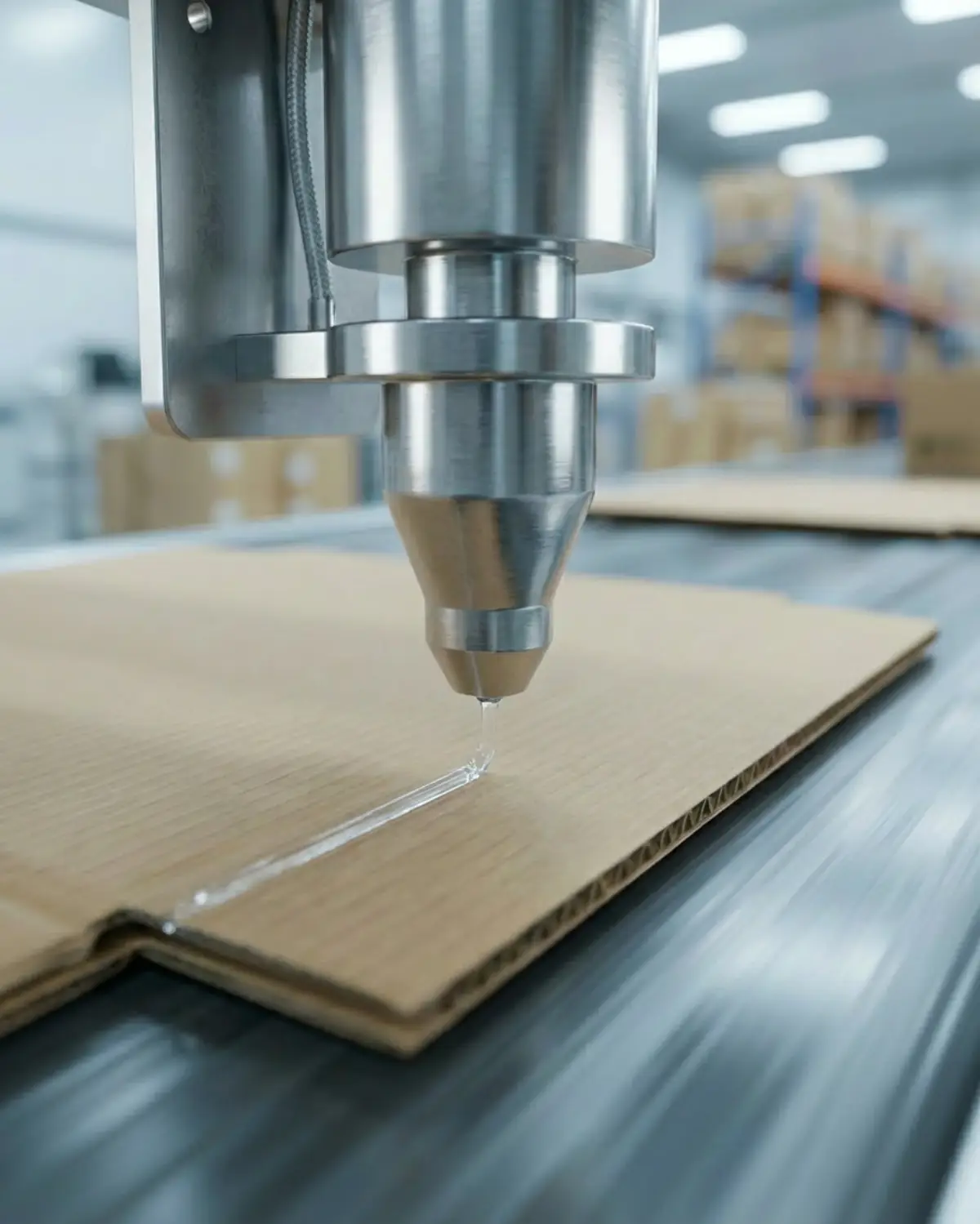
Hot Melt Adhesives Hub
Metallocene and EVA options for carton side seams, case sealing, and other packaging stations—compare technologies before you trial.
Explore Solutions
We struggled for months to find a glue that would stick to our new heavy-coverage UV varnish. Senda's formulation reduced pop-opens on our side seam and runs cleaner than our previous supplier on the same nozzle setup.
Technical Proof (Optional Reading)
Use these after you have requested samples—or share with your process engineer. Primary conversion path is lab screen + machine trial above.
 CASE STUDY
 Case Study: Pharma Folding Cartons on UV Board
How a pharma converter moved from surface tack to fiber-tear on heavy UV varnish—side-seam qualification on a high-speed folder-gluer.
Read the Full Story →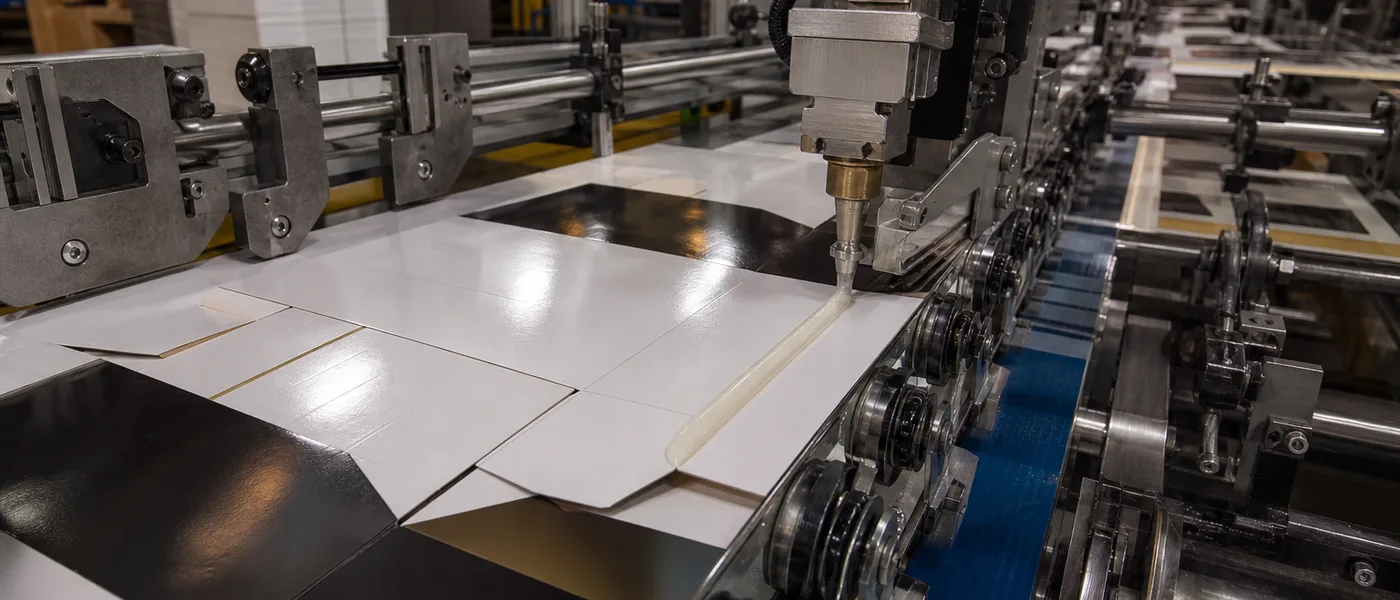 TECHNICAL GUIDE
 Guide: Bonding UV & Coated Stocks on Folder-Gluers
Surface energy, wheel vs nozzle setup, fiber-tear checks, and when metallocene beats EVA on low-surface-energy board.
Read Full Article →Frequently Asked Questions
Find answers to common questions about our adhesive solutions and services.
What is your Minimum Order Quantity (MOQ)?
Standard industrial MOQ is 1,000 kg (about one pallet). We supply 20 kg trial pails for folder-gluer validation after a lab screen on your board.
What are your standard production lead times?
Typical production is 7–10 business days for qualified grades. Shipping terms (FOB/CIF) are agreed per order.
Do you provide free samples for testing?
Yes—complimentary 1 kg lab material (recipient prepaid shipping) for initial compatibility. 20 kg pails for machine trials are quoted separately before dispatch.
How do I get a strong bond on UV-coated or metallized board?
Start with a coating identification (UV %, aqueous, OPP/BOPP) and a fiber-tear peel on your stock. Request a 1 kg sample for lab screening; our UV folder-gluer guide in Resources covers wheel/nozzle setup if your team wants deeper troubleshooting.
Are your adhesives suitable for high-speed folder-gluers?
Yes—grades are tuned for modern folder-gluers and auto-lock bottom equipment, commonly qualified from 400 m/min upward depending on coating and nozzle vs wheel. Machinability (splash, mist, tailing) is part of the trial scorecard.
How can I reduce pop-opens on crash-lock bottoms?
Pop-opens usually mean insufficient shear or open time for the board memory. Use a faster-setting auto-bottom grade, verify compression, and check fiber tear—not just finger tack. See our pharma folding carton case study for a documented qualification path.
Can one grade run on both nozzle and wheel stations?
Sometimes, but we usually recommend station-specific viscosities. Nozzle grades need clean jet break; wheel grades need controlled flow without slinging. We can supply both from one qualification project.
How do we qualify adhesives for confectionery or pharma carton structures?
For indirect-contact cartons, we supply FDA 21 CFR 175.105 grades. Direct-contact formats (straws, filters, etc.) need 176.170 routes—see food contact adhesives before you assume one carton grade covers every food pack.
Are you a folding carton adhesive supplier for industrial volumes?
Yes—we supply converters and brand owners at industrial MOQ with factory-direct documentation. Start with Request Free 1kg Sample or Book Machine Trial on this page; share board, coating, and line speed so we route the right grade family.
What is the typical shelf life of folding carton adhesives?
Typically 6 months sealed between 5°C and 35°C. Avoid freezing and direct sun to keep viscosity stable.