Hardcover & Case Making Adhesive for Flat Covers

Factory-direct adhesives for case making, casing-in, and end-sheet bonding on grey board, cloth, leather, and laminate wraps. Screen anti-warp and wet-out on your casemaker—1 kg lab screen, then 20 kg trial.
*Complimentary 1 kg lab material · shipping prepaid by recipient. 20 kg trials (VAE or jelly) after screening. MOQ typically ~1,000 kg.*
✅ Anti-warp screening on your board • EN 71-3 routes for educational products • Compliance docs on request
Optimized For:
Anti-Warp
Moisture balance screened on your grey board
Line-Matched
Open time tuned to casemaker cycle
Low-Odor
Routes for luxury cloth and paper wraps
VAE / Protein
Synthetic or traditional jelly-glue lines
Case-Making Stations We Qualify
Wrapping, casing-in, and end-sheet bonds need different open time and moisture budgets—one glue rarely fits every cover material.
Precision Case Making
High-tack routes for paper, cloth, or leather wraps—sharp corners and air release qualified on your Kolbus/Horauf or equivalent line speed.
High-Strength Casing-In
Joint adhesion for book-block attachment—flex and hinge feel screened for your end-use (textbooks vs gift editions).
End-Sheet Bonding
Lower-moisture formulas to limit bleed-through and cupping on decorative end papers—validate flatness after conditioning.
From Warp, Bubbles & Corner Lift to Qualified Cases
Luxury case defects are usually moisture + wet-out + open time together—not a single viscosity tweak.
Common Failures
Board Warping & Cupping
High water add-on swells grey board unevenly—covers cup or twist after drying and storage.
Bubbling & Tunneling
Fast skinning or poor air release traps pockets under cloth or laminate—visible on gloss and foil wraps.
Corner Lift on Low-Energy Films
Soft-touch, UV, and metallic surfaces repel standard glues—edges lift after trim or in humidity cycling.
Our Solution
Moisture-Controlled Formulations
Higher-solids, lower-water routes to limit board tension—flatness checked on your caliper and wrap stack.
Open-Time & Air Release
Controlled evaporation for positioning on automated casemakers before tack locks—matched to your cycle window.
LSE Surface Wet-Out
Wetting agents and tack levels tuned for laminate and foil wraps—approve with peel and humidity checks, not datasheet tack alone.
Lab Support for Case Makers
We screen warp, bubble, and corner lift on your board and cover materials—not generic “60 cases/min” claims.
Anti-Warp Protocol
Flatness checks after drying and conditioning on your grey board caliper and ink coverage.
Casemaker Runnability
Roller buildup and stringing screened at your nominated speed and glue film weight.
Difficult Cover Stocks
Bond trials on UV, soft-touch, foil, and cloth without blanket “no primer” promises.
Tune to Board, Wrap & Cycle Time
VAE synthetic and modified protein (jelly) routes—confirm vegan vs traditional line requirements before trial.
| Parameter | Typical range | Engineering benefit |
|---|---|---|
| Technology | Synthetic VAE / modified protein | Vegan-friendly synthetic or traditional jelly-glue casemaker lines. |
| Viscosity | 1,500–6,000 cps | Roller laydown tuned to your wrap width and corner turn. |
| Open time / set | ~2–10 s (grade-dependent) | Matched to casemaker cycle for corner wrap and bond lock. |
| Warp resistance | Board-matched solids | Screened on your grey board (often ~1.5–4 mm)—not a universal flatness guarantee. |
Typical range: Synthetic VAE / modified protein
Engineering benefit: Vegan-friendly synthetic or traditional jelly-glue casemaker lines.
Typical range: 1,500–6,000 cps
Engineering benefit: Roller laydown tuned to your wrap width and corner turn.
Typical range: ~2–10 s (grade-dependent)
Engineering benefit: Matched to casemaker cycle for corner wrap and bond lock.
Typical range: Board-matched solids
Engineering benefit: Screened on your grey board (often ~1.5–4 mm)—not a universal flatness guarantee.
Why Premium Case Makers Shortlist Senda
Flatness and aesthetics qualified on your materials—without “100% anti-warp guarantee” marketing.
Warp & Bubble Together
Cloth, Paper & Laminate
Clean Seams for Branding
Documentation for Educational & Export Programs
Request statements scoped to your product (children’s books, gift boxes, cookbooks)—not a one-size “FDA approved” label.
Compliance Scope (Confirm for Your Program)
EN 71-3, REACH/RoHS, and FDA 175.105 routes depend on grade and end use.
- EN 71-3 ( Grades available for children’s books and educational hardcovers (per grade). )
- REACH & RoHS ( SVHC statements on request for export programs. )
- FDA 175.105 ( Indirect-contact routes where applicable (structure-dependent). )
TDS, SDS, and declarations for the nominated grade—scoped to your case-making program.
Related Bookbinding Lines
Case making is one station—route perfect binding spine work and print finishing bonds separately.
Perfect Binding (Spine & Side)
PUR/EVA hot melts for spine and side gluing—page-pull and cutoff qualified on your binder, not case wrap.
View perfect binding grades
Luxury Print Finishing
Bonding on soft-touch and foil sheets and boxes—distinct from grey-board casemaker wrap chemistry.
View print finishing grades
Board warp on cloth wraps was our top defect until we qualified a lower-moisture jelly route on our grey board. Senda’s flatness protocol gave us customer-audit data—not just a supplier datasheet.
Technical Proof (Optional Reading)
Share with casemaking engineering after you request samples. Primary path: lab screen + audit package via the buttons above.
 CASE STUDY
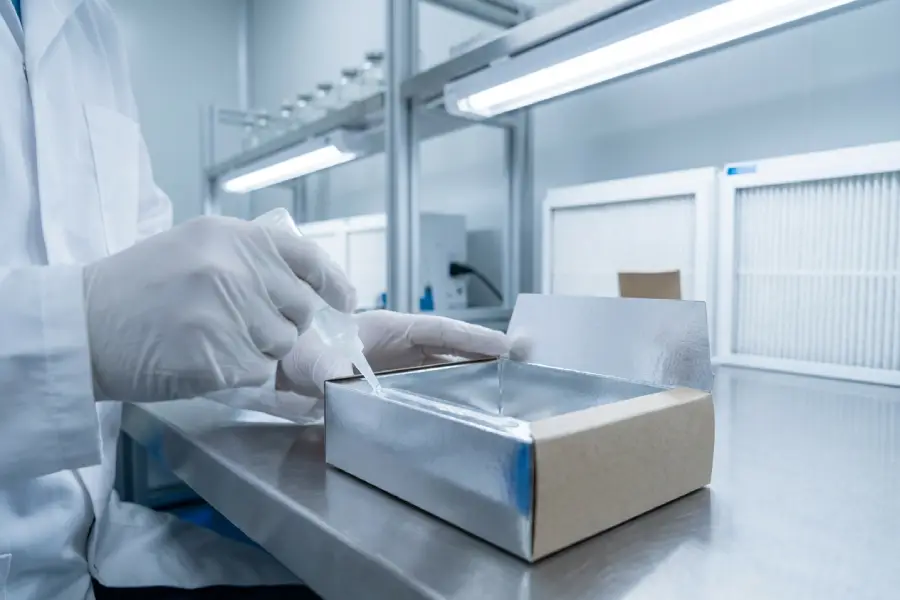
 Case Study: Anti-Warp on Premium Case Lines
How a converter reduced board warp, bubbling, and corner lift on cloth and laminated covers with a moisture-balanced adhesive route.
Read the Full Story →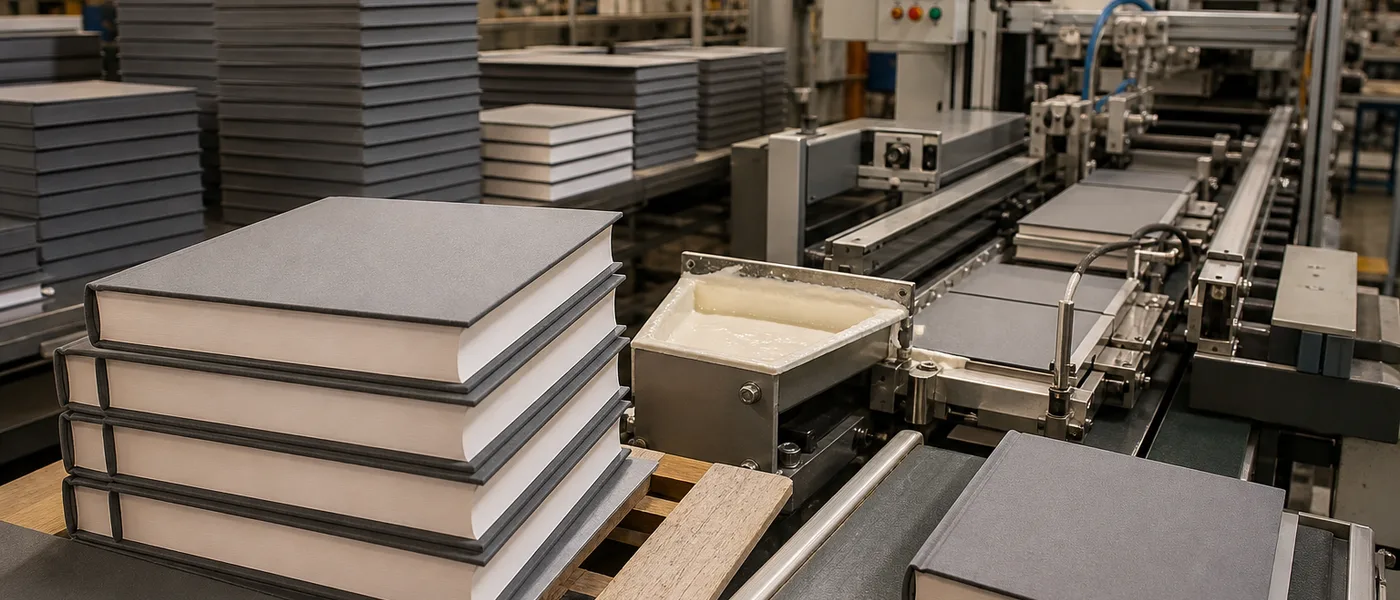 TECHNICAL GUIDE
 Guide: Solving Hardcover Warping
Moisture transfer, open time for air release, and wrap wet-out to limit cupping, bubbles, and corner lift.
Read Full Article →Frequently Asked Questions
Find answers to common questions about our adhesive solutions and services.
What adhesive is used for hardcover case making?
Lines use synthetic VAE water-based adhesives or modified protein (jelly) glue on casemakers—choice depends on machine, wrap material, and moisture budget. Start with a 1 kg sample on your board and cover.
What are MOQ, lead time, and sample options?
MOQ is typically ~1,000 kg. Lead time is often 7–10 business days for qualified grades. Complimentary 1 kg lab material (recipient prepaid shipping), plus 20 kg VAE pails or jelly cartons for casemaker trials.
How do I stop grey board from warping after wrapping?
Match solids and water add-on to board caliper and ink coverage—qualify flatness after drying and conditioning, not only at the casemaker exit.
Do you offer vegan alternatives to animal jelly glue?
Yes—synthetic VAE routes can mirror open time and tack for many casemaker cycles without animal protein. Run side-by-side on your wraps before switching.
Can you bond soft-touch, UV, or foil laminates?
We qualify wet-out on low-energy surfaces with peel and humidity checks—approve on your laminate stack, not from a generic “bonds everything” claim.
What safety standards apply to children’s hardcovers?
EN 71-3 statements are available for nominated grades; REACH/RoHS on request. Request an audit package via technical resources for your questionnaire.
How do open time and casemaker speed interact?
Cycle time sets how much air release you get before tack locks—see the anti-warp guide (Resources) before changing only viscosity.
What shelf life and storage conditions should we plan for the approved grade?
VAE grades: often ~6 months sealed—protect from freezing. Jelly/protein routes: often ~12 months cool/dry storage; confirm on the grade TDS.